
Experienced Attorneys Protecting the Rights of the Neglected and Abused
The Nursing Home Law Center is committed to providing the legal resources necessary to hold negligent facilities accountable.

Assisted living facilities are typically licensed and regulated by state governments.
The exact department varies by state, but it may include the Department of Health or Public Health, the Department of Human Services, an aging agency, or a social services department. Depending on state regulations, there may be different licensing categories for assisted living, residential care, personal care homes, or other types of assisted living communities.
If your loved one has been injured in an assisted living community, our assisted living abuse and neglect attorneys can help you explore your legal options. Contact us for a free consultation about your rights.
Nursing homes are regulated at the federal level through the Centers for Medicare & Medicaid Services (CMS) when they participate in Medicare or Medicaid. State survey agencies generally conduct inspections, investigate complaints, and assess whether federally certified nursing homes comply with federal requirements. Serious deficiencies can result in enforcement actions that may affect a facility’s Medicare or Medicaid certification.
However, assisted living communities are typically regulated at the state level rather than directly by CMS. Facilities that participate in Medicaid-funded home and community-based services programs may have to comply with certain federal requirements tied to those services and settings. Assisted living facilities may also be subject to federal disability laws, including the Americans with Disabilities Act, which ensures that disabled adults can receive services.
Assisted living facilities can also seek voluntary accreditation or join care associations to demonstrate a higher standard of care.
State regulations typically oversee licensing, inspections, minimum staffing and training requirements, resident care obligations, medication management, and health and safety. Survey and inspection frequency of assisted living communities varies by state.
These agencies safeguard resident rights and investigate complaints, which may result in corrective actions like fines, license restrictions, and suspension or revocation, depending on state law. Local and municipal authorities enforce fire safety codes and building requirements for assisted living facilities.
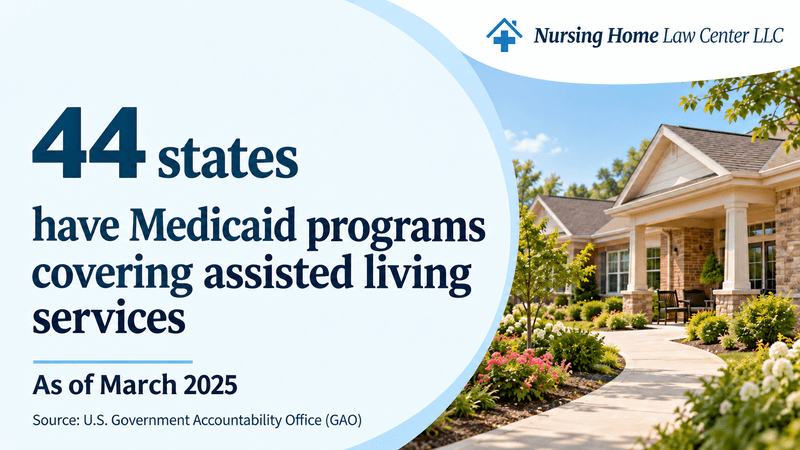
As of March 2025, Medicaid programs in 44 states covered assisted living services, according to the U.S. Government Accountability Office.
Beyond state regulatory agencies, other departments may support individuals in assisted living facilities and nursing homes. All states have a Long-Term Care Ombudsman Program that advocates for residents of assisted living facilities, nursing homes, and other long-term health care settings, as well as their families.
Adult Protective Services investigates reports involving vulnerable adults in both health care facilities and communities. Depending on state regulations, APS may be a dedicated agency or managed by a Department of Children and Families.
If necessary, APS will refer cases to law enforcement, which will handle suspected criminal conduct. This could include assault, sexual abuse, theft, or battery.
The Alabama Department of Public Health (ADPH), Bureau of Health Provider Standards, licenses and regulates assisted living facilities under Chapter 420-5-4 of the Alabama Administrative Code. An Alabama assisted living abuse and neglect lawyer can review licensing records, inspection findings, and complaints when investigating whether failures in care contributed to a resident’s injuries.
AS 47.33 establishes requirements for assisted living homes in Alaska. The Alaska Department of Health’s Residential Licensing Unit licenses these homes, investigates complaints, and monitors compliance with state standards.
The Arizona Department of Health Services licenses assisted living facilities, with requirements varying according to the level of care the facility is authorized to provide. Definitions and licensing requirements are found in A.R.S. § 36-401, while operational standards are set out in Title 9, Chapter 10, Article 8. An Arizona assisted living abuse and neglect attorney can compare a facility’s licensed level of care with the resident’s needs and review whether regulators previously identified deficiencies.
The Arkansas Department of Human Services, Office of Long Term Care, licenses both Level I and Level II assisted living facilities. Level I facilities and Level II facilities are subject to different requirements based on the services and level of care provided. Arkansas assisted living abuse and neglect attorneys can determine which licensing standards apply to the facility and whether its admission, retention, staffing, or care practices complied with those requirements.
California regulates assisted living communities as Residential Care Facilities for the Elderly (RCFEs). RCFEs are overseen by the California Department of Social Services (CDSS), Community Care Licensing Division under California Health and Safety Code § 1569 et seq. and Title 22, Division 6, Chapter 8 of the California Code of Regulations. California assisted living abuse and neglect lawyers can obtain RCFE licensing, complaint, and inspection records and evaluate whether regulatory deficiencies are relevant to the resident’s injuries.
The Colorado Department of Public Health and Environment licenses and regulates assisted living residences under C.R.S. § 25-27-101 et seq. and 6 CCR 1011-1, Chapter 7. A Colorado assisted living abuse and neglect lawyer can examine inspection findings, resident records, and applicable care standards when evaluating whether a facility failed to provide required services or protections.
Connecticut regulates assisted living differently from many states. The Connecticut Department of Public Health (DPH)licenses Assisted Living Services Agencies (ALSAs), which provide nursing services and assistance with activities of daily living within registered Managed Residential Communities (MRCs). Connecticut does not license the physical MRC itself as an assisted living facility; instead, the MRC must be registered before an ALSA can provide assisted living services there. The regulatory framework includes Conn. Agencies Reg. § 19-13-D105.
The Delaware Department of Health and Social Services regulates assisted living facilities under 16 Del. Admin. Code § 3225. These rules address licensing, resident services, staffing, safety, medication management, and inspections.
Assisted living facilities in Florida are licensed and regulated by the Agency for Health Care Administration (AHCA). Florida Statutes §§ 429.01–429.55 establish requirements covering licensing, resident rights, care, and facility operations. A Florida assisted living abuse and neglect lawyer can examine AHCA inspection and complaint records alongside the applicable state standards to identify potential failures in resident care.
The Georgia Department of Community Health, Healthcare Facility Regulation Division licenses assisted living communities under authority that includes Georgia Code § 31-7-12.2. Operational requirements are set out in Georgia Rules and Regulations Chapter 111-8-63. Georgia assisted living abuse and neglect lawyers can review DCH inspection records, complaints, and facility practices when determining whether staffing, supervision, or other care failures contributed to harm.
The Hawaii Department of Health, Office of Health Care Assurance licenses and oversees assisted living facilities. Facility requirements are established under HAR Title 11, Chapter 90.
The Idaho Department of Health and Welfare regulates residential assisted living facilities under Title 39, Chapter 33 of the Idaho Code. Operational and licensing standards are contained in IDAPA 16.03.22.
The Illinois Department of Public Health (IDPH) regulates assisted living and shared housing establishments under the Assisted Living and Shared Housing Act, 210 ILCS 9. Administrative requirements are detailed in 77 Ill. Admin. Code Part 295. An Illinois assisted living abuse and neglect lawyer can examine IDPH records and the facility’s compliance with requirements involving assessments, service plans, staffing, supervision, and resident safety.
The Indiana Department of Health licenses residential care facilities, including facilities commonly marketed as assisted living. Regulatory requirements are established through 410 IAC 16.2-5. An Indiana assisted living abuse and neglect attorney can review inspection findings, incident records, and applicable residential care requirements when investigating preventable injuries or neglect.
Iowa regulates these communities as assisted living programs, which must be certified under Iowa Code Chapter 231C. The Department of Inspections, Appeals, and Licensing (DIAL) oversees the programs, with detailed requirements in Iowa Administrative Code Chapter 481-69. Iowa assisted living abuse and neglect attorneys can review the program’s certification status, monitoring reports, and complaint history to determine whether it met applicable resident-care standards.
The Kansas Department for Aging and Disability Services (KDADS) regulates assisted living and other adult care homes under K.S.A. Chapter 39, Article 9 and administrative rules including K.A.R. Agency 26, Article 41. Kansas assisted living abuse and neglect lawyers can request KDADS licensing, inspection, and complaint records to identify recurring safety problems or regulatory deficiencies relevant to a claim.
The Kentucky Cabinet for Health and Family Services (CHFS) oversees assisted living communities under KRS 194A.700 through 194A.729, with administrative requirements set out in 902 KAR 20:480. A Kentucky assisted living abuse and neglect attorney can evaluate whether facility practices complied with state requirements for resident services, safety, reporting, and operations.
Louisiana regulates assisted living settings as Adult Residential Care Providers (ARCPs). The Louisiana Department of Health licenses and oversees ARCPs, with operational standards established under Louisiana’s adult residential care regulations.
Maine Revised Statutes Title 22, Chapter 1664 governs assisted housing programs. The Maine Department of Health and Human Services licenses and oversees these facilities under rules including 10-144 CMR Chapter 113.
Assisted living programs in Maryland are licensed by the Maryland Department of Health, Office of Health Care Quality. COMAR 10.07.14 establishes requirements for licensing, resident assessment, staffing, services, medication management, and other aspects of assisted living operations.
Massachusetts uses a certification system rather than conventional facility licensure for Assisted Living Residences. The Executive Office of Aging & Independence (AGE) certifies residences under 651 CMR 12.00, which establishes requirements for certification, services, staffing, resident rights, and compliance reviews. Massachusetts assisted living abuse and neglect lawyers can review certification and compliance records when investigating whether a residence failed to meet required standards.
Michigan does not license “assisted living facilities” as a separate facility category. Depending on the care provided, a community marketed as assisted living may instead require a Home for the Aged (HFA) or Adult Foster Care (AFC)license through the Michigan Department of Licensing and Regulatory Affairs (LARA), Bureau of Community and Health Systems. A Michigan assisted living abuse and neglect lawyer can determine which licensing category applies and review LARA records for complaints, enforcement actions, or prior deficiencies.
The Minnesota Department of Health licenses and regulates assisted living facilities under Minnesota’s assisted living licensure laws. State requirements address areas including staffing, assessments, service plans, resident rights, and dementia care.
The Mississippi State Department of Health regulates personal care homes, including assisted living facilities, under authority including Miss. Code Ann. § 43-11-13. Administrative standards address facility operations, resident care, staffing, and safety.
The Missouri Department of Health and Senior Services (DHSS) licenses assisted living facilities under Chapter 198 of the Missouri Revised Statutes. Detailed requirements are contained in 19 CSR 30-86, including current administrative, personnel, and resident-care requirements for assisted living facilities. A Missouri assisted living abuse and neglect attorney can compare the facility’s license level, survey history, and resident-care practices with the standards that applied when the injury occurred.
The Montana Department of Public Health and Human Services licenses assisted living facilities under authority including MCA § 50-5-227. Administrative rules address areas such as resident services, staffing, food service, housekeeping, and facility operations.
Assisted living facilities in Nebraska are licensed by the Nebraska Department of Health and Human Services, Division of Public Health. Neb. Rev. Stat. §§ 71-5901 through 71-5909 establish the statutory framework, with additional operating standards contained in state regulations.
Nevada licenses these communities as Residential Facilities for Groups. The Division of Public and Behavioral Healthregulates the facilities under NRS Chapter 449, with administrative requirements set out in NAC Chapter 449. Facilities offering assisted living services may require an assisted living endorsement.
RSA Chapter 151 authorizes the New Hampshire Department of Health and Human Services, Health Facilities Administration to license and oversee residential care and assisted living facilities. He-P 804 establishes standards for facility operations and resident care.
The New Jersey Department of Health (NJDOH) licenses and regulates assisted living residences, comprehensive personal care homes, and assisted living programs. N.J.A.C. 8:36 establishes licensing and operational standards for these settings. New Jersey assisted living abuse and neglect attorneys can use NJDOH inspection, complaint, and licensing records to assess whether failures in supervision, reporting, maintenance, or resident care contributed to an injury.
The New Mexico Health Care Authority oversees assisted living facilities through its regulatory and licensing functions. State requirements are contained in 8.370.14 NMAC. A New Mexico assisted living abuse and neglect lawyer can examine licensing records, survey findings, complaints, and plans of correction when investigating a facility’s history and the circumstances surrounding an injury.
The New York State Department of Health (NYSDOH) regulates adult care facilities under standards including 18 NYCRR Parts 485–487. A separate framework applies to New York’s Assisted Living Program (ALP), which is governed by Social Services Law § 461-l. Because the state uses several adult-care and assisted-living classifications, a New York assisted living abuse and neglect attorney can identify the facility’s legal category and determine which licensing and care standards apply.
Assisted living residences in North Carolina generally operate as adult care homes under Chapter 131D of the North Carolina General Statutes. They are regulated by the North Carolina Division of Health Service Regulation, with administrative requirements contained in Title 10A of the North Carolina Administrative Code.
The North Dakota Department of Health and Human Services oversees assisted living facilities. Facilities are subject to licensing through both the Health Response and Licensure Section and Food and Lodging, with requirements including NDCC Chapter 50-32, NDAC Chapter 75-03-34, and other applicable health and lodging rules.
The Ohio Department of Health licenses and inspects assisted living settings as residential care facilities under Ohio Revised Code Chapter 3721. Ohio Administrative Code Chapter 3701-16 contains detailed licensing and care standards. Ohio assisted living abuse and neglect attorneys can review ODH inspection findings and facility records to establish what duties applied to the resident and whether documented problems are relevant to the harm suffered.
The Oklahoma State Department of Health licenses and regulates assisted living centers under the Continuum of Care and Assisted Living Act. Operational requirements are set out in OAC Title 310, Chapter 663, covering areas including staffing, resident services, physical standards, and facility operations.
Assisted living and residential care facilities in Oregon are licensed by the Oregon Department of Human Services (ODHS). OAR Chapter 411, Division 54 establishes requirements for licensing, resident services, staffing, health and safety, and facility operations.
The Pennsylvania Department of Human Services licenses assisted living residences under Pennsylvania law, with detailed care and operational requirements contained in 55 Pa. Code Chapter 2800. Pennsylvania assisted living abuse and neglect lawyers can evaluate licensing records, resident assessments, service plans, incident documentation, and inspection findings when investigating a potential breach of the facility’s duties.
The Rhode Island Department of Health licenses assisted living residences under Rhode Island General Laws Chapter 23-17.4. Detailed licensing and operational requirements are contained in 216-RICR-40-10-2.
South Carolina regulates facilities commonly called assisted living communities as Community Residential Care Facilities (CRCFs). They are licensed by the South Carolina Department of Public Health and subject to Regulation 61-84. A South Carolina assisted living abuse and neglect lawyer can review DPH inspection and complaint findings to determine whether deficiencies involving staffing, supervision, medication, or resident safety may be relevant to a civil claim.
The South Dakota Department of Health licenses assisted living centers under SDCL Chapter 34-12. ARSD Article 44:70 establishes requirements involving staffing, resident care, physical plant standards, safety, and operations.
Assisted living communities in Tennessee are licensed as Assisted-Care Living Facilities by the Tennessee Health Facilities Commission. Tennessee Rules Chapter 0720-26 establishes licensing and operational requirements. A Tennessee assisted living abuse and neglect attorney can review HFC licensing records, facility action reports, survey findings, and incident documentation when evaluating whether required protections were provided.
Texas Health and Human Services licenses and regulates assisted living facilities under Texas Health and Safety Code Chapter 247 and 26 TAC Chapter 553. Texas assisted living abuse and neglect lawyers can compare HHSC survey and enforcement records with the standards governing the facility’s license type, staffing, resident services, restraints, and safety practices.
Utah assisted living facilities are licensed by the Office of Licensing within the Department of Health and Human Services’ Division of Licensing and Background Checks. Utah Administrative Code Rule R432-270 establishes licensing and operating standards for Type I and Type II assisted living facilities.
The Vermont Department of Disabilities, Aging and Independent Living, Division of Licensing and Protection, licenses Residential Care Homes and Assisted Living Residences. The current Residential Care Home and Assisted Living Residence Licensing Rules took effect April 1, 2025, and establish requirements for resident care, rights, staffing, safety, and facility operations.
The Virginia Department of Social Services licenses assisted living facilities under authority provided by Title 63.2 of the Code of Virginia. Operational and resident-care requirements are set out in 22VAC40-73.
The Washington Department of Social and Health Services licenses and regulates assisted living facilities under Chapter 18.20 RCW. Detailed licensing and care requirements are contained in WAC Chapter 388-78A.
Assisted living residences in West Virginia are licensed through the state’s health facility licensing system under West Virginia Code Chapter 16B. Current operational requirements are established by Title 71, Series 21. West Virginia assisted living abuse and neglect attorneys can examine licensing, complaint, and enforcement records to determine whether the facility had a documented history of failing to protect residents or meet required care standards.
Wisconsin regulates many assisted living settings as Community-Based Residential Facilities (CBRFs), which are overseen by the Wisconsin Department of Health Services under Chapter 50 of the Wisconsin Statutes. Wis. Admin. Code Chapter DHS 83 establishes requirements for CBRF licensing and operations. A Wisconsin assisted living abuse and neglect attorney can identify the facility’s licensing category and use DHS inspection and complaint records to evaluate whether required staffing, supervision, medication, or safety standards were followed.
Assisted living facilities are defined under W.S. § 35-2-901 and licensed by the Wyoming Department of Health, Healthcare Licensing and Surveys. Wyoming’s Assisted Living Facility rules establish licensing, resident-care, staffing, and safety requirements.
Always call 911 if the person is in immediate danger and request medical services along with law enforcement.
Reporting suspected assisted living facility abuse works similarly to reporting nursing home abuse, but the specific process depends on your state regulatory agency. Submitting a complaint through the licensing authority may result in actions such as sanctions, fines, renewal denials, or license suspension, depending on state laws and the type of harm.
If you believe that a vulnerable adult is being abused, then Adult Protective Services can investigate suspected abuse and will refer to law enforcement if needed. Most states allow you to report abuse anonymously if necessary. On the form, provide details such as names, dates, locations, witnesses, people involved, type of injuries suffered, and a narrative of events.
Every state has a Long-Term Care Ombudsman Program that covers long-term care residents and their loved ones. Your local ombudsman is not a regulatory official but can provide resources, including guidance through the complaint process or mediation with the facility. This service is free for residents.
Suspected Medicaid provider fraud or certain cases involving abuse or neglect may also be reported to the state’s Medicaid Fraud Control Unit (MFCU). MFCUs investigate and prosecute Medicaid provider fraud and can investigate abuse or neglect involving residents of health care facilities and board-and-care facilities. These units are usually part of the state Attorney General’s Office but operate separately from the state Medicaid agency.

Outside of potential regulatory consequences, an injured resident or another legally authorized person, such as a guardian or estate representative, may be able to pursue a civil claim if the facility’s negligence resulted in preventable injury or death.
An attorney can assist in finding evidence needed to prove abuse and neglect in an assisted living facility, including inspection reports, surveys, witness statements, medical records, diagnostics, hospital transfer records, and other records. Facilities can still be liable even if they do not have any regulatory violations or citations, but these records can help establish a history of negligence.
We will identify the liable parties, such as medical providers, administrators, property management companies for failure to maintain safe premises, parent companies of chain facilities, transportation contractors, or staffing agencies.
Nursing Home Law Center works on a contingency-fee basis, meaning that you do not pay legal fees unless we secure compensation. Some of our successful settlements include $570,000 for an assisted living facility resident who fell down the stairs after a CNA failed to wait for a handicap lift.
Contact us today to schedule a free initial case review about your rights.