
Experienced Attorneys Protecting the Rights of the Neglected and Abused
The Nursing Home Law Center is committed to providing the legal resources necessary to hold negligent facilities accountable.

A bedsore can become fatal when the wound is allowed to deepen, become infected, and trigger complications such as sepsis, septic shock, or multi-organ failure. 42 C.F.R. § 483.25(b) requires the facility to provide care that prevents pressure ulcers unless they were clinically unavoidable, and to give residents the treatment needed to promote healing, as well as prevent infection and new ulcers from developing. When a facility ignores those duties and a resident dies from bedsore complications, a nursing home bedsore lawyer from our team can help.
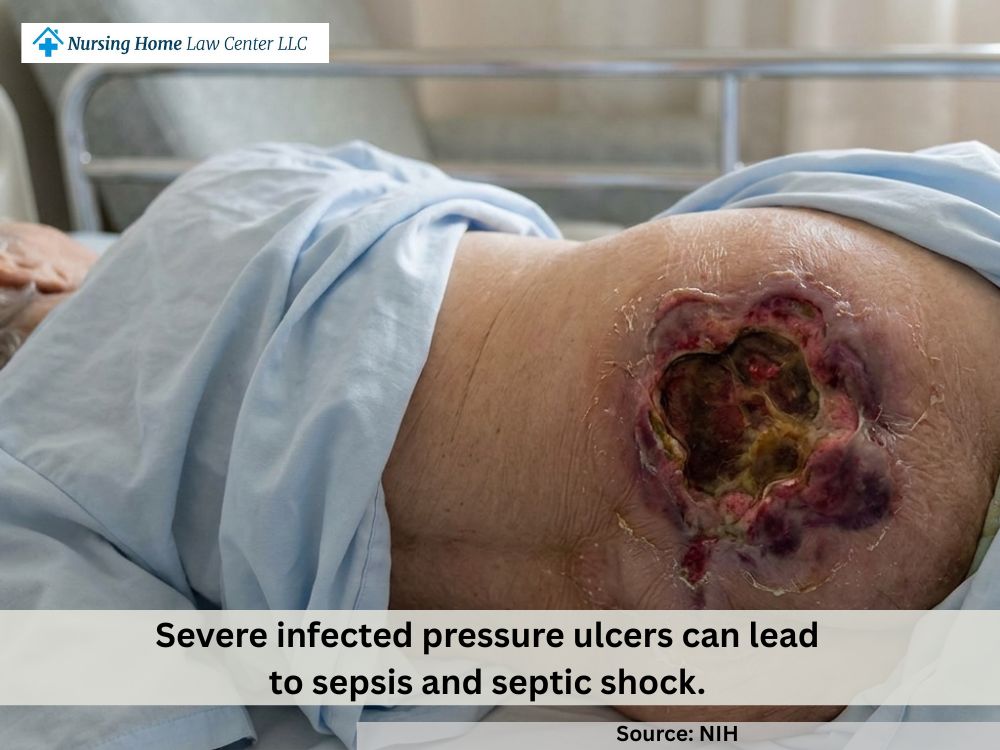
Bed sores, also called pressure ulcers or decubitus ulcers, are wounds caused by prolonged pressure on the skin and underlying tissue. They usually develop when a person is unable to move enough to relieve pressure, especially over areas where they commonly occur, such as the heels, hips, tailbone, and elbows. In nursing home residents, they are often a sign that basic repositioning, skin monitoring, and daily care were not handled properly.
Pressure sores vary in severity.
During a stage 1 pressure sore, the skin’s outer layer will develop non-blanchable redness, meaning it does not turn white when pressed. The affected skin is still intact and may feel warm; more severe pressure ulcers may leave the skin purple or blue, and this early stage is more difficult to diagnose in people with darker skin.
Stage 2 decubitus ulcers will start to affect the integrity of the skin. The skin has partial thickness loss, which manifests as a partially open wound. These pressure injuries look like abrasions or blisters in the affected area. The skin itself will be discolored, and the surrounding skin will be painful.
Stage 3 pressure ulcers involve a lot of dead tissue, which means skin thickness loss is occurring. The sore will look like a crater, and the edges of the sore may have dark patches of dead tissue. There may also be necrosis in the subcutaneous tissue, which means the deep wound penetrates the fat layer.
Stage 4 pressure injuries involve full-thickness tissue loss, exposing bones, such as shoulder blades, tendons, or muscle tissue. The skin has been completely lost, creating serious risks of bacterial infection that can lead to death.
A bedsore becomes dangerous when the wound stops being a surface injury and turns into a systemic one. The process usually starts with skin breakdown, which creates an opening for bacteria to enter the tissue. From there, the bedsore infection can spread deeper into the muscle or bone, then move into the bloodstream. Once that happens, the resident may develop sepsis, then septic shock, followed by organ failure, and ultimately death.
A bedsore may be becoming life-threatening when the wound starts showing signs of serious infection or the resident begins declining more broadly. Signs can include:
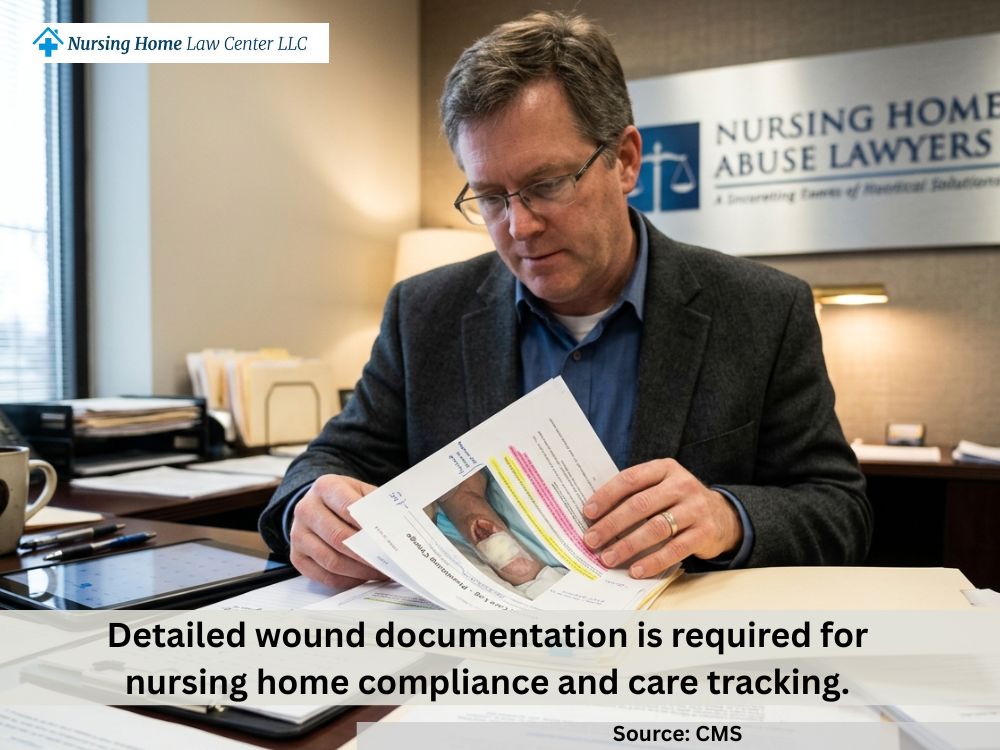
Pressure ulcers are caused by sustained pressure on the skin and underlying tissue, usually when a person is unable to move enough to relieve that pressure. Friction, shear, moisture, poor nutrition, dehydration, and reduced blood supply can make the damage worse. In nursing home residents, bed sores often develop when health care providers fail to reposition the resident, monitor the fragile skin, manage incontinence, or respond to early signs. Sadly, it is estimated that 11% of nursing home residents have pressure injuries. (CDC)
Skin ulcers commonly develop in areas where bone and skin are in constant contact with a surface, such as:
Nursing home residents who are at a heightened risk of developing bedsores are bedridden patients, those who are immobile, or dependent on a wheelchair, especially if they need staff help to reposition. Risk also rises with advanced age, spinal cord injury, poor blood flow, limited oxygenation, kidney disease, malnutrition, dehydration, and other conditions that slow healing or weaken the body’s ability to fight infection.
To help prevent bedsores, nursing home staff should:
Pressure sores can and should be treated as early as possible, before a minor pressure spot turns into a deep wound or a life-threatening infection, including bone infection, joint infection, or worse. Bedsore treatment includes:
Fatal bedsores often point to neglect because they are usually tied to failures in basic care. With proper care, bedsores are preventable injuries. Bedsores in nursing homes often develop when staff fail to reposition residents, neglect nutritional needs, fail to keep the skin clean and dry, or fail to monitor and treat bedsores.
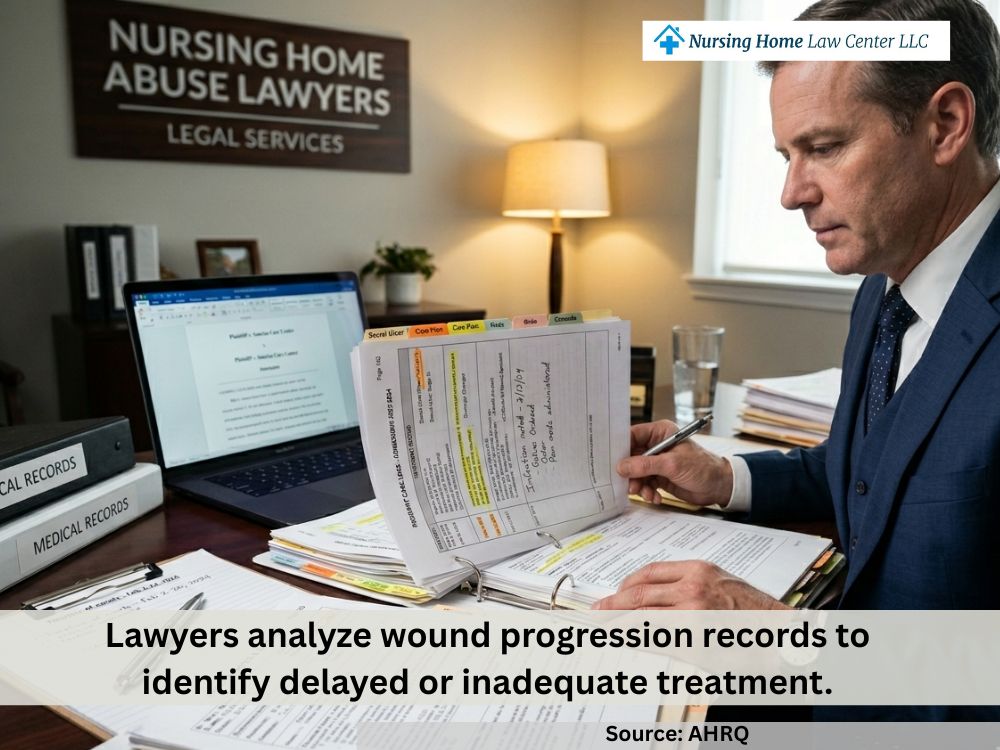
That is why a fatal bedsore case usually raises a larger negligence question. Our attorneys are looking at whether the home missed skin assessments, delayed wound care, ignored hydration or nutrition problems, failed to offload pressure, or waited too long to send the resident out for proper treatment after the ulcer became infected. We’re also looking at systemic issues such as understaffing, which is often where the pattern starts.
The facility may be held liable if a nursing home resident dies after they were known to be at risk, the ulcer was preventable, and the staff still let the wound deepen and get infected.
The evidence we use to show the resident died from bedsore complications and not simply with a bed sore includes:
Families may be eligible to recover the following types of compensation:

At the Nursing Home Law Center, we have represented many nursing home residents who have suffered from pressure ulcers and sores. Our nursing home abuse lawyers will investigate your case, protect your rights, assess damages, gather compelling evidence, and even represent you in court if necessary.
The sooner you seek legal advice regarding the bedsore, the sooner we can take action that could potentially save a life. We will also help you seek justice if you have already suffered due to the injury.
Call the Nursing Home Law Center today at 800-926-7565 or complete the online form to request a free consultation.
According to Law.com‘s VerdictSearch, payouts in fatal nursing home bedsore cases range from $55,169 to $114,000,000. The average payout is $5,800,570, while the median recovery is $1,208,740.
Several factors can influence the value of a claim, including:
The timeframe to file a nursing home abuse claim varies by state, typically ranging from one to three years from the date of injury or discovery. Missing this deadline could mean losing the right to seek compensation, so acting quickly is crucial.
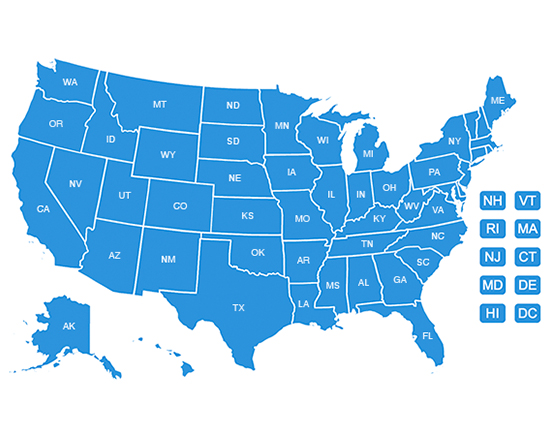
Nursing home abuse lawsuits must be pursued according to the laws set forth by the state where the facility is located. In this section, our attorneys have compiled the relevant laws, regulations and local organizations for each state so you can get an idea of how the law impacts your situation. Should you decide to move forward with a case, you will also find information about locating an experienced attorney who can assist your family.