
Experienced Attorneys Protecting the Rights of the Neglected and Abused
The Nursing Home Law Center is committed to providing the legal resources necessary to hold negligent facilities accountable.

Abuse or neglect is typically proven by documenting what occurred, showing what the facility should have done, establishing the failure of care, and connecting that failure to the resident’s injury or harm. Exact legal standards for proving abuse and neglect vary by state.
If you suspect abuse or neglect of a loved one or family member, our assisted living abuse and neglect lawyers can explain your legal rights. Contact us for a free consultation.
In general, a plaintiff must prove that the facility failed to uphold its duty of care to the resident. Civil claims generally turn on four factors, though each state has specific statutory tests. The general factors that a plaintiff must prove include:
Before gathering documentation, ensure the person is not in immediate danger; call 911 if you suspect that they may be at risk. Next, document evidence of abuse with detailed logs and physical documentation, including:
A written log of dates, times, observations, and staff responses can also establish what the facility said and when incidents were reported.
Physical abuse includes hitting, slapping, or pushing residents. Beyond documenting physical injuries, you may establish this through witness statements, incident reports, or surveillance footage.
Sexual abuse is any non-consensual sexual contact with residents, which may be established through forensic exams if possible, witness testimony, or mental health evaluations. In some cases, residents are sexually exploited, and there may be cell phone records, pictures, or video evidence of the inappropriate conduct.
Emotional abuse can be difficult to prove, as it does not leave physical injuries; instead, emotional abuse causes fear or distress through verbal mistreatment. To prove emotional abuse, family members can gather reports from other residents, staff members, or visitors who may have seen the abusive behavior.
Financial exploitation involves misuse of an elderly person’s funds for personal gain. If families suspect financial exploitation, they can collect and review financial documents that may show unusual account activity.
Neglect occurs when long-term care facilities fail to provide necessary food, shelter, medical care, and assistance with activities of daily living. This may be proven through medical exams, such as proving that the person has a urinary tract infection caused by negligent catheter use or bed sores from prolonged time in the same position.
The Department of Justice identifies certain signs as indicative of potential abuse. These can include:
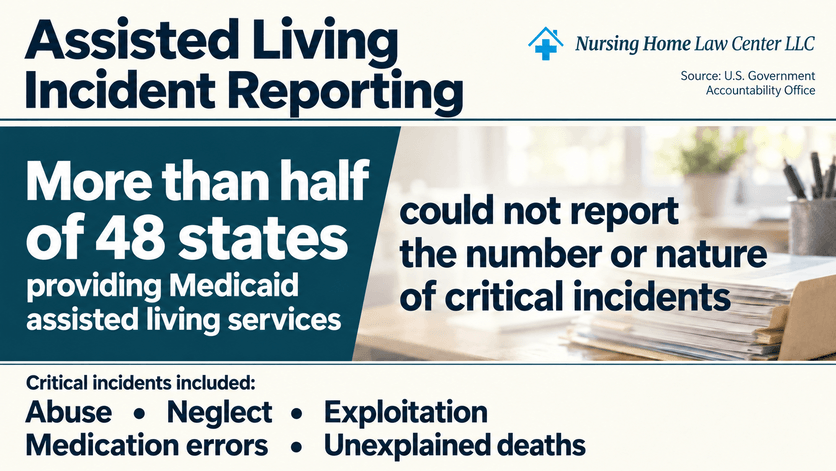
A GAO review found that more than half of the 48 states providing Medicaid assisted living services could not report the number or nature of critical incidents occurring in assisted living facilities.
Prompt action is crucial to proving abuse or neglect in assisted living facilities. Follow these steps to ensure that the abuse or neglect is properly documented.
The state licensing and regulatory agencies that are involved in investigations depend on the state’s assisted living facility regulations. Facilities are often required by law to report suspicions of abuse or neglect. Depending on the type of harm, they may report it to law enforcement, Adult Protective Services, or the state licensing agency.
Local law enforcement may investigate if they suspect a crime in the facility. Adult Protective Services (APS) investigates abuse or neglect of the most vulnerable members of the community, including disabled and elderly individuals who cannot advocate for themselves. State agencies usually must investigate potential violations of state regulations.
Depending on the type of harm, other investigative agencies could include the state department of health and human services, the Attorney General’s Office, the Office of Inspector General, or the state Medicaid authority.
Every state has an Ombudsman Program to assist residents in assisted living facilities, nursing homes, and other long-term care facilities. However, ombudsmen do not formally substantiate abuse. They may refer families to other agencies or help document the harm.
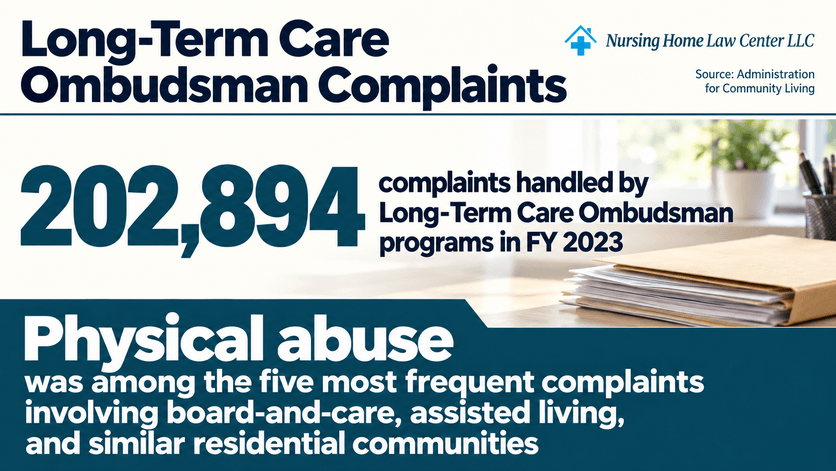
In fiscal year 2023, Long-Term Care Ombudsman programs handled 202,894 complaints, and physical abuse was among the five most frequent complaints involving board-and-care, assisted living, and similar residential communities.

Through litigation, attorneys can request evidence that may not be available to the family. This can include:
Attorneys can also interview witnesses, such as staff members, residents, and visitors, who may be able to substantiate a claim. For example, in cases of neglect resulting from inadequate staffing and poor training, employees may explain what the training process was like and how background checks were conducted.
Nursing home abuse cases often require expert testimony. These provide an unbiased professional opinion on the harm caused and its potential repercussions for the resident, like health complications from neglect. Some states require qualified nurse experts to support negligence claims or may require an affidavit of merit for certain abuse claims. This information can help us identify liable parties, then negotiate for compensation.
Nursing Home Law Center is committed to seeking justice for assisted living facility residents and their families. Our team has over 100 years of combined experience investigating potential abuse and neglect, collecting evidence like medical reports, and securing settlements.
Our firm handles qualifying cases on a contingency-fee basis, meaning you pay no legal fees unless we secure compensation. Contact us for a free initial case review to better understand your legal rights.