
Experienced Attorneys Protecting the Rights of the Neglected and Abused
The Nursing Home Law Center is committed to providing the legal resources necessary to hold negligent facilities accountable.

Assisted living facilities are not built or licensed to function as full skilled nursing facilities. Still, a lower level of care is not a free pass. Many of these cases turn on a hard, simple question: should the resident have been there at all, or should the facility have acted once it became clear the placement was no longer safe? If an elderly loved one has suffered injuries in such an institution, an assisted living abuse lawyer from Nursing Home Law Center can help you establish liability and seek justice. Contact us for a free consultation.
Assisted living is not a hospital nor a nursing home. Even so, that distinction does not erase duty. These facilities still have to provide the level of supervision, assistance, and protection they promise residents and families.
A facility cannot avoid liability by saying the resident needed more care than assisted living usually provides. In fact, that argument often makes the case worse. If staff knew the resident was falling, wandering, declining, missing medications, losing weight, or otherwise becoming unsafe in that setting, they had to respond.
The facility should reassess the resident’s condition, revise the service plan, increase supervision where appropriate, and decide whether the placement is still workable. Once the resident’s needs outgrow what the facility can safely handle, transfer or discharge may become necessary.
The legal problem starts when none of that happens. The resident stays. The risks keep mounting. Then comes the fracture, the elopement, the dehydration, the untreated infection, the avoidable death. In cases like that, negligence is obvious as the warning signs were already there, and an assisted living abuse attorney from our team can help you prove it.
These are the categories our assisted living abuse law firm sees most often, along with the patterns behind them.
Physical elder abuse and neglect:
Medical neglect:
Supervisory neglect:
Emotional or psychological elder abuse:
Financial elder abuse and exploitation:
Resident wandering and elopement:
Placement-related negligence:
Our assisted living abuse lawyers find that certain injuries and outcomes tend to signal serious breakdowns in care. These include:
Residents of assisted living facilities have the following rights:
If you or a loved one has faced abuse in a care facility of any type, you have legal options. Contrast us and seek legal representation from an assisted living neglect lawyer.
In our experience, a valid assisted living abuse lawsuit usually comes down to four elements: duty, breach, causation, and damages.
The facility must have owed the resident a duty of care. That duty may arise from state law, licensing rules, the residency agreement, or the basic obligation to provide reasonable supervision and services consistent with the resident’s condition.
Breach means the facility failed to meet that duty. In these cases, that often involves inadequate supervision, failure to reassess a resident after a clear decline, medication mistakes, neglect of obvious medical needs, or keeping someone in assisted living after it became unsafe to do so.
Causation is where many cases either strengthen or weaken. It is not enough to show that the facility was operating badly in a general sense. Our assisted living facility neglect attorneys have to connect the failure to the harm. For example, if a resident was repeatedly falling and the facility did nothing, then a later fracture may not look accidental in the legal sense. If staff ignored dehydration, infection, or wandering risk and the resident was later hospitalized or seriously injured, that link starts to matter.
Damages are the final piece. A troubling incident without meaningful harm may still point to poor care or a licensing problem, but a strong civil claim usually requires measurable injury. That may include hospitalization, fractures, head trauma, serious infection, weight loss, pressure injuries, emotional harm, transfer to a higher level of care, or wrongful death.
An assisted living accident attorney from our team can help you understand whether duty, breach, causation, and damages all line up, and if you’re looking at a viable lawsuit.
An assisted living facility abuse lawyer can help victims and their loved ones three categories of damages in civil lawsuits:
Our assisted living facility abuse lawyers look at the following evidence:

When you want to file an abuse and neglect lawsuit, you want to ensure that you select the right nursing home abuse lawyers. That’s where the Nursing Home Law Center comes in. Here’s why we’re the right choice:
Our law firm has extensive experience handling elder abuse and neglect cases; we’ve successfully represented victims and their families for years. Our team understands assisted living facility regulations, elder law, and personal injury claims. With access to investigators and medical experts, our law firm is well-equipped to guide you through the legal process.
We approach every case with sensitivity and care, recognizing the challenges victims and their families face. Protecting your privacy and maintaining confidentiality are priorities for us. Abuse and neglect are unacceptable, and we are committed to standing by your side and fighting for the justice you deserve.
Legal proceedings against an assisted living facility can feel overwhelming, but our law firm strives to keep you informed and empowered throughout the process. From the first consultation to the resolution, we will explain your options clearly and work to achieve a fair outcome.
Abuse and neglect are never acceptable in any situation, and you deserve legal representation that will fight for you every step of the way.
The amount of time you have to file a lawsuit, known as the statute of limitations, varies by state. Many states provide a window of 1 to 3 years, while others may allow up to 6 years.
If the abuse or neglect wasn’t immediately discovered, most states allow additional time to file based on when the issue was actually discovered. If abuse led to a death, there are often separate deadlines for filing claims.
Delaying action could result in the loss of your legal right to pursue justice and compensation for the harm suffered, so consult an assisted living accident lawyer as soon as possible.
According to Law.com‘s VerdictSearch, payouts in assisted living abuse cases range from $120,000 to $12,322,920. The average payout is about $2,474,685, while the median recovery is approximately $762,500.
Several factors can influence the payout in assisted living abuse cases, including:
$12,322,920 Verdict – Elder Neglect, Bedsores, and Wrongful Death
Anuncia Viana, a 96-year-old woman with late-stage Alzheimer’s, was transferred to an unlicensed assisted living home where she developed pressure sores, malnutrition, dehydration, and an infected feeding tube. Despite warnings from medical staff, the operator, Rosa Mendoza, concealed her role as a caregiver to continue collecting Viana’s Social Security payments.
Viana’s condition worsened until she was hospitalized and later died of sepsis from untreated bedsores. Her estate alleged gross neglect and elder abuse, seeking compensatory and punitive damages. The jury awarded over $12.3 million, including $12 million in punitive damages, to hold the operator accountable for Viana’s suffering and wrongful death.
$11,000,000 Verdict – Assisted Living Neglect, Foreign Object Ingestion, and Death
Earl Scherrer, a 36-year-old man with a traumatic brain injury, died after ingesting foreign objects while under the care of an assisted living facility. His widow alleged that the facility knew of his history of swallowing unsafe items but failed to create a proper care plan or monitor his behavior. Medical experts testified that the obstruction caused severe pain and contributed to his death.
Evidence also revealed false records and missing caregivers. The jury found the facility liable for abuse and neglect, awarding $11 million in damages, later limited to a high-low agreement. The award included compensation for wrongful death, punitive damages, and loss of consortium for Scherrer’s widow.

Residents of assisted living homes deserve to feel safe and cared for in their care facilities. If this is not the case and you or your loved ones have been the victim of assisted living abuse, you have options.
At Nursing Home Law Center, we can help you navigate the legal process, treating you and your case with the utmost respect. Contact us to schedule your free consultation today. Our assisted living facility neglect lawyers can help you seek justice and recover compensation.
The main difference between assisted living and nursing facilities is that the first is generally for people who need help with daily activities such as meals, medication reminders, bathing, or dressing, while the second are for those who need a higher level of medical care.
Deciding whether a resident should transition from assisted living to a nursing facility is usually made through a mix of facility assessment, physician input, and family involvement. The assisted living facility should evaluate whether the resident’s condition, supervision needs, and medical needs still fit what the setting can safely handle. A treating doctor may weigh in, and families are often involved, but the facility cannot ignore obvious signs that the resident now needs a higher level of care.
Yes. An assisted living facility can be sued when it fails to meet its duty of care, and that failure causes injury.
In many cases, the core claim is negligence. That means the assisted living facility owed a duty of care, failed to meet it, and caused harm. Some cases also support a breach of contract claim when the facility failed to provide the services or protections promised in the residency agreement. If the abuse or neglect led to the resident’s death, surviving family members or the estate may also have a wrongful death claim.
If the resident is mentally competent, they can usually file on their own behalf. If the resident is alive but cannot act because of cognitive or physical impairment, a valid power of attorney may be able to step in. If the resident has passed away, the claim may need to be brought by the personal representative, executor, or another legally authorized estate representative. In some situations, family members such as a spouse, adult child, or other next of kin may also have standing, especially in wrongful death matters or where state law allows them to act on the resident’s behalf.
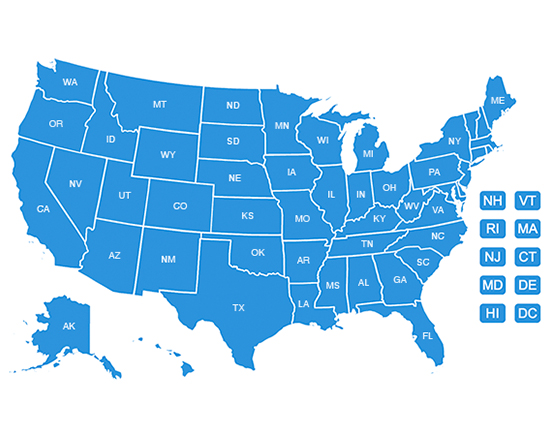
Nursing home abuse lawsuits must be pursued according to the laws set forth by the state where the facility is located. In this section, our attorneys have compiled the relevant laws, regulations and local organizations for each state so you can get an idea of how the law impacts your situation. Should you decide to move forward with a case, you will also find information about locating an experienced attorney who can assist your family.