
Experienced Attorneys Protecting the Rights of the Neglected and Abused
The Nursing Home Law Center is committed to providing the legal resources necessary to hold negligent facilities accountable.

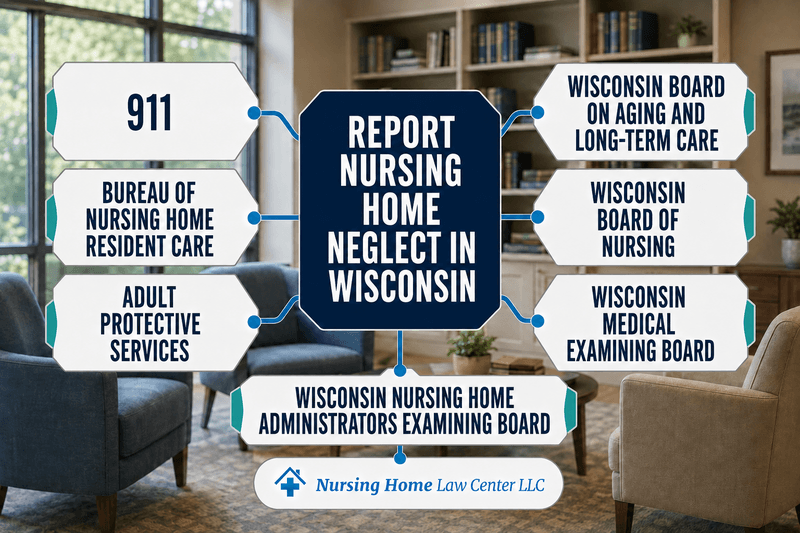
Learning how to report nursing home abuse in Wisconsin begins with protecting the resident. Call 911 if a loved one faces immediate danger, then contact the Wisconsin agency responsible for the type of abuse, neglect, unsafe care, financial exploitation, or professional misconduct involved.
Serious concerns should be reported outside the facility. Our firm can help family members preserve evidence and determine whether a civil claim may be available.
Families may use several Wisconsin channels for reporting abuse in a nursing facility. The correct contact depends on safety, the suspected conduct, and whether the concern involves a licensed provider, Medicaid, resident rights, or a crime.
Call 911 if the resident is in immediate danger or needs urgent medical care. Police should also receive reports involving physical abuse, sexual assault, threats, theft, intentional harm, unlawful physical restraints, or suspicious injury inside the nursing home. Save the report number and officers’ names. Emergency action comes before an administrative complaint.
The Wisconsin Department of Health Services Division of Quality Assurance (DQA) regulates nursing homes and investigates complaints concerning quality of care and life. Families can complain about abuse, neglect, caregiver misconduct, poor staffing, medication errors, falls, bed sores, infections, unsafe conditions, transfers, or discharges.
Call 800-642-6552 or use the official online Complaint Intake Survey. Complaints may be anonymous. The DHS site explains that the Department of Health Services prioritizes reports by severity and directs nursing-home complaints to the proper regional office. Its complaint page also lists 201 E. Washington Ave., Room E300, Madison, Wisconsin 53703 as its address.
Members of the public may also report abuse, neglect, or misappropriation by a facility employee or contractor anonymously. Regulated health care facilities use the Misconduct Reporting System. Wisconsin nursing homes must report abuse or serious bodily injury allegations to the Division of Quality Assurance within two hours and other covered allegations within 24 hours.
Wisconsin Adult Protective Services receives reports of elder abuse, neglect, self-neglect, and financial exploitation through county agencies. Contact the APS office in the county where the resident lives. APS serves adults aged 60 and older and qualifying adults at risk aged 18 through 59.
The Wisconsin elder abuse hotline is 1-833-586-0107. An online elder abuse report is also available. Anyone may file a complaint, and Wisconsin law protects the confidentiality of the reporter’s identity. APS may investigate, assess danger, and arrange protective services for victims.
The Wisconsin Long-Term Care Ombudsman Program protects the rights of nursing home residents aged 60 and older. Contact an ombudsman for discharge threats, visitation restrictions, retaliation, care-planning disputes, poor communication, emotional abuse, or unresolved concerns involving nursing home staff.
Call 800-815-0015, email BOALTC@wisconsin.gov, or use the program’s online complaint form. Complaints may be anonymous, and interactions are confidential. The ombudsman is an advocate, rather than an emergency responder or regulator. Safety threats belong with 911, APS, or DQA.
File a complaint for suspected Medicaid fraud, false billing, services never provided, or misuse of public funds to the Wisconsin DHS Office of Inspector General at 877-865-3432 or through the online fraud portal. OIG accepts anonymous reports.
The Wisconsin Department of Justice Medicaid Fraud Control and Elder Abuse Unit investigates Medicaid provider fraud and abuse, neglect, or financial misappropriation involving residents of nursing homes and other board-and-care facilities. Call 800-488-3780 for provider fraud, or email WIMedicaidFraud@doj.state.wi.us. Facility abuse may also be reported through the Wisconsin elder abuse hotline.
The Wisconsin Department of Safety and Professional Services complaint portal accepts complaints about licensed health professionals. Use it when an individual credential holder may be responsible for unsafe or unethical conduct. DSPS can be reached at 608-266-2112 or 877-617-1565.
The Wisconsin Board of Nursing addresses misconduct by registered nurses, practical nurses, and other nursing licensees. Report unsafe practice, falsified records, impairment, abandonment, or conduct outside a nurse’s scope.
Use the Wisconsin Medical Examining Board for concerns about a physician’s diagnosis, treatment, consent, prescribing, or delayed care. DQA remains the contact for facility-wide failures.
The Wisconsin Nursing Home Administrators Examining Board may review an administrator’s failures involving resident protection, compliance, supervision, or repeated warning signs.
To report nursing home abuse in Wisconsin, ensure the resident’s safety and document the concern. Proof is not required. Follow these steps:
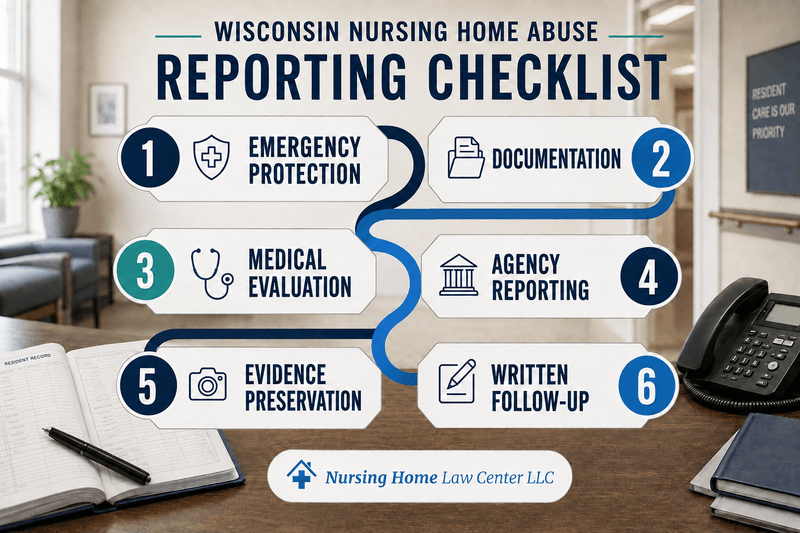
When filing a complaint, give the agency enough detail to identify the resident, facility, risk, and alleged caregiver:
Separate your observations from statements made by others.
Recognizing common signs of abuse and neglect early can prevent further harm. Nursing home abuse involves intentional conduct, while neglect may occur through a failure to meet care standards without an intent to injure.
Signs of nursing home abuse include:
Wis. Stat. § 940.295, Abuse and Neglect of Patients and Residents statute criminalizes intentional, reckless, and certain negligent abuse or neglect by people responsible for patients or residents.
DQA screens complaints by risk and may inspect the facility, interview residents and staff, review medical records, or issue citations. APS may assess safety and offer services. Police, DOJ, OIG, or a licensing board may conduct a separate investigation.
A government report can document abuse but cannot recover damages. If retaliation follows, report discharge threats, reduced care, isolation, intimidation, restricted visits, or refusal to communicate immediately.
Yes, several channels permit anonymous reporting of nursing home abuse. DQA accepts anonymous nursing home complaints and public caregiver-misconduct reports. APS reports can be anonymous, and reporter identity is legally protected. Ombudsman complaints and OIG fraud tips may also be anonymous. Contact details help investigators clarify facts. Report any fear of retaliation.
The abused person or their family may contact facility leadership, but serious abuse should also go to an outside agency. Document delayed care, changed explanations, missing records, discouraged reporting, and any failure to protect the resident after concerns were raised.
A report focuses on safety, compliance, discipline, or criminal conduct. A nursing home abuse lawsuit seeks to prove liability and obtain compensation for medical expenses, pain, emotional harm, relocation costs, financial loss, or death. A Wisconsin nursing home abuse settlement may resolve a civil claim without trial.

Speak with an attorney when:
Wisconsin nursing home abuse cases can involve several legal and evidence issues. Early review can preserve the claim.
Our experienced attorneys can help families pursue accountability by:
Evidence may include hospital records, care plans, incident and wound reports, medication charts, staffing schedules, call-light logs, witness statements, communications, inspection citations, billing records, and an autopsy report in case of a death.
Our nursing home abuse attorneys can review what happened, explain Wisconsin reporting options, and pursue accountability when a facility caused injury. The consultation is free and confidential. We work on a contingency fee, so there are no upfront attorney fees, and payment is due only if compensation is recovered.
Contact us today to learn about your legal options.