

How to Anonymously Report a Nursing Home


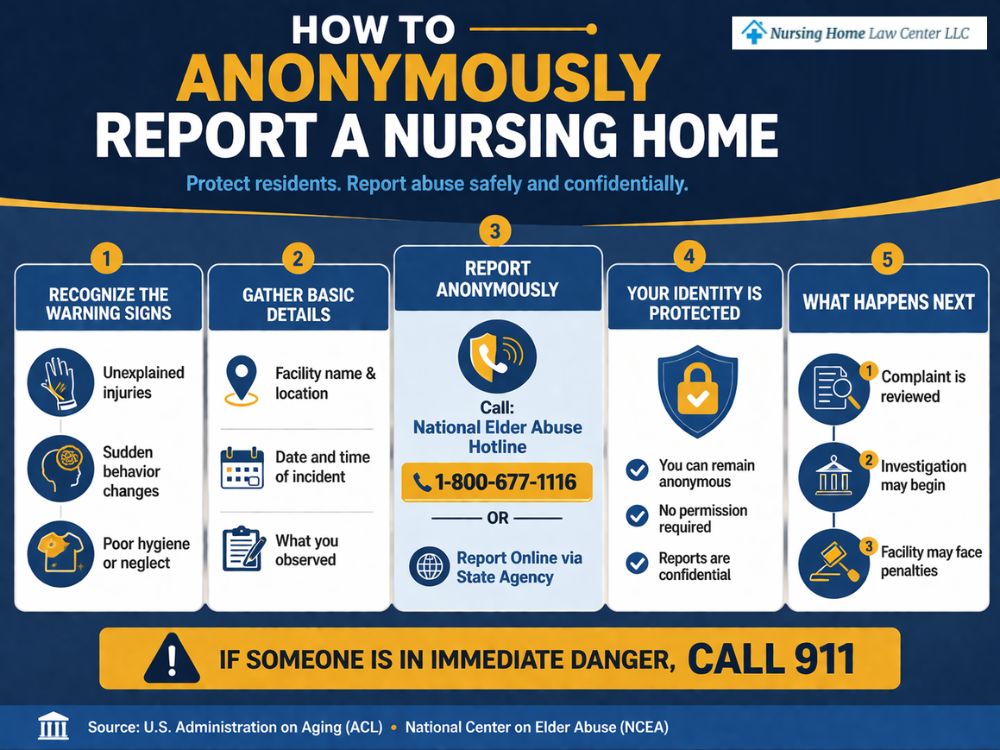
A nursing home can be reported anonymously to the state health or licensing agency, the long-term care ombudsman, Adult Protective Services, and 911 if the resident is in immediate danger.
Under 42 C.F.R. § 483.10(j), nursing home residents have the right to voice grievances to the facility or another agency without discrimination or reprisal, and facilities must tell residents how to file complaints, including anonymously, with outside entities.
If your loved one has been abused, neglected, or placed at risk in a nursing home, our nursing home abuse and neglect lawyers can help you identify the right reporting path, preserve evidence, and determine whether the facts support a civil claim.
Can You Anonymously Report a Nursing Home or Health Care Facility?
You can legally and anonymously report a nursing home, assisted living facility, or other health care facility. Many state and federal agencies encourage anonymous reporting to ensure that abuse, neglect, or unsafe conditions don’t go unaddressed. Still, people often hesitate, fearing retaliation, losing their jobs, or creating tension within their families.
Anonymity allows whistleblowers to protect vulnerable residents while reducing personal risk. Whether you’re a staff member, visitor, or concerned relative, you can file a complaint confidentially and help hold the facility accountable under state and federal regulations.
Anonymous vs. Confidential Reporting
Anonymous reporting means you do not provide your name. Confidential reporting means you give your name to the agency, but ask that it not be shared with the nursing home. In some cases, agencies can investigate more effectively if they are able to contact you for follow-up or clarification, even if your identity is kept confidential from the facility.
Where to File a Complaint Against a Nursing Home or Assisted Living Facility
Knowing the appropriate authorities to send an anonymous report depends on the nature of the abuse and the type of facility involved. Whether you’re reporting physical abuse, neglect, financial exploitation, unsafe living conditions, or have other complaints, different agencies handle specific types of complaints.
Many allow anonymous or confidential reporting through toll-free hotlines or secure online complaint forms. If you’re a staff member, never use employer-provided phones, computers, or email accounts when filing—use your personal devices to help ensure your identity remains protected.
State Department of Health or Public Health Agency
Your state’s Department of Health or Public Health Agency regulates nursing homes and health care facilities. They investigate complaints involving poor hygiene, missed medications, unsafe staffing ratios, or facility violations. Each state has its own hotline and online portal for filing. You can find your agency via the CDC’s state health department directory.
Include as much detail as possible—even if reporting anonymously—such as the name of the negligent facility, dates of concern, and the nature of the abuse or neglect.
Long-Term Care Ombudsman
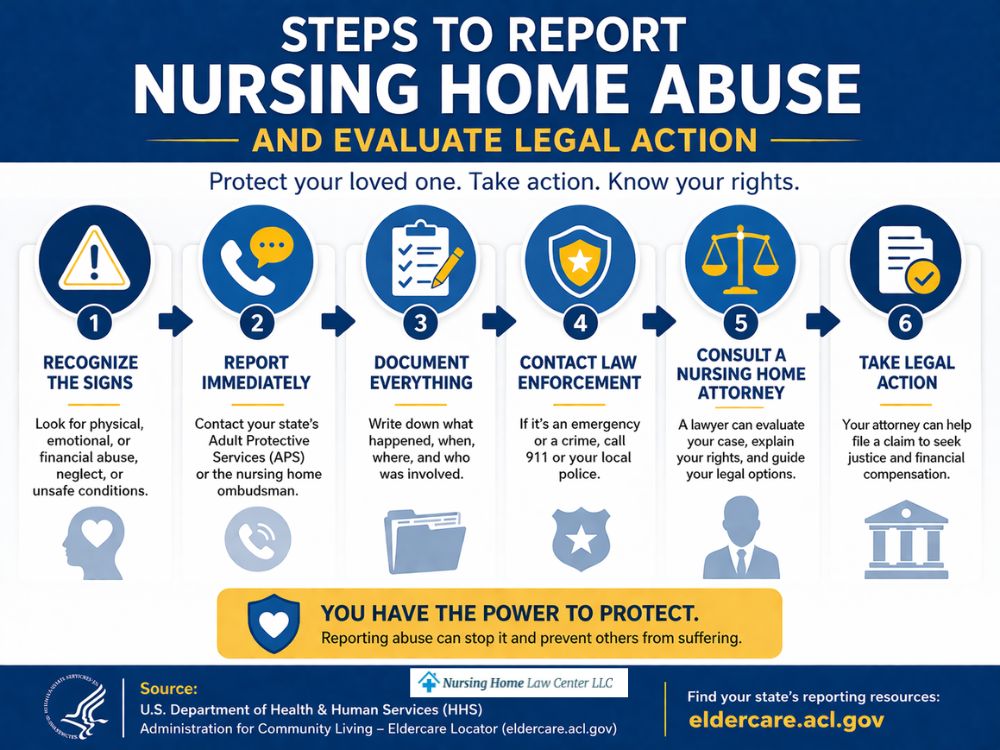
A Long-Term Care Ombudsman advocates for residents in nursing homes and assisted living health care facilities. They receive and help resolve complaints, as well as address safety, rights, and care issues in long-term care settings. If you observe poor care, neglect, abuse, or facility misconduct, an ombudsman can help investigate while protecting the resident’s rights.
You can report concerns confidentially or anonymously, and they will not disclose your name without your permission. To get connected with your local ombudsman, call 1-800-677-1116 or use the Eldercare Locator.
Adult Protective Services (APS)
Adult Protective Services (APS) handles reports of elder abuse (including psychological abuse), neglect, or exploitation in non-licensed settings, such as private homes, group homes, or assisted living health care facilities. If you’re concerned about a vulnerable adult receiving care outside a regulated nursing facility, APS can step in to investigate and arrange services.
To report nursing home abuse anonymously, visit the National Adult Protective Services Association to find your state’s contact. Reports can be submitted online or by phone and will remain confidential.
911 or Local Law Enforcement if Immediate Danger
If a resident is facing immediate harm, such as physical abuse, assault, or severe neglect, call 911 or your local police department. Officers can remove the resident from danger and initiate a criminal investigation. You can report anonymously, especially in high-risk situations. For non-emergencies, use your local department’s non-emergency line to file a report.
Be ready to give details about the facility, the incident, and those involved—even if you don’t disclose your name.
U.S. Department of Health and Human Services (HHS) – Office of Inspector General (OIG)
The Office of Inspector General (OIG) investigates fraud, waste, and abuse related to federally funded health care programs, including Medicare and Medicaid services in nursing homes.
If you suspect overbilling, false documentation, or federal care violations, you can file a complaint online at the OIG fraud reporting portal or by calling 1-800-HHS-TIPS (1-800-447-8477). You may remain anonymous, and you’re encouraged to include the facility’s name, address, and any specific concerns about the suspected abuse or misconduct.
Centers for Medicare & Medicaid Services (CMS)
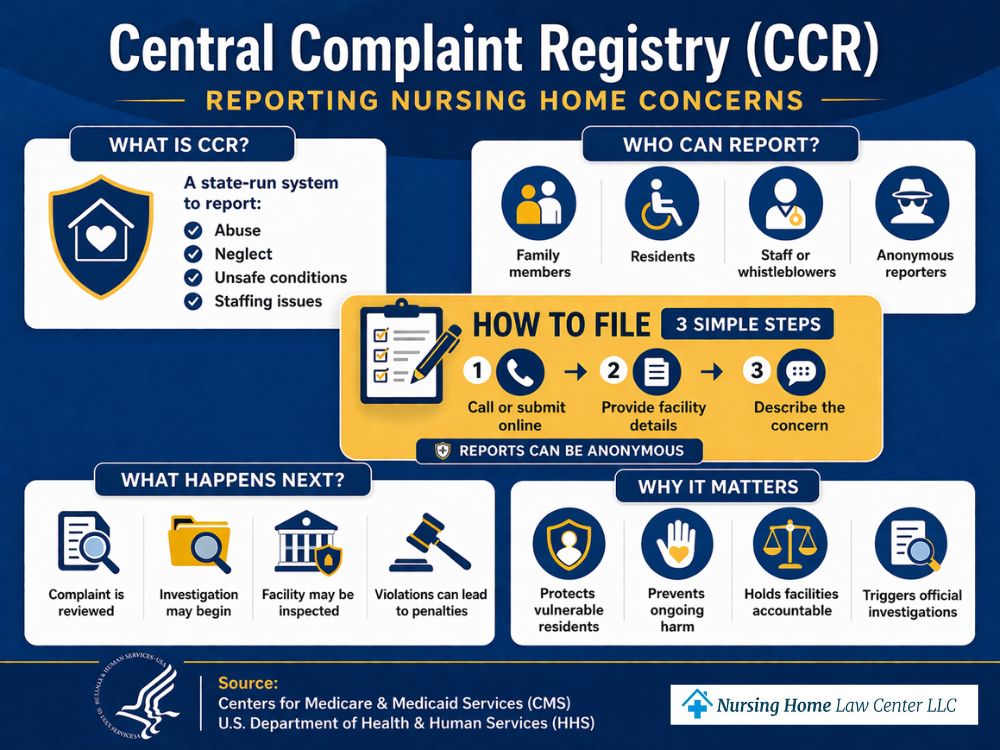
CMS oversees long-term care facilities that receive Medicare or Medicaid funding. Although CMS does not accept direct complaints, it partners with state survey agencies to investigate health and safety violations. You can file a report anonymously through your state agency by using the CMS state complaint contact list.
These reports may trigger an unannounced inspection or corrective action. Provide details like the nursing home’s name, location, and description of the issue, even without identifying yourself.
The Administration for Community Living (ACL) operates the Eldercare Locator, a nationwide resource connecting people with elder support services, including reporting options. If you’re unsure where to file or want guidance, call 1-800-677-1116 or visit eldercare.acl.gov. Operators will direct you to the proper agency in your state.
Calls are confidential, and you are not required to share your name. This is a helpful first step for those unfamiliar with the reporting process or dealing with concerns across state lines.
U.S. Department of Justice (DOJ) – Elder Justice Initiative
The DOJ’s Elder Justice Initiative focuses on protecting seniors from abuse, neglect, and financial exploitation, especially when criminal acts are involved. You can report suspected physical abuse, sexual assault, or financial crimes anonymously through this initiative.
Visit justice.gov/elderjustice for federal resources or call the National Elder Fraud Hotline at 1-833-FRAUD-11 (1-833-372-8311). The hotline is confidential and can connect you with state or federal agencies to begin an investigation without disclosing your identity.
State Licensing Board or Medicaid Fraud Unit
If the nursing home abuse involves a licensed health care professional, such as a nurse or administrator, report them to your state licensing board. For issues involving Medicaid billing fraud, contact your state Medicaid Fraud Control Unit (MFCU). Both agencies accept anonymous tips and can take disciplinary or criminal action.
Use the National Association of Medicaid Fraud Control Units directory to find the correct agency in your state. Be sure to provide the facility’s name and any relevant facts to help start the investigation.
Federal Trade Commission (FTC) – Identity Theft or Financial Abuse
The Federal Trade Commission (FTC) investigates financial abuse and identity theft, including cases involving stolen benefits, unauthorized charges, or scams targeting nursing home residents. If you suspect financial exploitation, you can report it anonymously at ReportFraud.ftc.gov.
The FTC shares reports with law enforcement or regulatory agencies as appropriate. Include details such as names (if known), the facility involved, and the type of financial harm. You don’t have to provide personal contact information when submitting a report.
What Information to Gather Before Filling Out the Anonymous Complaint Form
Before filing a complaint, it helps to gather as much specific information as you can. Even an anonymous report is usually stronger when it includes clear, concrete details. Try to collect:
- the resident’s name;
- the facility’s name;
- the dates and times of the incident or the pattern of concern;
- what you saw or heard;
- any injuries or noticeable changes in condition;
- the names of staff members, if known;
- any photos, videos, messages, or medical records you have;
- whether the problem is still happening or the resident is in ongoing danger.
When Should You Report Nursing Home Abuse Anonymously
Anonymous reporting is appropriate when you have reasonable concern about nursing home neglect but fear retaliation or personal consequences. For example:
- A staff member witnesses abuse but is afraid of losing their job;
- A family member sees unexplained bruises or notices a resident being isolated;
- A visitor overhears staff threatening or bullying a resident;
- A resident confides in someone but is too scared to report directly.
In any of these situations, anonymous reporting protects your identity while ensuring that concerns about resident safety and well-being are addressed.
Legal Protections for Anonymous Whistleblowers in Health Care Settings
Whistleblowers in health care settings, including nursing homes and assisted living facilities, are protected under federal and state laws. Most states have anti-retaliation provisions that protect individuals who report suspected abuse or neglect in good faith.
Federal laws like the False Claims Act protect those reporting Medicare or Medicaid fraud, while OSHA and HIPAA provide safeguards for health care workers raising concerns about safety or patient privacy.
Even if you choose to report anonymously, these laws are in place to defend your rights if your identity becomes known or if retaliation is attempted by the facility.
Legal Consequences and What Happens After Reporting Abuse
After a complaint is filed, the agency or office that receives it may decide whether the report falls within its authority and whether an investigation is needed. If it moves forward, investigators may:
- review records, including care notes, incident reports, medication records, and staffing documentation;
- inspect the facility and the conditions where the resident lives to determine whether multiple residents are experiencing nursing home abuse;
- interview staff, residents, and witnesses;
- assess staffing levels, supervision, and overall safety conditions;
- conduct unannounced inspections in some cases.
The exact process depends on the agency and the state, but the goal is always to determine whether the nursing home violated resident care or safety standards.
Who Can Report a Nursing Home Anonymously?
Anyone who suspects nursing home negligence can file an anonymous report. This includes:
- Staff members or caregivers who witness mistreatment;
- Family members or visitors concerned about a resident’s safety;
- Residents themselves or friends of residents who suspect something is wrong;
- Third parties, like volunteers, medical providers, or social services workers.
You don’t need to have direct proof—just reasonable concern. Any person can take action to protect residents in long-term care facilities when neglect occurs, and you have the right to remain anonymous while doing so.
Should You Ever Consider Reporting Elder Abuse Non-Anonymously?
While reporting anonymously helps protect your privacy, there are times when sharing your identity may strengthen the investigation. If you’re a direct witness or have detailed evidence, such as photos, written information, or firsthand accounts, investigators may be better able to act quickly and thoroughly if they can follow up with you.
In cases involving Medicare or Medicaid fraud, identifying yourself may also make you eligible for whistleblower compensation under federal laws. Consider the pros and cons carefully. If you have strong documentation and feel safe doing so, a non-anonymous report can make a bigger impact.

Secure Confidential Legal Support for Your Loved One
If you’re concerned about abuse, neglect, or fraud in a nursing home or care facility, you don’t have to face it alone. At Nursing Home Law Center, we offer free, confidential consultations—even if you’re simply looking for guidance on how to report abuse anonymously and what additional information to provide.
While reporting a nursing home is an important step, it is not always enough on its own. Our nursing home abuse attorney team can help identify the right reporting path, preserve records, photos, and witness information, and review whether the facts point to abuse, neglect, understaffing, or delayed medical care. We also look at whether the facility violated the resident’s legal protections under federal and state nursing home rules.
If your loved one was harmed, a nursing home abuse lawyer from our team can help you understand what happened and whether the facts support a civil lawsuit to recover damages such as medical expenses. We represent families nationwide and handle all cases on a contingency fee basis, meaning you pay no fees unless we win financial compensation for you. Whether you’re ready to take legal action or just want to understand your legal options, we’re here to help protect vulnerable residents and hold facilities accountable. Call our experienced attorneys at (800) 926–7565 to get started with the legal process.