
Experienced Attorneys Protecting the Rights of the Neglected and Abused
The Nursing Home Law Center is committed to providing the legal resources necessary to hold negligent facilities accountable.

Nursing home sepsis settlements may provide compensation when negligent care allows an infection to develop, worsen, or go untreated until a resident suffers sepsis. Cases can involve failures in infection prevention, wound or catheter care, monitoring, recognition of worsening symptoms, or timely medical intervention.
A nursing home sepsis lawyer from our team can review medical records and care plans to determine whether nursing home negligence caused the harm. If evidence shows the facility failed to provide timely medical treatment, your family may be able to file a lawsuit. Contact us for a free case evaluation.
According to reviewed case data published by VerdictSearch, the average nursing home sepsis settlement is $514,233. Settlements in sepsis claims can range anywhere from $20,000 to $900,000, depending on the severity of the harm and the strength of the evidence against the facility.
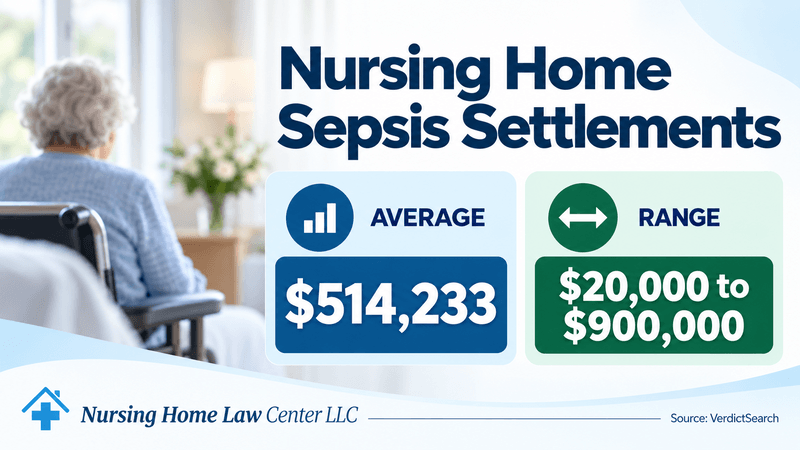
The value of a nursing home sepsis lawsuit depends heavily on how far the infection progressed before staff intervened.
Lower settlements typically involve residents who recovered from sepsis with prompt treatment and disease control, suffering minimal lasting harm or no permanent injury. Higher settlements usually involve severe neglect and serious complications resulting in septic shock, organ failure, or wrongful death, especially when medical records show the nursing home failed to catch early warning signs despite clear risk factors.
Settlement value also depends heavily on notice. Medical documentation showing that a resident had an untreated urinary tract infection, an infected wound, or other signs indicating the development of sepsis, and staff didn’t deliver proper medical care can significantly strengthen a claim. Nursing homes are expected to closely monitor residents with weakened immune systems or chronic health conditions, since they face a much higher risk of infection becoming a medical emergency.
The strength of available evidence plays a major role as well. Detailed medical data, nursing notes, staffing logs, and witness statements from other residents or staff members can help establish a clear timeline of neglect. Cases with well-documented delayed treatment or ignored warning signs tend to settle for more than cases with limited or incomplete records, whether resolved through litigation or out-of-court settlements.
State law also shapes settlement value. Some states cap damages in wrongful death or personal injury lawsuits, while others allow broader recovery for pain and suffering, medical bills, and funeral expenses.
Every case is different, and no settlement is guaranteed. An experienced nursing home sepsis lawyer can review your loved one’s records and care plan to estimate a realistic settlement value based on the specific facts of the case.
These cases show how nursing home sepsis lawsuits have been resolved across the country, involving untreated wounds, neglected infections, and delayed medical care. Each example reflects how the facts of a case, from the severity of the infection to the strength of the evidence, can shape the final settlement value.
A 43-year-old California resident was admitted for long-term care following a lung disease exacerbation. Staff never assessed him for pressure ulcer risk, and a wound on his buttocks progressed to a stage 3 pressure sore before it caused an MRSA infection and sepsis.
His mother, represented by San Bernardino nursing home abuse lawyers, brought a wrongful death claim, alleging the facility ignored documented redness, delayed treatment orders, and understaffed his care.
A 71-year-old Illinois facility resident was admitted for urinary tract infection treatment requiring catheterization. The nursing home failed to monitor or change his catheter bag for the duration of his stay.
The Cicero nursing home abuse lawyers representing his estate claimed that the nursing home failed to recognize the symptoms of UTI-caused sepsis that killed him. The estate also alleged that records were altered to show exams that never occurred.
An 82-year-old California resident was admitted for antibiotic therapy into a skilled nursing facility.
Her family, guided by Anaheim nursing home abuse lawyers, alleged the facility failed to assess her fluid needs or monitor her intake, leading to renal failure and sepsis. State health regulators issued a high-level citation over the facility’s failure to track her hydration.
A 71-year-old Illinois nursing home resident with Alzheimer’s was allegedly underfed and overmedicated by staff, leaving him bedbound for extended periods.
His family, represented by Chicago nursing home sepsis lawyers, alleged the resulting immobility caused bed sores that led to dehydration and sepsis, and ultimately his death.
A 74-year-old woman was admitted to a physical-rehabilitation facility after a stroke. Over her four-month stay, untreated pressure ulcers progressed to gangrene, osteomyelitis, and sepsis.
Her estate, working with New York City nursing home abuse lawyers, alleged negligence, including failure to reposition her regularly and monitor wound progression, in violation of state health law.
A 98-year-old nursing home resident with dementia suffered a head injury and later a broken femur in separate incidents. Placed in an immobilizer because she was too frail for surgery, she developed pneumonia, a pressure ulcer, and sepsis, and died shortly after.
The lawsuit, brought with New Jersey nursing home abuse lawyers, alleged negligent supervision and improper equipment use.
A 56-year-old Texas nursing home resident with multiple sclerosis was left unattended in a whirlpool bath as the water continued rising. She nearly drowned, suffering from aspiration and asphyxiation, and later developed bedsores that led osteomyelitis, which progressed to sepsis.
Her son, represented by Dallas nursing home abuse lawyers, alleged negligent supervision and faulty medical devices contributed to the incident.
An 87-year-old New York nursing home resident with dementia developed infected pressure ulcers within weeks of admission after staff failed to monitor her hydration and nutrition properly. The infection progressed to sepsis and death.
With the help of a New York nursing home abuse lawyer, her estate filed a lawsuit alleging the nursing home failed to provide proper care and never disclosed her declining condition. The facility agreed to adopt new wound care guidelines after the failure to disclose her condition was considered nursing home neglect.
An 83-year-old resident in a rehabilitation facility developed a tailbone bed sore after hip surgery that worsened into a stage 4 bone-deep wound within two weeks. She died from sepsis shortly after transfer to a hospital.
Her family, aided by Montgomery nursing home abuse lawyers, alleged negligence, and the facility’s own director admitted nurses should have sought medical consultation at the first signs of infection.
An elderly nursing home resident suffered from dehydration and pressure ulcers so severe that amputation was considered before her death.
Her estate, represented by Texas nursing home abuse lawyers, alleged months of visible neglect, including a failure to hospitalize her for dehydration sooner.
A 71-year-old New York care facility resident developed gangrene after improper treatment of an ingrown toenail. The infection advanced to sepsis and required an above-the-knee amputation before her death.
The estate’s counsel alleged staff delayed reporting that antibiotics weren’t working.
A 40-year-old resident of an Ohio developmental care facility with a known history of eating non-food items ingested a metal nut and a piece of shoe leather. This caused a bowel perforation and sepsis that led to his death.
His family, guided by Ohio nursing home abuse lawyers, alleged the facility failed to supervise him and prevent access to hazardous objects.
An 80-year-old nursing home resident was treated for a urinary tract infection, but lab results showing an advancing infection went unaddressed for over a week. He died from sepsis shortly after being discharged to hospice care.
With the California nursing home abuse attorney, his estate filed a lawsuit alleging the facility failed to train staff and respond promptly.
A 75-year-old South Carolina rehabilitation center resident developed bed sores that progressed to sepsis and death about a month later.
The Columbia nursing home abuse attorneys who led this sepsis lawsuit claimed the facility failed to reposition him regularly or monitor for skin breakdown.
Sepsis is the body’s extreme, life-threatening response to an infection. It can develop when an infection triggers a harmful systemic response that leads to tissue damage, organ dysfunction, septic shock, or death. In nursing home residents, infections that can progress to sepsis may begin in the urinary tract, lungs, skin, gastrointestinal tract, pressure wounds, or other sites.
Nursing home sepsis cases may involve delayed treatment of infections, inadequate wound or catheter care, poor infection-control practices, or failure to recognize significant changes in a resident’s condition. Inadequate nursing home staffing can also contribute when it interferes with monitoring, hygiene, wound care, or timely escalation to medical providers. Whether those failures amount to negligence depends on the resident’s condition, care plan, applicable standards, and the evidence in the individual case.
Sepsis can also progress in assisted living facilities, particularly when staff lack the training to identify infection risk factors or fail to escalate concerns to medical providers.
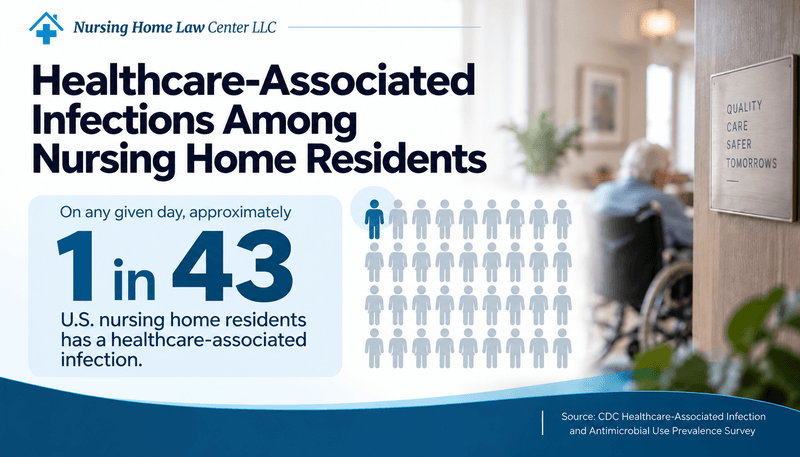
In a national U.S. emergency-department study, among nursing home residents with severe sepsis, 40% required ICU admission and 37% died in the hospital.

Several types of nursing home neglect can allow an infection to take hold and progress into sepsis. Below are the injuries most frequently tied to nursing home sepsis lawsuits.
Identifying sepsis early can mean the difference between recovery and a life-threatening sepsis emergency. Still, the signs are often missed in nursing home occupants, especially those with dementia or limited ability to communicate. Families and staff should watch closely for changes that could signal a worsening infection.
Sepsis progresses in stages through recognizable warning signs, including:
Because sepsis progresses quickly, any sudden decline in an elderly resident’s condition warrants immediate medical attention, so nursing home staff are expected to recognize these risk factors and act quickly.
A nursing home sepsis lawsuit depends on records that show when the infection began, what staff knew, and how quickly they responded.
Medical Records
Facility and Staffing Records
Family and Witness Evidence
Families who file a nursing home sepsis lawsuit may be entitled to significant financial compensation, depending on the severity of the harm and applicable state law. Recoverable damages can include:
A resident who survives sepsis may generally pursue their own claim if they have legal capacity. If they cannot act independently, state law and the resident’s existing legal arrangements determine whether a guardian, conservator, agent under a valid power of attorney, or another authorized representative may act for them.
If the resident dies, state wrongful death and survival laws determine who may bring the claims. Depending on the jurisdiction, that may be the estate’s personal representative or another person specifically authorized by statute. A nursing home sepsis lawyer can identify the proper claimant before a lawsuit is filed.
The deadline for filing a nursing home sepsis lawsuit depends on the state and the type of claim involved.
Nursing home neglect, medical negligence, survival, and wrongful death claims may be governed by different statutes of limitations, and some states impose relatively short filing periods. Discovery rules, resident incapacity, government defendants, and other circumstances may also affect the deadline.
Because waiting can jeopardize both the claim and important evidence, families should have an attorney identify the applicable filing deadline as soon as possible.
Before agreeing to any nursing home abuse settlement, families should take a few key steps to protect their legal rights and ensure they understand the full value of their claim.

Most nursing home sepsis lawsuits settle before trial, but reaching a fair settlement takes thorough investigation, medical analysis, and skilled negotiation. Our lawyers handle every step of the legal process, including:
Our attorneys have secured fair compensation for families whose loved ones developed sepsis due to nursing home neglect. Some of our case results include:
If your loved one developed sepsis due to nursing home neglect, contact the Nursing Home Law Center for a free case review. Our team of nursing home abuse lawyers can review medical documentation to evaluate the circumstances surrounding the infection, identify the facility and staff responsible, and explain whether legal action may be available for nursing home abuse, neglect, personal injury, or wrongful death.
Our nursing home sepsis lawyers work on a contingency-fee basis, meaning you pay no attorney fees unless we recover compensation for you. To speak with an experienced lawyer and secure quality legal representation, call (800) 926-7565 or complete the online contact form.