
Experienced Attorneys Protecting the Rights of the Neglected and Abused
The Nursing Home Law Center is committed to providing the legal resources necessary to hold negligent facilities accountable.

Nursing home leg fracture settlements vary depending on the circumstances. A claim involving a stable hairline fracture and a short recovery does not carry the same weight as one involving permanent immobility, surgery, infection, or death.
At Nursing Home Law Center, we help injured residents and their families hold negligent facilities accountable. Our nursing home broken bone lawyers investigate whether the injury occurred due to unsafe transfers, inadequate supervision, or rough handling.
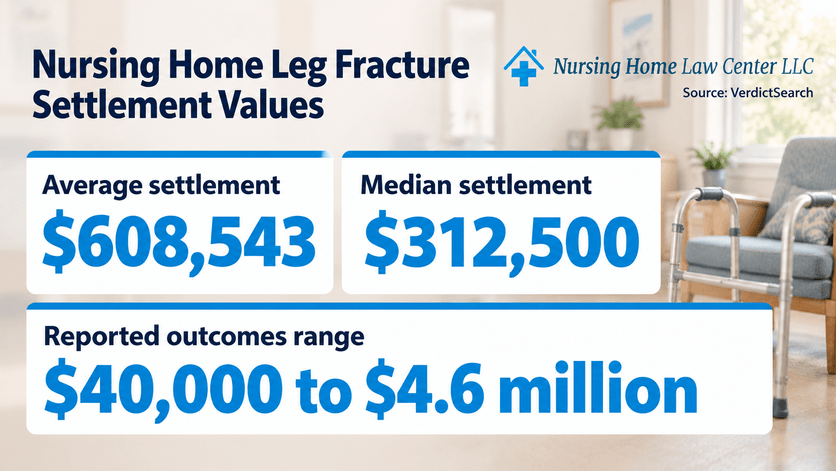
According to case data reported by VerdictSearch, the average nursing home lawsuit settlement following a leg fracture is $608,543. The reported outcomes range from $40,000 to $4.6 million, while the median settlement is $312,500.
Myrtle Faye Reed, an 89-year-old nursing home resident, developed infected pressure sores, fractured her tibia and fibula, and became dehydrated and malnourished.
Her estate and adult children alleged that the facility failed to prevent accidents, protect her skin, treat her pressure sores, monitor changes in her condition, notify her physician and family, and follow its own policies. They claimed these failures resulted from known understaffing and further alleged that staff falsified medical records.
The defense denied nursing home negligence, maintained that staffing was adequate, and attributed Reed’s injuries to her age and underlying conditions. The defendants also argued that her family declined a feeding tube. The nursing home pressure sore settlement following the fractures was $4.6 million, funded through insurance proceeds and a solvent third-party general partner.
Iacola Birdow, 74, suffered severe fractures of her right tibia and fibula after falling at a nursing home. Ten days later, she fell again and fractured the tibia and fibula in her left leg.
She subsequently developed pressure sores around her casts and on her coccyx, ultimately requiring the amputation of both legs. Birdow also experienced dehydration, malnutrition, diabetic distress, permanent disfigurement, phantom-limb pain, and months of painful wound care.
Her nursing home fall attorneys alleged that the facility failed to monitor her fall risk, prevent pressure injuries, manage her diabetes, follow physician orders, maintain infection controls, and train staff properly. She claimed these failures stemmed from known understaffing.
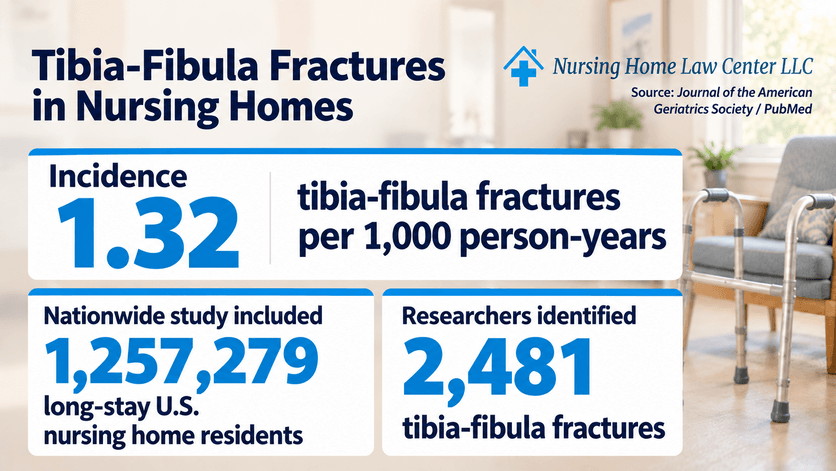
The defense argued that her falls and wounds were unavoidable consequences of her medical conditions. Still, these are among the least common fractures in nursing homes. A nationwide study of 1,257,279 long-stay U.S. nursing home residents identified 2,481 tibia-fibula fractures, with an incidence of 1.32 fractures per 1,000 person-years. The nursing home fall settlement was $1.15 million.
Bettie Thrasher, a 71-year-old nursing home resident with significant cardiovascular and neurological conditions, suffered a fractured tibia after at least one fall. She also developed dehydration, malnutrition, scabies, and at least five painful fecal impactions before her death.
Her estate and adult daughter alleged that the facility failed to employ competent staff, provide sufficient supervision, prevent accidents, follow physician orders, and monitor her pain adequately. Their nursing home wrongful death attorneys argued that these failures resulted from chronic understaffing known to the facility’s corporate operators.
The defense denied the allegations, maintained that staffing met residents’ needs, and claimed that Thrasher’s injuries were unavoidable consequences of her underlying conditions. They also asserted that she could not experience pain because of her health and age. The nursing home wrongful death settlement was $850,000.
Janet Freeman, 83, sustained a comminuted femur fracture while living in a skilled nursing facility. Her estate alleged that nurses dropped her while changing her clothing and that staff waited approximately one day to obtain imaging and transfer her for hospital care.
Testing revealed low hematocrit and hemoglobin levels, indicating significant blood loss, but her family claimed medical providers delayed administering necessary transfusions. Freeman developed hemorrhagic shock, experienced multiple-organ failure, became comatose, and later died without regaining consciousness.
The nursing facility maintained that she became dizzy and was gently lowered to the floor, while the hospital argued that its treatment was timely and appropriate. Both defendants contended that her death resulted from her injury and serious comorbidities. The case settled before trial for $450,000.
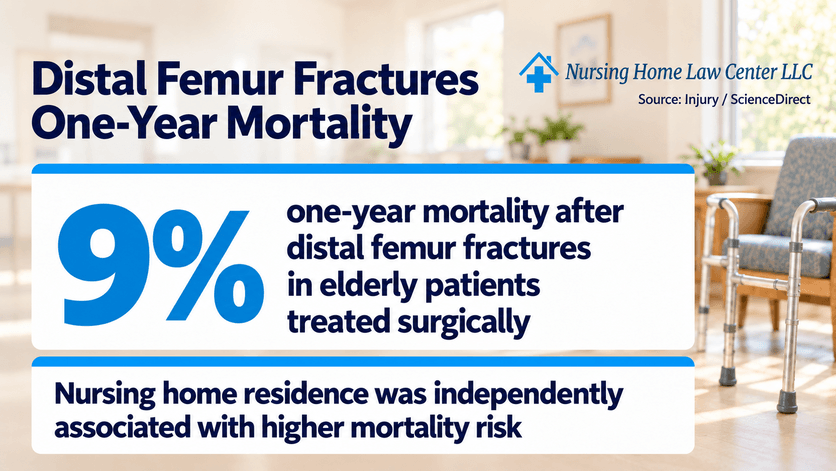
Distal femur fractures can be particularly serious in elderly residents. A multicenter study of patients aged 65 and older found a 9% mortality rate within one year after surgical treatment, and nursing home residence was independently associated with a higher mortality risk.
A 95-year-old nursing home resident with Alzheimer’s disease and a documented history of approximately 20 falls fell from her wheelchair while allegedly unattended. Her physician had ordered a foam positioning device intended to keep her from sliding or falling, but her family claimed the facility never provided it.
The fall caused a femur fracture that required open reduction and internal fixation surgery. After the injury, she became bedridden and remained so until her death three months later. Her family alleged that the facility failed to supervise her properly, implement ordered fall precautions, and respond adequately to a longstanding pattern of falls. They sought compensation for the pain and suffering she experienced, particularly during the final months of her life.
The facility denied providing inadequate care. The case settled for $395,000, including $100,000 structured over time.
Alex Wortmann, an 82-year-old woman with Alzheimer’s disease and a known history of falling, entered a skilled nursing facility after a fall at home. Less than a month later, she fell while walking from her bed to the bathroom. Her physician had ordered safety rails to help prevent falls, but the rails were allegedly not in place. Staff then had Wortmann participate in walking exercises for two days, which her family claimed worsened her injuries.
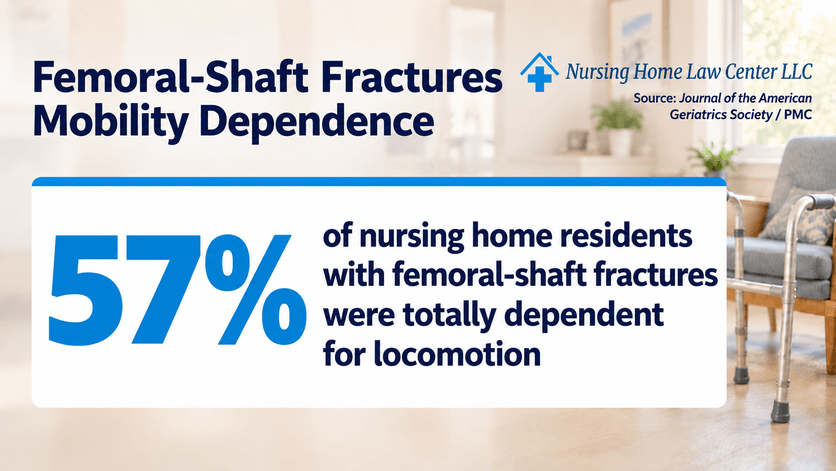
She was eventually diagnosed with fractures of the kneecap and femur and underwent extensive surgery followed by a second procedure to address displaced hardware and knee stiffness. Wortmann was left unable to walk without a walker, as is the case with 57.0% of residents with femoral-shaft fractures who are totally dependent for locomotion.
She alleged nursing home negligence, elder abuse, understaffing, inadequate fall planning, and conscious disregard for her safety. The case settled for $245,000.
Raul Lopez, a 70-year-old nursing home resident with dementia, fell three times during his first three days at the facility. The third fall caused a fracture of the femoral neck, affecting the hip joint.
His wife, acting as his legal guardian, alleged that staff knew his dementia placed him at an elevated risk of falling but failed to provide adequate supervision or a system that would alert caregivers when he attempted to walk. The family also argued that staff should have strengthened fall-prevention measures after the first two incidents.
Lopez’s fracture was treated without open surgery, but he never regained the ability to walk and remained dependent on a wheelchair. His guardian sought damages for his past and future pain, suffering, and loss of mobility. The parties reached an $80,000 pretrial settlement.
Fannie Davis, a disabled nursing home resident in her 80s who could not walk independently, began sliding from her bed while an attendant was washing her. Although the attendant caught her before she reached the floor, Davis sustained a fractured femur and bruising to her arm and chest.
She died several months later, allegedly from complications associated with those injuries. Her family claimed that the facility failed to monitor, supervise, and care for her properly and waited until the following day to diagnose the fracture.
The lawsuit included allegations of negligence, breach of fiduciary duty, fraud, negligent misrepresentation, breach of contract, and wrongful death. The defendants denied that their care contributed to Davis’s injuries or death. The wrongful death claim was dismissed before settlement. The remaining claims settled for $40,000.
A nondisplaced injury differs from a shattered fracture requiring hardware and repeat operations. Broken bones ending in permanent immobility tend to support greater settlement amounts than fully healed injuries. For frail elderly nursing home patients, loss of mobility also raises the chance of blood clots, pressure ulcers, and rapid deconditioning.
A nursing home settlement may be higher when records show repeated prior falls, ignored care-plan instructions, chronic understaffing, or concealment. In some cases, especially egregious conduct may support punitive damages.
Forcing nursing home patients to walk after they have suffered broken bones can displace a fracture or intensify pain. Delayed diagnosis or treatment may permit bleeding, clot formation, or other serious injuries to progress. Nursing home lawsuits result in higher settlement amounts when medical records link the delay to an avoidable complication.
The defense will examine osteoporosis, dementia, and life expectancy. Preexisting disease may make elderly residents susceptible to bone fractures from modest force, but fragility does not excuse careless handling. The central question is whether the nursing home provided proper care, given the risks it knew or should have known.
Economic losses can include medical costs for surgery, rehabilitation, future nursing care, and other medical expenses. Non-economic damages may address permanent immobility, physical pain, and emotional distress. If the resident dies, eligible survivors or the estate may pursue a nursing home wrongful death lawsuit for funeral costs and loss of companionship.
Most bone fractures in long-term care arise from a fall, unsafe transfer, or force during hands-on care. Osteoporosis makes elderly nursing home residents vulnerable, but fragility does not excuse abuse or neglect. Staff must assess risk factors and tailor the care plan to mobility, cognition, medication, and history.
Common events behind personal injury lawsuits involving broken bones in a nursing home include:
Multiple broken bones, fractures in unusual locations, or injuries that do not appear consistent with the facility’s explanation may warrant closer investigation for possible abuse or neglect.
A fracture may indicate nursing home negligence when the injury follows an avoidable breach of the resident’s care plan or accepted safety practices.
Potential breaches include failing to assess fall risk, leaving call lights unanswered, using the wrong transfer method, and assigning one aide where the care plan requires two. The nursing home facility should also revise interventions when a resident’s gait, medication, cognition, or transfer status changes.
Delayed diagnosis may create a separate basis for liability. Some bone fractures can be subtle, but persistent pain, bruising, swelling, or refusal to bear weight calls for medical evaluation. A nursing home facility that dismisses those symptoms may allow a treatable fracture to develop into a life-threatening injury.
Unexplained fractures at different healing stages demand investigation for nursing home abuse.
A nursing home resident who cannot speak, has dementia, or depends on caregivers may be unable to describe a failed transfer, rough care, or direct assault. A delay in notifying the family, no fall incident report despite a major injury, missing chart entries, conflicting statements, and bruising inconsistent with staff accounts are red flags.
Treatment notes may reveal when a physician was called. Schedules can show whether the unit was understaffed. Video may capture a hallway or common area. Interviews with roommates, visitors, and nursing home staff members can expose contradictions.
Broken bones are particularly dangerous for elderly patients. A femur or hip fracture can erase mobility overnight. Surgery may be contraindicated because of dementia, cardiac disease, anticoagulant therapy, or general frailty. If an operation proceeds, anesthesia, blood loss, infection, delirium, and rehabilitation impose their own strain.
Immobility can cause clots, pulmonary embolism, pneumonia, muscle loss, and pressure ulcers. Untreated infections may progress to sepsis.
A fall resulting in broken bones may also trigger fear, withdrawal, and a refusal to attempt walking again. Some nursing home patients never return to their previous baseline. When the evidence links those outcomes to nursing home neglect, the damages analysis should capture the entire course, not merely the initial X-ray.
Yes. A fracture may support a wrongful death case when negligent care caused the injury, and it contributed to death.
Nursing home wrongful death cases are often contested because elderly nursing home residents may already have a serious disease. The defense may attribute death to cancer, heart disease, dementia, or age. A qualified medical expert can assess whether the fracture and its complications shortened life or materially contributed to the fatal outcome.
Nursing home compensation in a wrongful death claim may include funeral expenses, loss of financial support, grief, sorrow, and loss of consortium. The estate representative may also pursue a survival claim, which may include other losses incurred before death, including the resident’s conscious pain and suffering.
Important medical records when seeking nursing home settlements for cases involving broken bones include:
The defense will often argue that osteoporosis or disease, not nursing home abuse or neglect, caused the fracture. Expert review can address whether proper care would have prevented it and whether delayed treatment caused additional harm. A fall resulting from ignored assistance orders can support nursing home abuse or neglect claims even when osteoporosis increased the resident’s vulnerability.
Responsibility may extend beyond the individual caregiver or aide.
The licensed nursing home can be liable for its employees’ acts and for institutional failures such as insufficient staffing, inadequate training, poor supervision, unsafe conditions, or broken equipment. A management company may control budgets, staffing policies, and clinical systems. A property owner, equipment contractor, transport provider, temporary staffing company, or medical provider may also share fault.
Corporate structure can reveal which company assumed which duty. Some nursing home operators divide ownership, licensing, management, staffing, and real estate among related entities. Financial and operational records may show that decisions made far from the bedside created the danger inside the nursing home.

The legal professionals at Nursing Home Law Center will investigate how the fracture occurred by reconstructing the resident’s last safe movement.
Our nursing home abuse lawyers obtain medical records, examine nursing home fall precautions and transfer protocols, compare the care plan with staff conduct, and consult medical and long-term care professionals. If the responsible parties refuse to offer fair compensation, our legal team is prepared to take the case to trial.
Our experienced attorneys have obtained significant nursing home lawsuit settlements, including:
If your family member sustained a leg fracture in a nursing home, do not accept an assurance that age made the injury unavoidable before the evidence has been examined.
At Nursing Home Law Center, we will investigate how the injury occurred, identify the parties responsible, and recover compensation for the financial and human losses suffered. Our nursing home abuse lawyers work on a contingency-fee basis, meaning you owe no attorney’s fee unless we recover compensation.
Call us at (888) 424-5757 or fill out our contact form to book a free consultation.