
Experienced Attorneys Protecting the Rights of the Neglected and Abused
The Nursing Home Law Center is committed to providing the legal resources necessary to hold negligent facilities accountable.

Alabama nursing home lawsuit settlements provide financial compensation when a resident is injured because a nursing home failed to provide proper care, prevent abuse, monitor residents, or respond to warning signs of decline.
These cases may involve falls, pressure ulcers, medication errors, dehydration, malnutrition, physical abuse, sexual assault, poor hygiene, broken bones, or wrongful death.
Settlement value depends on how the facility failed the resident, whether staff members ignored known risks, and how the resident’s injuries affected the resident and family members.
Our Alabama nursing home abuse attorneys review medical records, witness statements, facility history, and state law to determine whether you have grounds for legal action against the facility for the harm. Contact us for a free consultation.
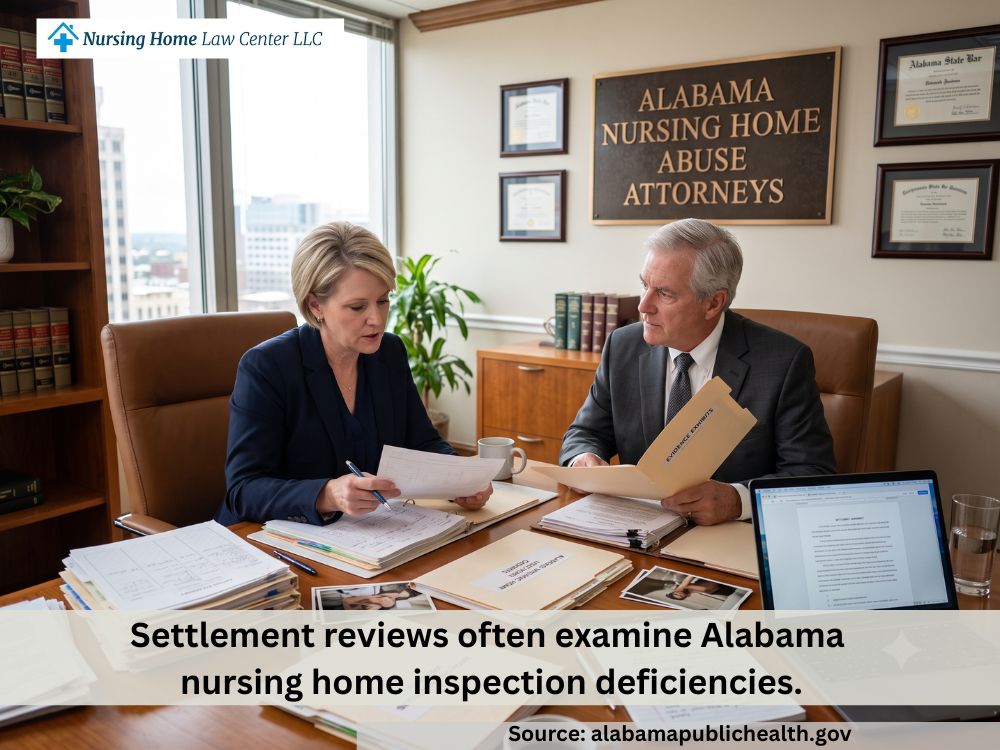
The average nursing home lawsuit settlement in Alabama is $500,000.
Betty, an 83-year-old Alabama nursing home resident, was admitted to Cedar Crest Health and Rehabilitation Center in Montgomery, AL, after hip surgery. At admission, the nursing staff documented the early development of a Stage II bedsore on her tailbone and prescribed treatment.
Over the following days, the wound worsened. The bed sore developed yellow slough, a foul odor, purulent discharge, and necrotic tissue. A physician was not consulted until several days after those warning signs appeared. Betty was transferred to Jackson Hospital the next morning, where emergency room records described a large sacral wound that was several inches deep with visible bone. She died later that day.
Her estate filed a nursing home wrongful death claim, alleging that the facility failed to provide proper nursing care and allowed the wound to progress into an infected pressure ulcer that caused sepsis and death. The defendants disputed causation and argued that the sepsis was more likely tied to a urinary tract infection, while also pointing to Betty’s preexisting emphysema and lung cancer.
Several facts increased the settlement value of this nursing home abuse lawsuit. The medical records showed rapid wound deterioration, documented signs of infection, delayed physician involvement, and a severe wound presentation at the hospital. During discovery, the facility director admitted that with adequate care, the bedsore should not have progressed within 14 days to a Stage IV pressure wound with visible bone. The director also conceded that she would have sought a medical consultation earlier when the foul odor suggested infection.
The parties settled the case following a pretrial conference.
Robert, a 77-year-old Alabama nursing home resident, entered a nursing facility after a fall and was expected to receive about one month of physical therapy. During his stay, he developed a serious bedsore on his sacrum that worsened until it reached the bone and became infected. He died about two months after admission from sepsis connected to the infected wound.
The family brought a nursing home wrongful death case, alleging that the facility failed to follow the resident’s care instructions and did not provide the care needed to prevent the wound from progressing. The evidence showed that Robert had remained in the same position for long periods, which contributed to the pressure injury. Expert testimony also identified problems in the nursing home documentation.
Several factors affected the value of this nursing home abuse case. The wound progressed to a severe stage, the infection caused death, and the medical records raised questions about whether wound care was actually provided as charted. One major issue involved a discrepancy between the wound care nurse’s notes and her time card, which indicated that care was documented at times when she was not on duty.
The case settled after a week-long arbitration.
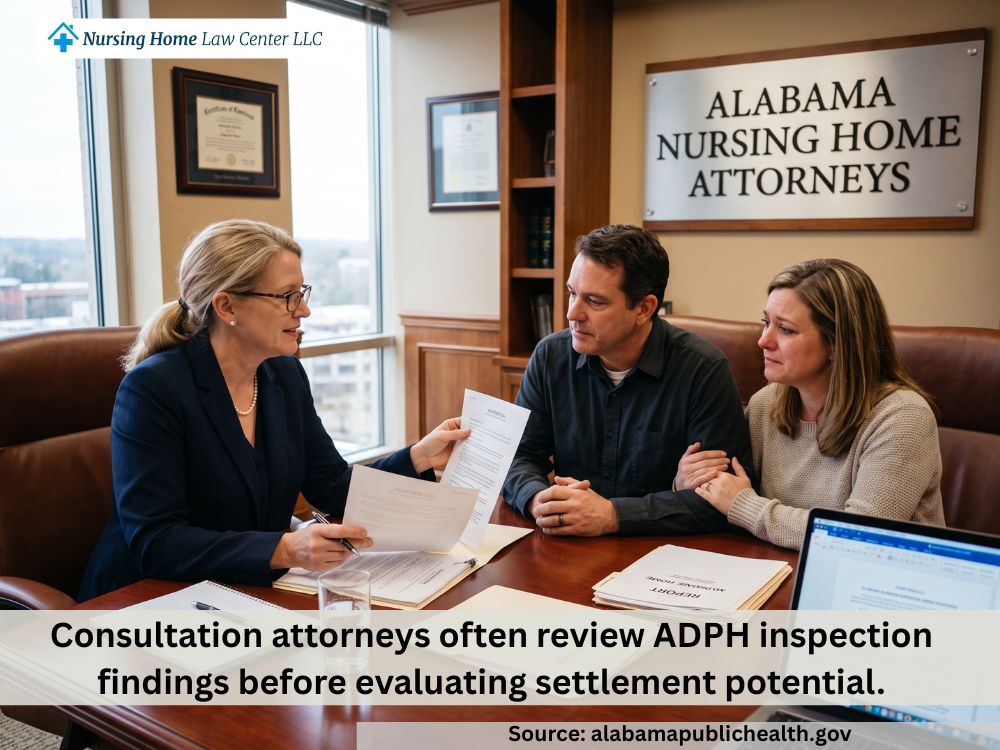
A minor fall is valued differently than a hip fracture, sepsis, amputation risk, or death. Longer periods of neglect or abuse can increase settlement value.
Dementia, mobility limits, swallowing problems, diabetes, prior wounds, or recent surgery can show that the Alabama nursing home knew the resident needed closer supervision.
Prior falls, family complaints, inspection citations, wound notes, diet orders, and repeated chart entries may prove the facility failed to act despite clear warnings.
Nursing home abuse attorneys often review medical records with wound care, infectious disease, nursing, or geriatric experts to connect the neglect to the injury or death.
Missing records, late charting, inconsistent notes, altered documentation, or time-card conflicts can increase pressure on the facility during settlement talks.
The facility’s liability insurance limits, excess coverage, and whether multiple policies apply can directly affect how much is available to pay a settlement.
Alabama nursing home abuse cases often settle when the injury shows that the facility failed to provide basic supervision, wound care, nutrition, hydration, medication management, or protection from abuse. The most common settlement-driving injuries include:
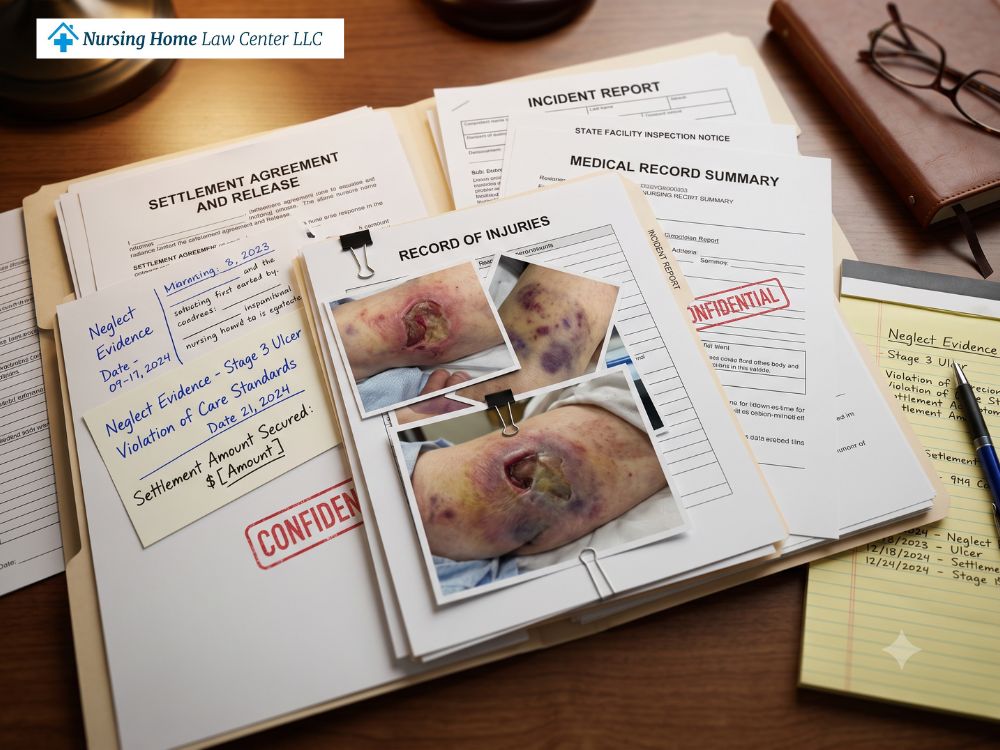
Pressure ulcers can become high-value nursing home neglect claims when staff failed to turn the resident, treat the wound, call a doctor, or transfer the resident for medical care before infection or death occurred.
A nursing home fall may support legal action when the Alabama facility ignored fall-risk warnings, left a wheelchair unattended, failed to lock wheels, used unsafe transfers, or failed to monitor residents who needed assistance.
Choking cases often involve ignored diet orders, lack of meal supervision, delayed emergency response, or failure to follow swallowing precautions for residents recovering from strokes or other medical conditions.
These nursing home neglect cases may involve missed medications, wrong doses, poor fluid intake tracking, weight loss, kidney failure, or failure to alert medical professionals when the resident’s condition declined. Over 20% of nursing home residents are given antipsychotic drugs, some of which used as chemical restraints.
Nursing home residents have a 300% higher risk of being hospitalized after experiencing abuse. Nursing home abuse claims may involve assaults by staff, other residents, visitors, contractors, or maintenance workers. These cases often focus on hiring, supervision, access control, prior complaints, and whether the facility ignored common warning signs.
Scalding water, unsecured chemicals, poor hygiene, unsafe storage areas, wheelchair accidents, and improper Hoyer lift transfers can lead to serious harm when a nursing home fails to take appropriate precautions.
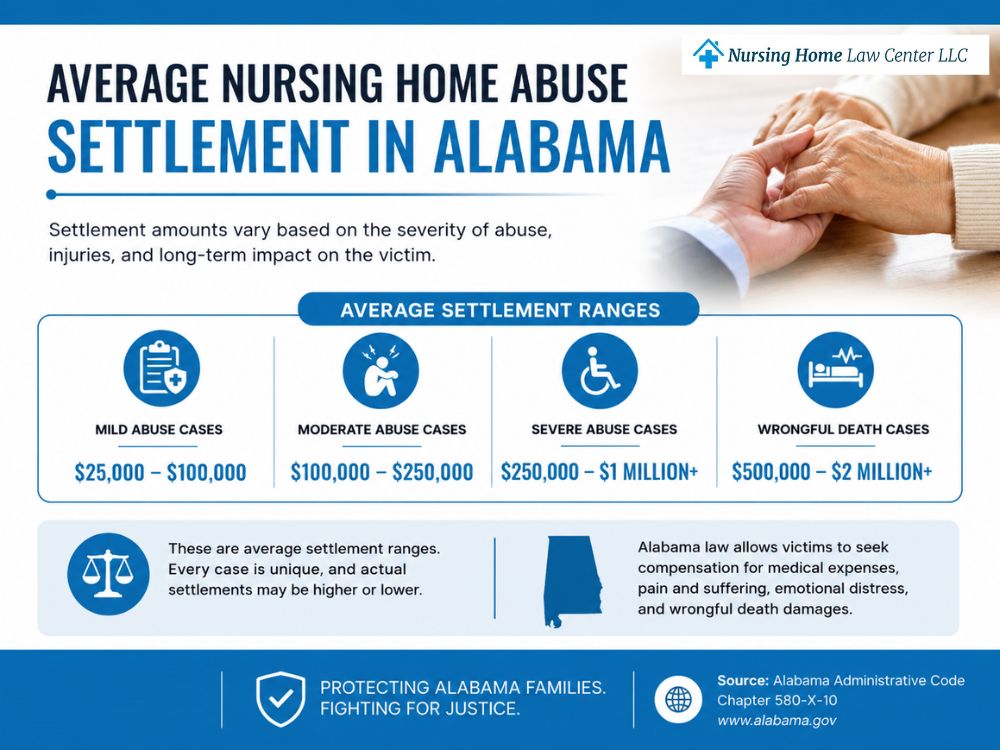
The compensation available in a nursing home lawsuit settlement in Alabama depends on whether the resident survived the abuse or neglect. Alabama treats non-fatal nursing home abuse cases differently from fatal ones.
In a non-fatal nursing home abuse case, a resident may be able to recover compensation for:
These damages may apply when nursing home abuse victims suffer pressure ulcers, broken bones, medication errors, physical abuse, sexual abuse, dehydration, malnutrition, burns, or other serious injuries because a nursing home failed to provide proper care.
If the resident dies, a wrongful death lawsuit must be filed by the personal representative of the resident’s estate under Alabama Code § 6-5-410, which also provides that recovered damages are distributed according to Alabama’s statute of distributions and are not used to pay the resident’s debts.
Alabama wrongful death damages are punitive rather than compensatory. In practical terms, that means they focus on the seriousness of the facility’s misconduct and the need to punish or deter similar conduct, not on reimbursing the family for funeral costs, grief, loss of companionship, or the resident’s medical bills.
Punitive damages may also be available in some non-fatal injury cases, but Alabama requires clear and convincing evidence that the defendant consciously or deliberately engaged in oppression, fraud, wantonness, or malice. (Ala. Code § 6-11-20) The state also generally limits punitive damages to three times compensatory damages or $1.5 million, whichever is greater. (Ala. Code § 6-11-21)
An Alabama nursing home settlement may take several months to more than a year, depending on whether the case resolves before filing, enters arbitration, or proceeds through a personal injury lawsuit.
95% of personal injury lawsuits, including nursing home cases, settle out of court. Cases involving clear evidence, documented injuries, and limited disputes over causation may settle faster than cases where the facility denies that nursing home neglect caused the resident’s harm.
Alabama nursing home abuse cases often take longer when the resident died, the personal representative must be appointed, experts must review wound care or infection issues, or the facility disputes whether the resident’s decline was caused by neglect rather than preexisting medical conditions.
A case may also take longer if there are missing chart entries, inconsistent nursing notes, disputed time cards, multiple nursing facilities, corporate defendants, arbitration issues, or disagreements over whether the facility’s conduct supports punitive damages. These issues can affect both the legal process and the time needed to reach a fair settlement.
The filing deadline depends on the type of Alabama nursing home lawsuit.
For many personal injury claims, Alabama law generally provides a two-year deadline for actions involving injury to the person under Ala. Code § 6-2-38.
If the claim is treated as a medical liability claim against a health care provider, Alabama’s medical liability statute may apply. Under Ala. Code § 6-5-482, these claims generally must be filed within two years of the act or omission. If the injury could not reasonably have been discovered within that period, the statute allows a six-month discovery extension, but no case may be filed more than four years after the act or omission.
For an Alabama nursing home abuse lawsuit involving fatality, the deadline is two years from the resident’s death. Under Ala. Code § 6-5-410, only the personal representative of a deceased adult’s estate can file a wrongful death claim in Alabama.
Because different deadlines may apply to nursing home abuse and neglect cases, families should seek legal action quickly. Waiting can make it harder to obtain evidence, locate staff, preserve witness statements, and hold the nursing home accountable.
Most Alabama nursing home abuse cases settle before trial, but a fair settlement usually requires more than sending a demand letter. Our nursing home abuse attorneys build the claim by investigating what happened, reviewing the facility’s records, identifying responsible parties, and preparing the case for negotiation, arbitration, or litigation.
Our legal team can help by:
Your family deserves justice, and our goal is to hold the nursing home accountable while helping victims and their loved ones understand the legal process, preserve evidence, and pursue a fair settlement.
Linda’s husband was admitted to a skilled nursing facility after hip replacement surgery. During his stay, he developed serious pressure sores that were not properly prevented, monitored, or treated. The case involved a nursing home wrongful death claim and focused on whether the facility failed to reposition him, provide wound care, and respond before the wounds became life-threatening injuries.
The settlement value covering funeral expenses and the family’s pain and suffering was affected by the severity of the pressure injuries, the resident’s decline after surgery, the facility’s care obligations, and the evidence showing that nursing home neglect contributed to his death.
Two women were sexually assaulted while they were under the care of a nursing home. The case involved failures in considering resident vulnerability, staff access, and the facility’s responsibility to protect nursing home residents from preventable harm.
The value of the nursing home sexual abuse settlement reflected the serious emotional distress caused by the assaults, the breach of trust by a staff member, and the need to hold facilities accountable when residents are abused by employees responsible for their care.
Margaret developed facility-acquired bed sores that progressed to infection and sepsis. Her family pursued a wrongful death lawsuit, alleging that the nursing home failed to monitor her skin, provide proper care, and intervene before the infection became fatal.
Important value factors included the progression of the wounds, the connection between the pressure sores and sepsis, the resident’s pain before death, and the medical records showing whether the facility responded appropriately to warning signs.
Eleanor, an 88-year-old resident, was attacked in her nursing home room by a visitor to the facility. The case focused on supervision, facility access, visitor monitoring, and whether the nursing home failed to protect elderly residents from foreseeable harm.
The settlement value was influenced by the resident’s age, the physical abuse involved, the failure to maintain a safe living environment, and whether the facility could have prevented unauthorized or unsafe access to the resident’s room.
Helen was burned by scalding water while admitted to a nursing home. Burn injury cases often involve serious pain, disfigurement, infection risks, and questions about whether staff used safe bathing, water temperature, or supervision procedures.
This result reflected the seriousness of the burn injury, the resident’s dependence on staff for daily care, the medical treatment required after the incident, and the facility’s responsibility to prevent unsafe living conditions.
James suffered a nursing home fall that caused a subdural hematoma and hip fracture. The case involved failures in fall prevention, monitoring, transfer assistance, and whether staff followed the resident’s care plan.
The settlement value was affected by the evidence showing serious injuries and the facility failed to provide assistance when James was known to be at risk of falling.
Ruth, a resident with dementia, gained access to chemicals in an unlocked storage closet and ingested poison. The case involved unsafe storage, cognitive impairment, facility supervision, and whether the nursing home took precautions for a resident who could not recognize danger.
This nursing home neglect case had significant value because the resident was highly vulnerable, the hazard was preventable, and the facility failed to secure dangerous materials in an area accessible to residents.
Frank died after a choking incident that should have been prevented through dietary controls, staff supervision, and meal monitoring. Choking cases often involve residents who need soft diets, feeding assistance, swallowing precautions, or close observation during meals.
The wrongful death settlement reflected the resident’s known swallowing risks, the facility’s duty to follow diet orders, the delay in response, and the injuries caused when staff failed to intervene in time.
Rose, a dementia patient, was sexually assaulted by a maintenance worker at a nursing home. The case involved negligent access control, resident vulnerability, supervision failures, and whether the facility had adequate safeguards to protect nursing home abuse victims.
The settlement value was affected by the resident’s cognitive impairment, the trauma of the sexual abuse, the role of a non-care employee, and the facility’s responsibility to keep vulnerable residents safe from abuse.
Patricia fell from a wheelchair that was left unattended and suffered a broken leg along with compression fractures in her lumbar and cervical spine. The nursing home lawsuit focused on supervision, safe positioning, wheelchair safety, and whether staff members followed basic fall-prevention procedures.
The result reflected the seriousness of the broken bones, the spinal injuries, the resident’s pain and loss of mobility, and the facility’s negligence in leaving a vulnerable resident unattended.
George was dropped by nursing home staff during a transfer involving a Hoyer lift. Transfer injury cases often involve staff training, equipment use, the number of caregivers assigned, and whether the resident’s mobility needs were documented in the care plan.
The value of this personal injury case was affected by the avoidable nature of the transfer incident, the resident’s dependence on staff, the injuries caused by the fall, and whether the facility failed to use safe lifting procedures.
Walter developed pressure sores while living at a nursing home operated by a national nursing home chain. The case alleged that staff failed to prevent the wounds and failed to notify the family as the condition worsened.
The settlement value was affected by the pressure sore development, the delay in communication with family members, the resident’s decline, and the medical records showing how long the wounds went untreated before outside intervention occurred.
If your loved one suffered serious harm in an Alabama nursing home, contact Nursing Home Law Center for a free case review. Our legal team can review medical records to evaluate your loved one’s injuries, identify the facility accountable, and explain whether legal action may be available for nursing home abuse, nursing home neglect, personal injury, or wrongful death.
Our nursing home lawyers work on a contingency-fee basis, meaning you pay no attorney fees unless compensation is recovered for you. To speak with an experienced lawyer, call (800) 926-7565 or complete the online contact form.
Our nursing home abuse attorneys can help you file claims against Alabama’s worst-rated nursing homes, such as Burns Nursing Home. We represent clients throughout Alabama, including Birmingham, Huntsville, Mobile, Montgomery, Tuscaloosa, and beyond.