
$3,100,000Pressure sore death
$2,333,000Fall involving traumatic brain injury
$1,500,000Bedsore settlement
$1,499,000Dementia patient injury
$1,250,000Repeated fall injuries

West Virginia Nursing Home Lawsuit Settlements

Free Consultation for Nursing Home Abuse Victims and Their Families

West Virginia nursing home lawsuit settlements provide compensation when a nursing home’s negligence causes harm to a resident, whether through inadequate supervision, understaffing, or failure to recognize warning signs of decline. 

Our West Virginia nursing home abuse lawyers investigate records and facility history to determine if you have a valid claim. Contact us for a free consultation and see how we can help you hold negligent facilities accountable.

What Is the Average Nursing Home Settlement in West Virginia?

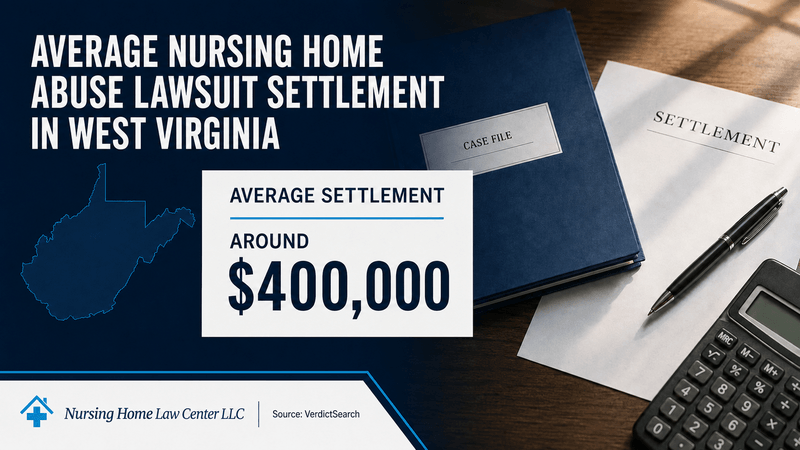
The average nursing home abuse settlement in West Virginia is $400,000.
Financial Recovery Examples in Nursing Home Abuse Cases in West Virginia

The sums below are larger than the state average because they resulted from jury verdicts and included substantial punitive damages against large corporate nursing home chains.

$91.5 Million for Fatal Dehydration and Neglect

An 87-year-old nursing home resident with dementia was placed in a Charleston, WV, nursing home. Within three weeks, she grew severely dehydrated and malnourished, lost a significant amount of weight, and was confined to a wheelchair. She was later transferred to a facility in Huntington, where she was hospitalized for acute renal failure and died days later.

The settlement value is unusually high because the verdict included $80 million in punitive damages.

$50 Million For Medical Malpractice Involving Undiagnosed Gallbladder Illness 

A 57-year-old nursing home resident recovering from Guillain-Barré syndrome was admitted for physical therapy but never received treatment over nine months in an understaffed facility with only one nurse for 120 beds. She suffered severe health complications, including repeated gallbladder attacks that went undiagnosed for months until a gangrenous gallbladder was diagnosed, and she died of complications. 

A pretrial agreement later capped the family’s recovery at $5 million.

What Factors Impact Nursing Home Abuse Lawsuit Settlement Values in West Virginia?

No two nursing home abuse cases are valued the same, but in general, insurers and defense counsel weigh these key factors before agreeing to any payout:
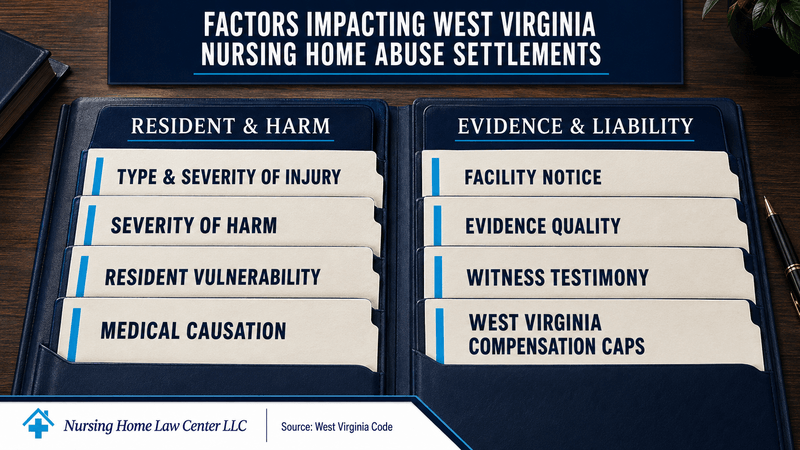
  • Type and severity of injury. Falls, pressure ulcers, infections, medication errors, choking, fractures, malnutrition, dehydration, and physical or sexual assault each carry different damage values.
  • Severity of harm. Hospitalization, surgery, permanent impairment, chronic pain, infection, or other injuries carrying devastating consequences or death typically increase the value of a claim.
  • Resident vulnerability. Dementia, limited mobility, swallowing difficulties, diabetes, or prior wounds may show the facility knew the resident needed closer supervision, but failed to provide adequate care.
  • Facility notice. Prior falls, ignored care plan warnings, family complaints, inspection citations, and repeated chart entries can show the facility had clear warning signs.
  • Medical causation. Expert review is often required to connect the facility’s conduct directly to the resident’s injury, decline, or death.
  • Evidence quality. Missing records, late charting, inconsistent notes, or altered documentation can considerably strengthen or weaken settlement negotiations.
  • Witness testimony. Family members, staff, roommates, visitors, and outside medical providers can support the claim.
  • West Virginia compensation caps. Under West Virginia’s Medical Professional Liability Act, Code §55-7B-8,the maximum compensation for noneconomic damages is capped at $250,000, or $500,000 in wrongful death and catastrophic bodily injury cases, while economic damages remain uncapped.

What Are Common Nursing Home Injuries That Lead to Settlements With Injured Residents and Their Families?

The following injuries frequently form the basis of neglect and abuse claims.

  • Bed sores and sepsis. Pressure ulcers often signal neglect when staff fails to reposition residents, properly dress wounds, or seek care before infection or sepsis sets in.
  • Falls, fractures, and head injuries. nursing home fall may support a claim when staff ignored fall-risk assessments, left residents unsupervised, or failed to use proper transfer equipment.
  • Dehydration and malnutrition. Dehydration and malnutrition often result from understaffing and can quickly progress into kidney failure or other life-threatening complications.
  • Medication errors. Medication errors, including missed doses or incorrect dosages, can cause serious complications, especially in residents managing multiple chronic conditions.
  • Infections. Untreated urinary tract infections or respiratory infections can spread quickly in facilities that fail to monitor residents or maintain proper hygiene.
  • Sexual or physical abuse. Sexual abuse and physical mistreatment often go unreported until families notice unexplained injuries, behavioral changes, or signs of fear around specific staff members.

What Compensation Can Be Recovered Through a West Virginia Nursing Home Settlement?

Recoverable damages may include:

  • Hospital and medical bills
  • Rehabilitation and long-term care costs
  • Pain and suffering
  • Emotional distress
  • Loss of companionship or consortium
  • Burial and funeral expenses
  • Survival damages
  • Wrongful death damages
  • Punitive damages, where allowed

West Virginia allows punitive damages in nursing home cases when a plaintiff proves, by clear and convincing evidence, that the facility acted with malice or a reckless disregard for resident safety. Under West Virginia Code §55-7-29, punitive damages are capped at the greater of four times the compensatory damages or $500,000. 

How Long Does a West Virginia Nursing Home Settlement Take?

A West Virginia nursing home settlement can take anywhere from several months to several years, depending on the injury and the strength of the evidence. 

West Virginia law adds another layer to the legal process. Under West Virginia Code §55-7B-6, claimants must serve a Notice of Claim and Certificate of Merit at least 30 days before filing suit, and the facility may request pre-litigation mediation, which can extend the pre-suit period further.

What Is the Filing Deadline for Nursing Home Abuse Claims in West Virginia?

General personal injury claims must be filed within two years under West Virginia Code §55-2-12

Most nursing home claims are treated as medical professional liability actions. Under West Virginia Code §55-7B-4(b), these claims must generally be filed within one year of the injury, or one year from when the injury was or should have been discovered, whichever is later, with a hard 10-year cutoff from the date of the injury.

For fatal cases, West Virginia Code §55-7-6(d) gives the estate’s personal representative two years from the resident’s death to file a wrongful death claim.

Waiting can mean lost evidence, unreachable witnesses, or a claim that expires before it’s filed. Families should act promptly and consult a nursing home neglect lawyer.

Steps to Maximize Your West Virginia Nursing Home Neglect Settlement

Before accepting any settlement offer in a West Virginia nursing home case, families should take several steps to protect the resident’s rights and increase the value of the claim.

  • Report Virginia nursing home abuse or neglect. If a resident is in immediate danger, call 911. Facility complaints can be filed with West Virginia’s Office of Health Facility Licensure and Certification. Suspected abuse or neglect can be reported to the West Virginia Department of Health and Human Resources‘ Adult Protective Services division. Residents and their families can also contact the West Virginia Long-Term Care Ombudsman Program for help understanding their rights and confidential advocacy. 
  • Request nursing home, hospital, and emergency records. Medical records often reveal missed entries, delayed treatment, or inconsistencies that support the claim. Furthermore, records from any hospital transfer can confirm the resident’s condition and clarify what the facility failed to prevent.
  • Photograph visible injuries or unsafe conditions. Take photos of pressure wounds, bruising, or hazards to preserve evidence before they fade or are corrected.
  • Save written complaints and facility communications. Emails, letters, and care plan notes can show the facility knew about a problem and failed to act.
  • Avoid signing releases without legal review. An early settlement offer may undervalue the claim before the full extent of harm is known.
  • Identify who has authority to act for the resident or estate. A power of attorney, guardian, or appointed personal representative may need to bring the claim.
  • Ask whether Medicare, Medicaid, or health insurers may claim reimbursement. These programs often hold a lien against settlement funds for costs already paid.
  • Confirm whether court approval is needed. West Virginia wrongful death settlements generally require circuit court approval before funds can be distributed.

Our West Virginia Nursing Home Abuse and Neglect Law Firm Can Help From the Discovery Process to Settlement

Most West Virginia nursing home elder abuse cases settle before trial, though reaching that point takes investigation, record review, and negotiation with the facility’s insurer. Our attorneys handle every stage of the process to help residents and families seek compensation, including:

  • Initial case review. We evaluate the injury, medical history, timeline, and potential defendants to determine whether a claim exists.
  • Medical record collection and gathering evidence. We gather records from the nursing home, hospitals, physicians, pharmacies, and emergency responders involved in the resident’s care.
  • Facility investigation. We review staffing levels, inspection history, prior complaints, and internal policies to identify patterns of neglect.
  • Expert review. Medical, nursing, wound care, or geriatric specialists may evaluate the case, including injuries such as surgical site infections, to establish causation and standard-of-care violations.
  • Notice of claim and certificate of merit. West Virginia law requires these documents before filing a medical professional liability action.
  • Demand package or lawsuit filing. Depending on the facts and the applicable deadline, we may send a settlement demand or file suit.
  • Discovery and depositions. If litigation proceeds, both sides exchange evidence and question witnesses, including facility staff and administrators, under oath.
  • Mediation or direct negotiation. Many West Virginia cases resolve through mediation, insurer negotiation, or a formal settlement conference.
  • Settlement approval and distribution. Wrongful death and certain estate settlements generally require circuit court approval before funds are distributed.
CTA Image

Settlements Recovered by Our Experienced Attorneys

Our team helps families pursue compensation through legal action when a facility fails to provide proper care. The following case results reflect actual settlements our attorneys have recovered in nursing home abuse and neglect lawsuits. 

$3,000,000 for Wrongful Death After Untreated Pressure Sores

Margaret’s husband was admitted to a rehabilitation center after hip replacement surgery. Staff failed to reposition him regularly, and he developed severe pressure sores that went untreated until infection set in. He later died from related complications.

Our nursing home abuse lawyers obtained the facility’s wound care logs and staffing records, which confirmed serious deficiencies in his care, and negotiated the settlement following her loved one’s death.

$2,333,000 for Sexual Abuse by a Nursing Assistant

Helen and Joan, residents with cognitive impairments, suffered abuse at the hands of a certified nursing assistant during overnight shifts. 

Our nursing home abuse lawyers investigated the facility’s hiring practices, uncovered gaps in its background-screening process, and pursued claims on behalf of both women.

$2,150,000 for Fatal Bed Sores and Sepsis

Walter, a longtime West Virginia resident, developed stage 4 pressure ulcers during an extended stay at a nursing facility recovering from a stroke. The wounds became infected, leading to sepsis, and he died within weeks despite hospitalization.

We built the case around evidence that Walter suffered neglect, including documented wound treatment delays and inconsistent charting.

$1,700,000 for a Fall Resulting in Subdural Hematoma and Hip Fracture

Eleanor, a fall-risk resident at an assisted living facility, was left unattended near her bed rail and fell, suffering a subdural hematoma and a fractured hip. She required emergency surgery, a hip replacement, and months of rehabilitation afterward.

Our nursing home lawyer team obtained Eleanor’s fall-prevention care plan and prior incident reports, which showed the nursing home failed to provide proper care.

$1,500,000 Group Home Negligence Settlement for Resident-on-Resident Elder Abuse

Michael, a group home resident, suffered repeated physical assaults from another resident with a documented history of aggressive behavior. 

Our nursing home abuse lawyers gathered incident reports and staffing records that showed the facility ignored repeated warnings and helped Michael’s family pursue justice.

$1,250,000 Pre-Litigation Settlement for a Fatal Choking Incident

Kevin, who required a modified diet due to swallowing difficulties, was served regular food during a meal service error. He began choking, and staff failed to respond quickly enough, resulting in his death before emergency responders arrived.

A nursing home neglect lawyer from our team confirmed the facility disregarded his restrictions.

$1,200,000 Settlement for a Disabled Resident Injured in a Facility Van Accident

Patricia, a wheelchair-dependent resident, was injured when her facility’s transport van collided with another vehicle during a scheduled medical appointment. She suffered fractures and required surgery followed by an extended recovery.

Our nursing home abuse lawyers reviewed the driver’s records and the van’s maintenance history and identified safety violations. 

Book a Free Case Review

If your loved one suffered serious harm in a West Virginia nursing home, our legal team can review medical records, identify the responsible facility, and help you seek justice for the harm caused.

Our nursing home abuse lawyers work on a contingency-fee basis, meaning you owe us no hourly fees unless we recover compensation for you. To speak with an experienced nursing home lawyer, call (800) 926-7565 or complete the online contact form.

We are ready to help families in MorgantownParkersburg, and beyond hold poorly rated West Virginia nursing homes accountable.

Client Reviews

Jonathan did a great job helping my family navigate through a lengthy lawsuit involving my grandmother's death in a nursing home. Through every step of the case, Jonathan kept my family informed of the progression of the case. Although our case eventually settled at a mediation, I really was...

- Lisa

After I read Jonathan’s Nursing Home Blog, I decided to hire him to look into my wife’s treatment at a local nursing home. Jonathan did a great job explaining the process and the laws that apply to nursing homes. I immediately felt at ease and was glad to have him on my side. Though the lawsuit...

- Eric