
Experienced Attorneys Protecting the Rights of the Neglected and Abused
The Nursing Home Law Center is committed to providing the legal resources necessary to hold negligent facilities accountable.
Learning how to report nursing home abuse in South Carolina begins with protecting your loved ones. Call 911 for immediate danger, then contact the agency responsible for the abuse and neglect involved.
Serious concerns should also be reported outside the nursing home. The Nursing Home Law Center can help family members preserve evidence and evaluate legal action. Contact us for a free consultation.
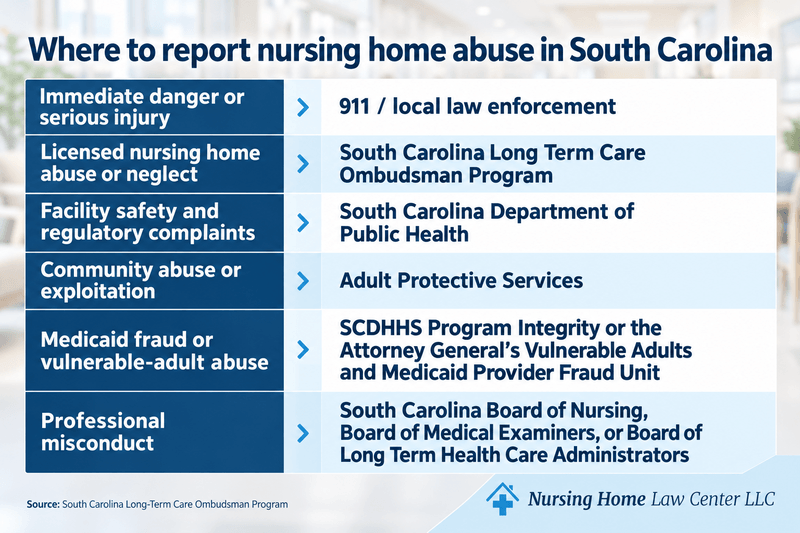
Families reporting abuse may use several local agencies. The correct contact depends on the resident’s condition and whether the concern involves a licensed care facility, crime, Medicaid fraud, resident rights, or professional misconduct.
Call 911 for assault, sexual misconduct, threats, severe physical harm, unsafe restraint, elopement, or urgent medical care. Local authorities can document injuries and investigate crimes. South Carolina law requires immediate law-enforcement contact for emergencies, serious injuries, and suspected sexual assault.
The South Carolina Department of Public Health complaint program handles unsafe care, poor staffing, medication errors, falls, bed sores, infections, sanitation failures, and regulatory violations. Submit a complaint online or call the nursing home abuse hotline toll-free at 1-800-922-6735.
The form permits anonymous filing of nursing home abuse reports, although confidentiality is not guaranteed. Use DPH for complaints involving nursing home licensing, regulatory compliance, unsafe facility practices, or quality-of-care concerns. Suspected abuse, neglect, or exploitation of a vulnerable adult living in a licensed nursing home should also be reported to the South Carolina Long Term Care Ombudsman Program.
The South Carolina Long-Term Care Ombudsman Program advocates for nursing home residents and addresses poor care, discharge threats, visitation, retaliation, dignity, and resident rights. To report nursing home neglect and abuse in a licensed facility, call 1-800-868-9095. Ombudsmen can explain local resources and help an elderly loved one.
South Carolina Adult Protective Services (APS) investigates elder abuse, self-neglect, and exploitation in community settings. It does not ordinarily investigate home abuse and neglect inside licensed nursing homes. Those reports go to the Ombudsman.
For community protective services handled by Adult Protective Services, call 1-888-CARE4US (1-888-227-3487) to report elder abuse or file online.
Report Medicaid billing fraud to SCDHHS Program Integrity at 1-888-364-3224. The Attorney General’s Vulnerable Adults and Medicaid Provider Fraud Unit investigates provider fraud, physical elder abuse cases, neglect, and exploitation in residential facilities.
Call 803-734-3660 or 1-888-NO-CHEAT (1-888-662-4328). Anonymous tips are accepted for false billing, stolen funds, diverted medication, or financial exploitation tied to Medicaid care.
The South Carolina Department of Labor, Licensing and Regulation accepts complaints against licensed professionals online or at 803-896-4470. Boards may discipline licensees but cannot award compensation.
Report unsafe nursing, medication misconduct, falsified records, impairment, or neglect through the Board of Nursing complaint process or 803-896-4550.
Use the Board of Medical Examiners complaint system for physician misconduct, ignored injuries, improper treatment, or altered medical records. Call 803-896-4500.
The Board of Long Term Health Care Administrators investigates administrator supervision and professional conduct. Call 803-896-4544.
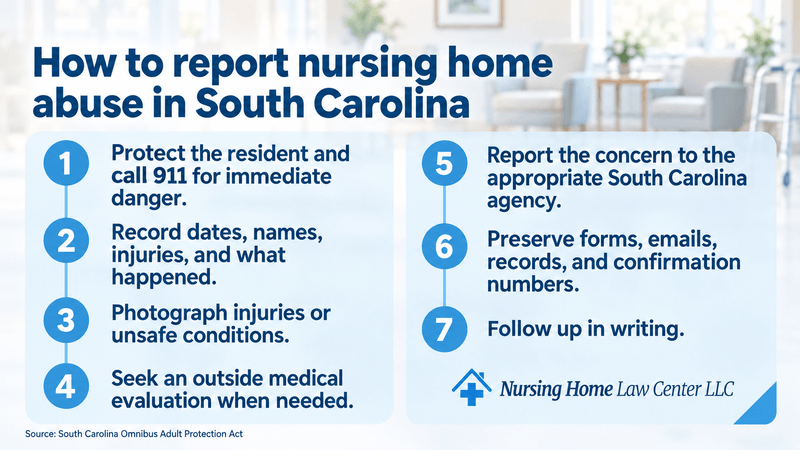
Families do not need complete proof to report nursing home abuse. Injuries, unsafe conditions, resident statements, or sudden decline may justify action. Use the following steps:
Whether you’re reporting by phone or filing a complaint online, a strong report supports a thorough investigation. Include:
Nursing home abuse includes physical abuse, sexual abuse, emotional elder abuse, neglect, and financial exploitation. The National Center on Elder Abuse (NCEA) can help family members understand when warning signs may justify reporting a nursing home.
Common signs of nursing home abuse include:
The South Carolina Omnibus Adult Protection Act defines abuse, neglect, and exploitation of vulnerable adults and establishes mandatory reporting requirements.
Under S.C. Code § 43-35-25, specified professionals who have reason to believe a vulnerable adult has been or is likely to be abused, neglected, or exploited must report it. Any other person with actual knowledge of abuse, neglect, or exploitation must also report it.
A required report must generally be made within 24 hours or the next working day. Section 43-35-85 establishes criminal penalties for knowingly and willfully failing to make a required report.
When you report a nursing home for suspected abuse, an agency may inspect the facility, interview nursing home residents and staff, obtain records, or refer crimes. DPH may cite violations, the Ombudsman may advocate, and Medicaid investigators or boards may pursue misconduct.
The number of violations and ratings can place a facility among the worst nursing homes in South Carolina, such as:
DPH, VAMPF, and LLR accept anonymous reports. Contact details may help investigators clarify facts. Families should explain retaliation concerns when they report anonymously. Ombudsman records are confidential, but callers should ask how identity will be handled.
You may tell the administrator, director of nursing, charge nurse, or social worker. Serious abuse of a loved one should also be reported outside the facility. Document delayed treatment, withheld records, discouraged reporting, or conflicting explanations. Internal reporting cannot replace outside action when safety is threatened.
A state report addresses safety and compliance. A nursing home abuse lawsuit seeks accountability and compensationfor injury, trauma, loss, or death. A South Carolina nursing home abuse settlement may cover medical expenses, relocation, pain, and other losses.
Contact counsel when:
Nursing home lawyers help families identify the responsible, accountable parties and seek justice.
Our nursing home abuse attorneys can:
Evidence may include photos, medical records, care plans, incident reports, medication and wound records, staffing schedules, call-light logs, witness statements, messages, citations, bills, and an autopsy report.
Families may need local legal guidance depending on where the nursing home is located. Nursing Home Law Center provides legal support for families seeking help statewide, including:
If you suspect nursing home abuse, our nursing home abuse attorneys can assess what happened and determine whether legal action may protect your loved one’s well-being. Consultation with an attorney from the Nursing Home Law Center is free and confidential. We work on a contingency basis, with no upfront fees. Contact us today.