
Experienced Attorneys Protecting the Rights of the Neglected and Abused
The Nursing Home Law Center is committed to providing the legal resources necessary to hold negligent facilities accountable.

Iowa nursing home lawsuit settlements provide compensation when a facility’s negligence causes a resident preventable harm, such as falls, bed sores, malnutrition, abuse, or wrongful death. Settlement value depends on how the harm affected the resident and their family.
Our Iowa nursing home abuse attorneys investigate medical records and facility history to build your case. Contact us for a free consultation.
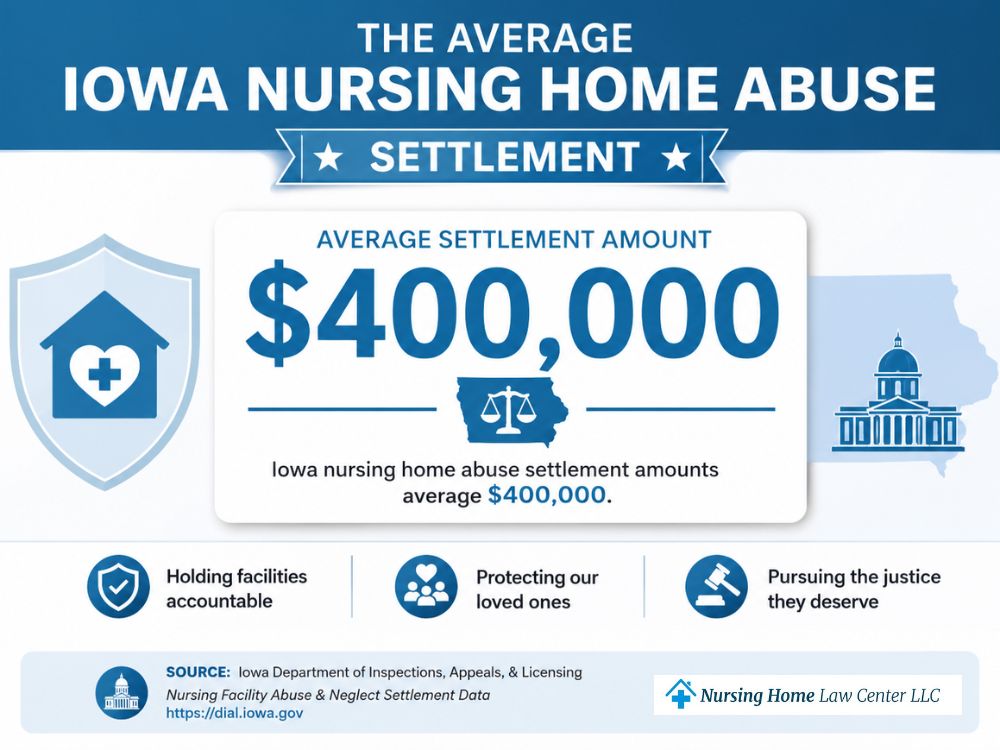
The average nursing home abuse settlement in Iowa is $400,000.
Darlene, an 83-year-old Iowa nursing home resident, had a history of falls that required additional safety measures. She later suffered another fall, where she sustained a hip fracture leading to fatality.
To achieve this nursing home wrongful death payout, her family claimed the nursing home’s negligence contributed to her injuries and that staff failed to address her fall risks or respond appropriately as her condition worsened.
Ethel, a 93-year-old Iowa nursing home resident, entered a Bettendorf facility with a history of falls. She fell on her second day and roughly 17 more times while trying to toilet herself without the required assistance. She was often found by family members incontinent and in her own urine.
To achieve this nursing home fall payout, her family alleged nursing home negligence, wrongful death, and breach of contract, with one fall causing injury to her hip that later contributed to a fatal stroke.
Several issues shape nursing home abuse case values in Iowa, including:
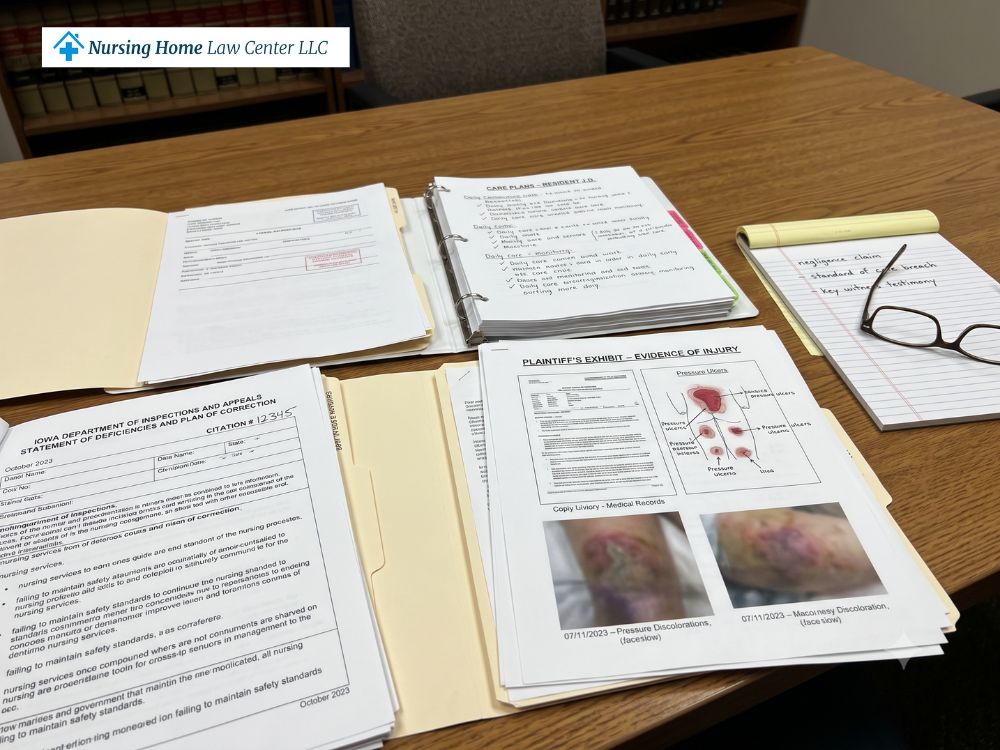
Here are some injuries that appear more often in Iowa nursing home abuse lawsuits than others, largely because they stem from preventable lapses in care rather than unavoidable decline.
The compensation available in a nursing home lawsuit settlement depends on the injuries involved, the losses suffered, and the circumstances surrounding the abuse or neglect. Depending on the facts of the case, injured residents and their families may be able to pursue damages such as:
When nursing home misconduct is especially serious, punitive damages may be considered in addition to other compensation available through a claim. Under Iowa Code § 668A.1, punitive damages are available only in certain cases where a defendant’s conduct demonstrates a willful and wanton disregard for another person’s rights or safety.
An Iowa nursing home settlement may take from several months to years depending on the complexity of the case, the severity of the resident’s injuries, and whether the nursing facility disputes responsibility. Claims involving serious injuries, wrongful death, multiple parties, or extensive medical evidence typically require more time to investigate and negotiate.
For personal injury claims, Iowa law requires lawsuits to be filed within two years after the claim accrues under Iowa Code § 614.1. The same two-year deadline applies to wrongful death claims arising from nursing home abuse or neglect, beginning on the date of the resident’s death.
Speak with an Iowa nursing home abuse attorney as soon as possible. Acting quickly can help preserve records, identify witnesses, and protect the ability to bring a claim.
Take the following steps to protect a resident’s rights and strengthen a potential claim:

Our Iowa nursing home abuse lawyers help families understand their legal options and pursue compensation for the injuries their loved ones suffered.
A typical case may involve:
Our attorneys have helped families pursue compensation in nursing home abuse and neglect cases involving serious injuries, wrongful death, and unsafe facility conditions. The following examples reflect the types of claims we have handled and the results obtained.
Marcus was recovering in a skilled nursing facility after hip replacement surgery when he developed severe pressure sores and died shortly after. The claim focused on whether staff failed to provide appropriate monitoring, repositioning, and wound care during his recovery.
The bedsore settlement value was influenced by the seriousness of his injuries, the progression of his condition, the impact on his quality of life, and evidence that inadequate care contributed to his death.
Maria and Sarah, two nursing home residents with cognitive impairments, were repeatedly sexually assaulted by a certified nursing assistant entrusted with their care. The case alleged that the facility failed to properly screen and supervise staff, protect vulnerable residents, and address prior reports of misconduct.
The nursing home sexual assault settlement value was influenced by the traumatic nature of the abuse, the residents’ cognitive impairments and resulting inability to report the harm themselves, as well as the facility’s poor hiring practices and failure to act despite earlier warning signs.
Walter’s family filed a wrongful death claim after he developed serious bed sores during his nursing home stay, leading to a severe infection, which progressed to sepsis. He passed away days later. The case focused on whether staff properly monitored his condition and provided the necessary treatment.
The nursing home sepsis settlement value was affected by the severity of the wounds, the medical complications that followed, and the evidence connecting inadequate care to his death.
Harold suffered a serious fall while living in a nursing facility, resulting in a subdural hematoma and hip fracture. The claim focused on whether the facility failed to follow appropriate fall-prevention measures given his condition and risk factors.
The settlement considered the extent of his injuries, long-term effects, and evidence regarding the facility’s failure to protect him from a preventable fall.
Joan, a nursing home resident with dementia, wandered into an unsecured storage area and ingested cleaning chemicals that had been left within reach. She suffered chemical burns and required emergency hospitalization as a result.
Her family brought a claim alleging the facility failed to secure hazardous materials and adequately supervise a resident known to wander. The nursing home elopement settlement value was impacted by Joan’s cognitive limitations, the severity of her injuries, and evidence that the incident was fully preventable.
Carol’s claim involved physical abuse by other residents in a group home setting. The case examined whether staff members recognized risks, provided adequate supervision, and took reasonable steps to protect residents from other residents with a history of aggressive behavior.
The settlement amount was influenced by the resident’s vulnerability, the impact on her sense of safety, and evidence related to the facility’s supervision and safety procedures.
David’s family pursued a wrongful death claim after he suffered a fatal choking incident while residing in a care facility. The case focused on whether staff properly followed his care needs and responded appropriately to known risks.
The settlement reflected the circumstances surrounding his death, the facility’s responsibilities, and evidence supporting the claim that improved care could have prevented the tragedy.
If your loved one suffered abuse, neglect, or preventable injuries in an Iowa nursing home, contact our team for a free consultation. We can review the circumstances of your case, examine available records, determine whether you may have a case for compensation, and help you seek justice.
We handle nursing home abuse cases on a contingency-fee basis, meaning you pay no attorney fees unless we recover compensation for you.
We have over 100 years of combined experience taking action against Iowa’s worst nursing homes. Call us at (800) 926-7565 or complete our online contact form to speak with an experienced nursing home abuse attorney about your legal options.