
Experienced Attorneys Protecting the Rights of the Neglected and Abused
The Nursing Home Law Center is committed to providing the legal resources necessary to hold negligent facilities accountable.

How to report nursing home abuse in Arkansas depends on the threat facing the resident.
Call 911 when a loved one has life-threatening injuries, needs immediate medical care, is being assaulted, or cannot safely remain in the nursing home.
Once the emergency is under control, report abuse to the agencies that oversee long-term care facilities.
Suspected nursing home abuse in Arkansas may need to be reported to the Office of Long Term Care, APS, the ombudsman, the Arkansas Attorney General’s Medicaid Fraud Control Unit, or a professional licensing authority, depending on the circumstances.
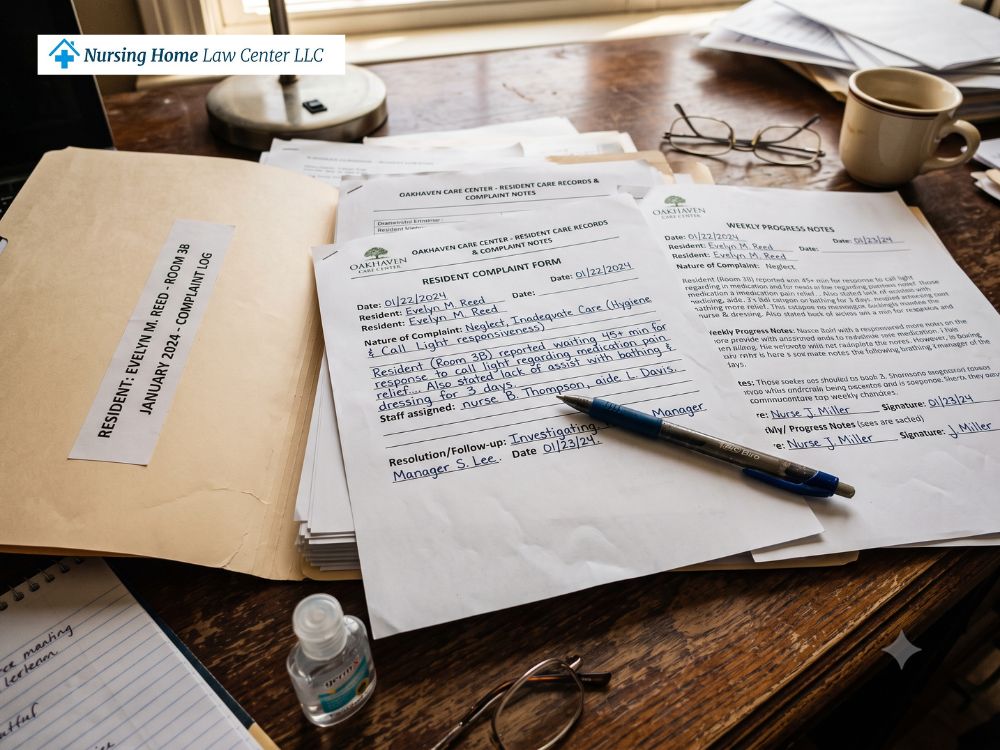
Do not wait for an internal meeting when nursing home abuse presents an urgent threat. Call 911 for physical abuse, sexual assault, threats, or any injury requiring emergency care. Ask for a welfare check if nursing home staff block access to your loved one or refuse to explain an obvious medical crisis.
OLTC licenses and surveys nursing facilities and investigates reports against long-term care facilities and their employees. Contact OLTC about nursing home abuse tied to poor supervision, unsafe staffing, medication errors, falls, severe bedsores, untreated wounds, food or hydration failures, infection control, missing property, or deficient care plans.
A person can file a nursing home abuse report by:
Phone: 1-800-582-4887
Fax: 501-682-8540, Attention Complaint Unit
Email: complaints.OLTC@arkansas.gov
Mail: Complaints Unit, P.O. Box 8059, Slot S407, Little Rock, AR 72203-8059
Give OLTC the name of the nursing home, the resident’s room or unit, dates, names of nursing home staff, and a plain account of what happened. The report does not need to prove that a certain standard was breached. It needs enough detail for an investigator to identify the risk and locate evidence.
The nursing home must not obstruct outside reporting. State whether your loved one remains exposed to abuse and whether they need relocation. Keep the resident away from anyone suspected of abuse, and explain how the injury changed your loved one’s condition.
APS investigates abuse, neglect, and exploitation involving endangered or impaired adults. The statewide Adult Maltreatment Hotline is 1-800-482-8049. Online reports are available for situations that do not require investigation within 24 hours; urgent reports must be made by telephone.
The OLTC handles reports involving elderly residents in long-term facilities, while APS handles adults in the community. The hotline can route uncertain cases. Do not stop because one agency points to another.
The caller may be asked for the adult’s medical conditions, contact information, names of family members, and a description of suspected nursing home abuse. Arkansas keeps the reporter’s identity confidential by law. Aging, illness, and cognitive decline can make rapid intake especially important.
The long-term care ombudsman program gives residents a confidential advocate for discharge pressure, blocked visitation, retaliation, dignity, and care-plan disputes.
The long-term care ombudsman can speak privately with the individual and refer allegations, but it cannot fine or inspect the home. Call 501-682-8155 or use the state directory for the representative serving the resident’s county.
When your loved one fears punishment, the ombudsman cannot disclose investigative information without consent. That safeguard protects the resident’s well-being when nursing home abuse involves staff members controlling meals, hygiene, medication, or visits.
The Attorney General’s Medicaid Fraud Control Unit (MCFU) investigates Medicaid-provider fraud and abuse or neglect involving institutional residents. Report nursing home abuse tied to false billing, services charged but not provided, forged documentation, or misuse of Medicaid funds at 866-810-0016. Altered records may show nursing home abuse and fraud.
A nursing home abuse report may also target an individual licensee.
The Arkansas State Board of Nursing accepts reports involving drug diversion, falsified charting, exploitation, or direct abuse. Reports may be filed through the board’s online complaint portal or by phone at 501-686-2700.
The State Medical Board handles complaints involving physicians and certain other medical practitioners. The board only accepts complaints submitted in writing:
Mail: 1401 West Capitol Avenue Suite 340, Little Rock, AR 72201
Fax: (501) 296-1805
Email: regdis@armedicalboard.org
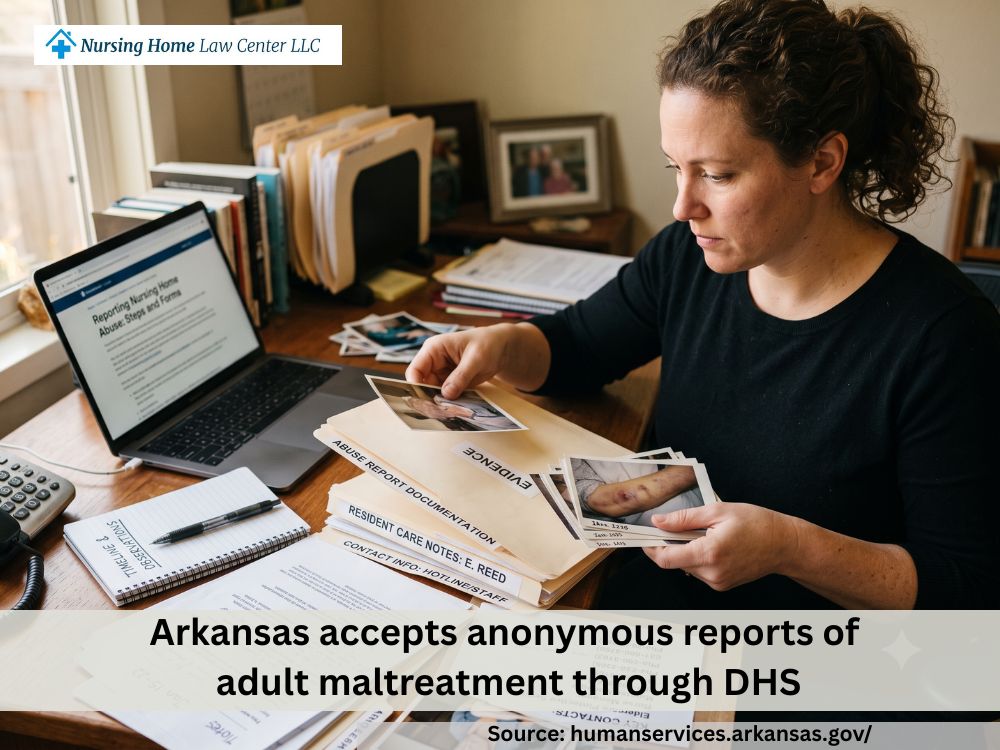
Move quickly if your loved one faces immediate abuse or neglect. Call 911, request hospital transfer, or ask law enforcement to enter the nursing home. Do not let management delay care. A worsening infection, untreated fracture, or overdose can produce severe health consequences within hours.
Record the date, time, location, witnesses, and your loved one’s exact words. Note assigned employees and separate direct observations from hearsay. Precision keeps a nursing home abuse report from being dismissed.
Photograph bruises, restraint marks, swelling, torn clothing, dirty bedding, unsafe equipment, and room conditions. Track how each injury changes; preserve original physical evidence. Do not record private areas or interfere with treatment.
Ask an outside clinician to evaluate the injury and document why nursing home abuse is suspected. For the resident, the assessment may identify dehydration, malnutrition, fracture, life-threatening infection, or overmedication. Elderly residents and nursing home residents can decline quickly without proper nutrition, fluids, pressure relief, or prescribed medication. The record can connect the injury to a care failure.
Report nursing home abuse to OLTC and local law enforcement for maltreatment inside a covered institution. Contact the ombudsman for advocacy; Adult Protective Services may apply outside the institution or when jurisdiction is unclear. Log each agency, intake worker, date, reference number, and next step. Repeated nursing home abuse warrants another report.
Save complaint forms, emails, photographs, treatment records, screenshots, certified-mail receipts, intake-worker names, reference numbers, and notes from every phone conversation. This record may become important if the nursing home disputes that it received notice.
When an agency or facility fails to respond, send a dated follow-up requesting confirmation and information about the next step. Avoid relying solely on verbal assurances that the matter is being handled.
A government report may address safety and regulatory violations, but a lawyer can seek compensation through a separate civil claim.
A useful nursing home abuse report is concrete. Include:
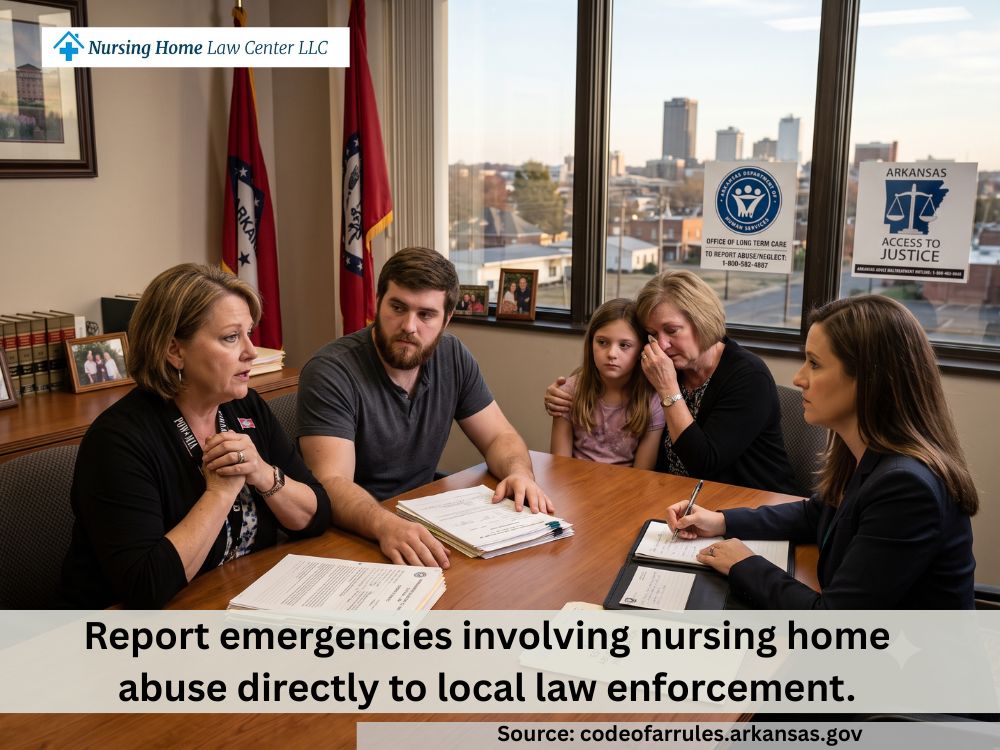
The National Center on Elder Abuse recognizes many forms of abuse, including physical, sexual, emotional, financial, and neglectful abuse. Warning signs of abuse in a nursing home that should trigger a report include:
Once a report is submitted, the receiving agency decides whether the allegations fall within its authority and how urgently the matter should be handled. The Arkansas Office of Long Term Care may review the complaint, contact the nursing home, examine records, interview residents or staff, conduct an inspection, and cite the facility when investigators identify regulatory violations. Adult Protective Services or law enforcement may become involved when the report concerns immediate danger or criminal conduct.
Watch for retaliation. Retaliation may include threats of discharge, isolation, blocked visitation, intimidation, reduced care, or refusal to communicate with family. These actions should be reported promptly to the investigating agency and the Arkansas Long-Term Care Ombudsman Program.
The Arkansas Office of Long-Term Care allows people to file nursing home complaints without providing their names. Its investigations are confidential, although identifying yourself may allow the agency to request additional details and notify you when its review is complete.
The Arkansas Long-Term Care Ombudsman Program also has procedures for complainants who wish to remain anonymous. An ombudsman may not disclose the identity of a nursing home resident or complainant without documented consent.
Anyone concerned about retaliation should state that concern in the initial report and explain whether their loved one has faced discharge threats, reduced care, intimidation, restricted visits, or isolation.
Anonymous reporting can protect family members who are concerned about retaliation. However, providing a safe way for investigators to contact the reporter may help them confirm details, obtain additional information, examine relevant records, and act more quickly when the resident may still be in danger.
Families may raise concerns with the nursing home administrator, director of nursing, charge nurse, or social worker. That internal report can create a useful record and may lead to immediate corrective action.
Do not rely on an internal report when there is violence, sexual abuse, theft, severe neglect, falsified records, or evidence at risk.
Document any failure to respond. This includes delayed medical treatment, missing records, conflicting explanations, pressure not to contact state authorities, or promises of an investigation that never produces a written result.
Reporting suspected nursing home abuse in Arkansas may prompt an inspection, APS review, licensing inquiry, or law-enforcement investigation. That process is designed to address resident safety and determine whether the nursing home violated state requirements. It does not, by itself, award an Arkansas nursing home abuse settlement to the victim or their family.
Legal action focuses on establishing fault and recovering financial compensation for the suffered abuse, such as medical expenses and other damages. A nursing home abuse lawsuit may be filed when a nursing home’s negligence, understaffing, poor supervision, or failure to provide adequate care causes injury, emotional trauma, financial loss, or death.

Families should not wait for law enforcement or another agency to finish its investigation before seeking legal advice.
Legal counsel may be especially important when:
An experienced attorney can investigate the resident’s care independently from the facility and state agencies. The investigation may identify whether the nursing home failed to provide adequate staffing, supervision, medical care, nutrition, hydration, wound care, infection control, or protection from abusive employees and residents.
To help you seek justice and recover maximum compensation, a nursing home abuse attorney from our team will gather and analyze:
If your loved one has suffered abuse in a long-term care facility, Nursing Home Law Center can help families understand their legal options.
Our legal team can explain which reporting authorities may apply, gather evidence, review medical records, and determine whether the nursing home or another party may be legally responsible.
Call us at (800) 926-7565 or fill out our contact form for a free case review.