
Experienced Attorneys Protecting the Rights of the Neglected and Abused
The Nursing Home Law Center is committed to providing the legal resources necessary to hold negligent facilities accountable.

How to report nursing home abuse in Arizona depends on whether the resident is in immediate danger.
If the resident needs urgent medical help, is being threatened, has been sexually assaulted, physically abused, or may be exposed to further harm, call 911 before filing a complaint to state agencies.
Families reporting nursing home abuse may need to contact more than one agency, including the Arizona Department of Health Services (ADHS), Adult Protective Services (APS), the long-term care ombudsman program, the Arizona Attorney General’s Medicaid Fraud Control Unit, or a professional licensing board.
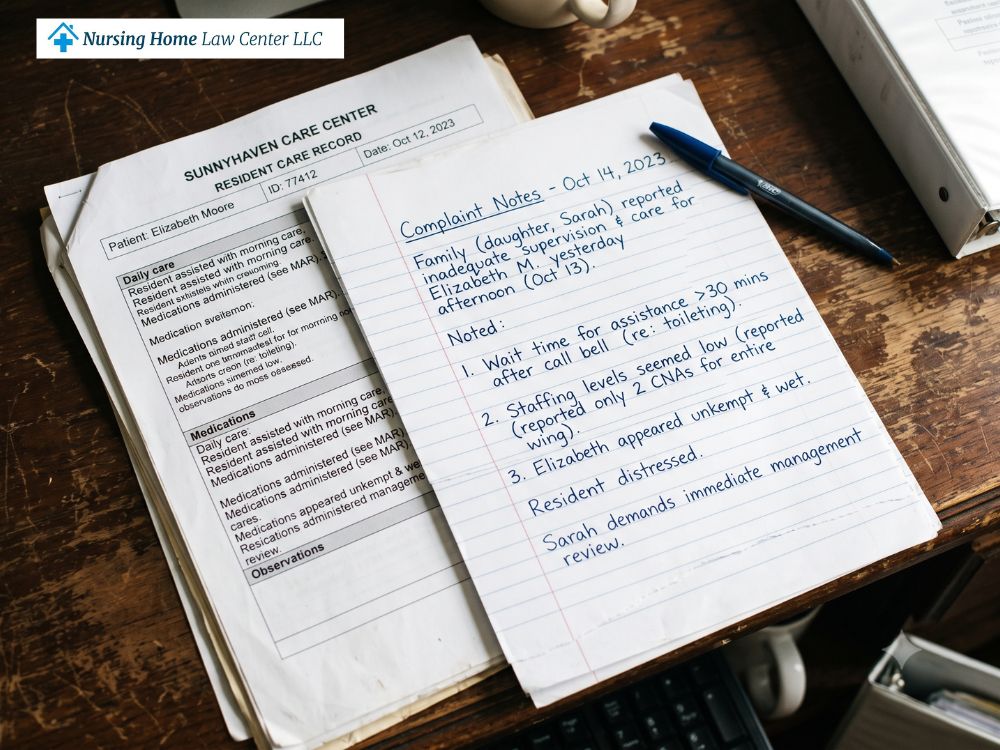
Call 911 when nursing home residents face immediate danger, physical assault, sexual abuse, serious threats, or urgent health care risk. Local law enforcement can make welfare checks and file criminal charges.
The Arizona Department of Health Services licenses and monitors long-term care facilities, including nursing homes. File a complaint with the ADHS for staffing issues, medication errors, falls, pressure injuries, infections, poor hygiene, unsafe conditions, food or hydration concerns, resident-rights violations, and care standards. Reports may be made by phone at (602) 364-2536 or through AZ Care Check.
APS investigates abuse, neglect, and exploitation involving vulnerable adults. In the State Fiscal Year 2024 Year in Review Report, APS reported handling 42,440 such allegations. The APS takes reports at 1-877-SOS-ADULT, or 1-877-767-2385, with an online form available 24/7.
The Long-Term Care Ombudsman Program investigates alleged abuse made by or for residents of nursing homes, assisted living facilities, and group homes. The state office can be reached at (602) 542-6454 extension 9. Families should contact the ombudsman when they need local resources and advocacy for discharge threats, retaliation, blocked visitation, care-plan disputes, poor communication, or rights concerns.
The Arizona Attorney General’s Medicaid Fraud Control Unit investigates AHCCCS fraud and abuse or neglect in Medicaid facilities or by Medicaid providers. Reports may be made by calling (602) 542-3881 during business hours or by using the complaint form.
When the concern involves an individual nurse, physician, aide, or administrator, families can submit complaints to the relevant professional board too. The Arizona Medical Board regulates medical doctors and provides complaint instructions for physician misconduct.
The Arizona State Board of Nursing investigates complaints alleging violations of the Nurse Practice Act. Reports may be made by phone at (602) 771-7800 or by using the online form.
The Arizona Board of Examiners of Nursing Care Institution Administrators and Assisted Living Facility Managers accepts complaints at (602) 364-2374 or through its online complaint portal.
Call 911 if the resident needs emergency medical care, is being threatened, may have suffered sexual abuse, has been physically assaulted, or cannot safely remain in the nursing home.
Record the resident’s name, room number, date, time, staff members involved, what you saw, what the resident said, and how the nursing home responded.
Take photos of bruises, bed sores, poor hygiene, unsafe room conditions, or anything else that points to possible abuse or neglect.
An outside health care professional can assess injuries, untreated wounds, medication issues, or any decline the facility has not explained.
Contact the ADHS for nursing home care violations, Adult Protective Services for abuse and neglect involving vulnerable adults, the Long-Term Care Ombudsman for resident-rights issues, and local police for possible criminal conduct.
Save complaint forms, emails, screenshots, confirmation numbers, mailed letters, names of intake workers, and the dates and times of phone calls.
If the nursing home or agency does not respond, send a written follow-up. Include the original complaint date, the resident’s current condition, and any new signs of nursing home neglect.
Reporting elder abuse or neglect can help protect the resident’s well-being and alert local agencies, but filing a civil claim may also be necessary to recover compensation.
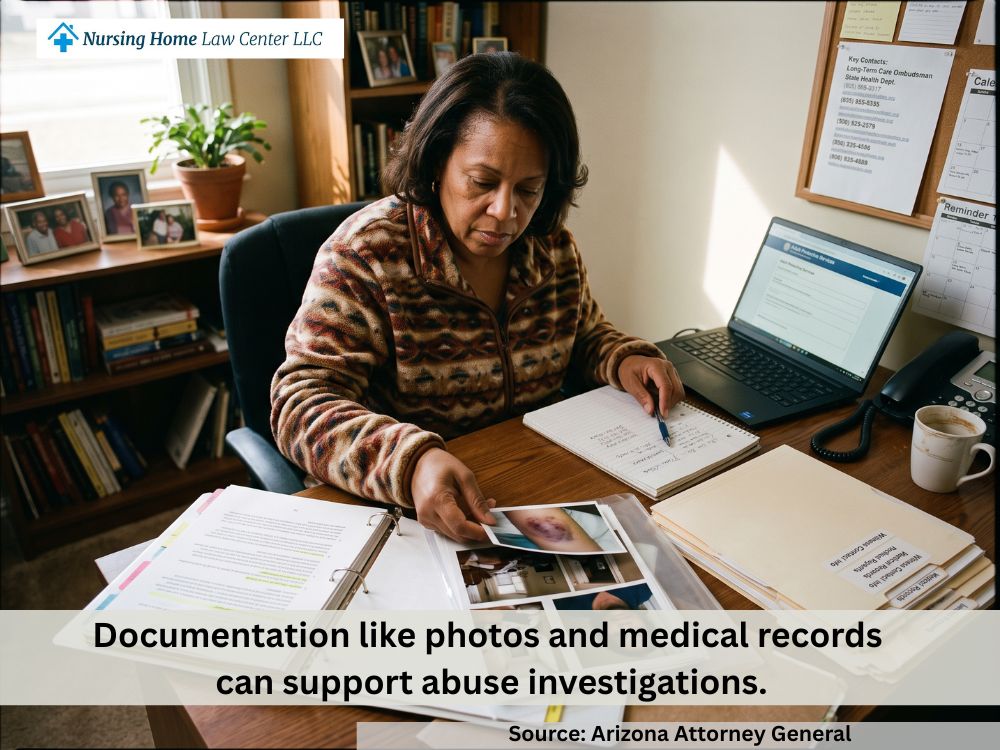
A nursing home abuse report should be specific enough and include as much detail as possible for the agency to identify the resident, understand the risk, and decide how quickly someone needs to intervene.
Include:
Signs of nursing home abuse that warrant reporting include:
Arizona law (Arizona Revised Statutes (A.R.S.) § 46-454) mandates certain professionals to report elder abuse. Mandatory reporters include physicians, social workers, and peace officers.
After an Arizona nursing home abuse report is submitted, the response depends on where the complaint was filed and how urgent the allegations are.
The Arizona Department of Health Services may review the complaint, request facility records, inspect the nursing home, interview staff members, speak with nursing home residents, and issue citations if licensing violations are found. Adult Protective Services may evaluate whether an older adult has been abused, neglected, or exploited. Local law enforcement may conduct an investigation if the case suggests physical abuse, sexual assault, theft, or other criminal behavior. Arizona Attorney General’s Taskforce (TASA) investigates senior abuse complaints.
A state investigation can help show whether the nursing home failed to follow care standards, ignored warning signs, or allowed abuse or neglect to continue. However, an agency complaint is not the same as a civil claim. Even if Arizona investigators confirm violations, the resident and their loved ones may still need a nursing home abuse lawyer to pursue compensation and ensure economic security.
If the nursing home retaliates after a report, that should be reported immediately. Retaliation may include discharge threats, reduced care, isolation, restricted visitation, intimidation, refusal to communicate with family members, or staff treating the resident worse because a complaint was filed.
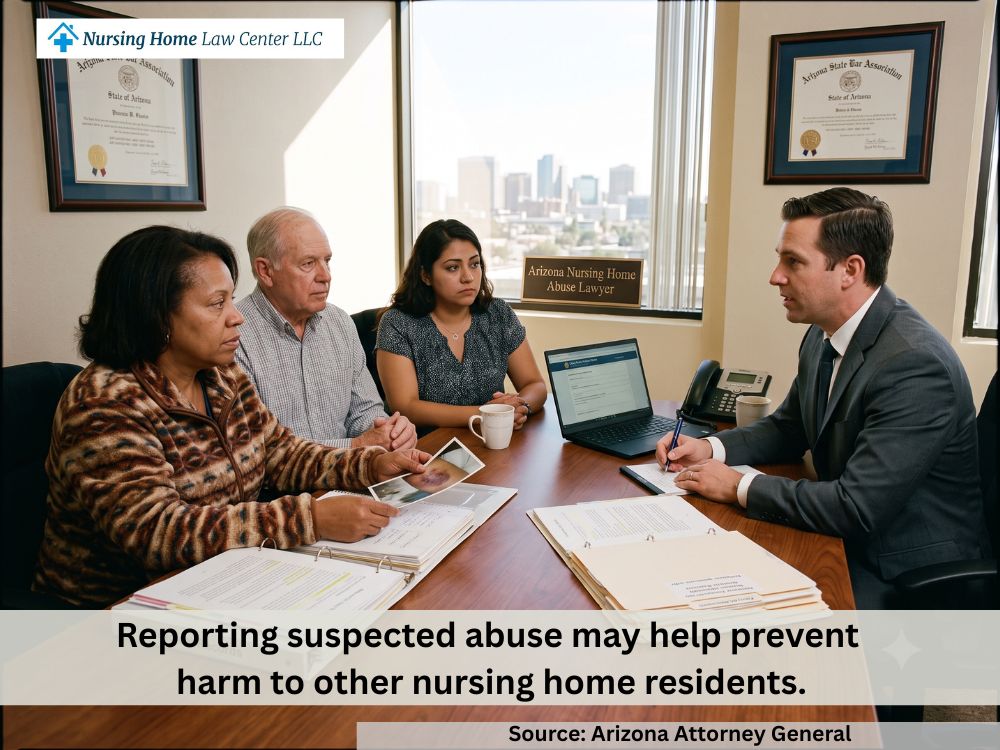
Arizona Adult Protective Services allows anonymous online reports, but anonymous reporting has limits. APS states that the Central Intake Unit cannot contact an anonymous reporter if more information is needed to decide whether the report meets investigation criteria. For that reason, families who can safely provide a phone number or email address should consider doing so.
The Arizona Long-Term Care Ombudsman Program also emphasizes resident confidentiality when investigating complaints made by or on behalf of nursing home residents. Families worried about retaliation should tell the ombudsman, APS, or the ADHS that the resident may be punished if the facility learns who reported the concern.
Anonymous reporting may help when family members fear retaliation. Still, a report with contact information often gives investigators a better chance to verify dates, request clarification, review medical records, and respond quickly if the resident remains at risk.
Family members can raise concerns with the nursing home administrator, director of nursing, charge nurse, or social worker, especially when the issue is minor. However, serious nursing home abuse and neglect should not stay inside the facility.
Families should document each and every response from the nursing home, including downplaying complaints, refusing to provide records, delaying medical care, threatening to discharge the resident, or comments discouraging them from contacting state agencies.
Reporting nursing home neglect in Arizona can start an investigation by the ADHS, APS, the ombudsman, or local law enforcement. That process may help protect the resident, document facility violations, and identify whether abuse or neglect occurred. It does not, by itself, recover compensation for the resident’s injuries.
An Arizona nursing home abuse settlement can only be obtained through a lawsuit. The report focuses on safety, oversight, and possible regulatory or criminal charges. The lawsuit focuses on proving fault, identifying all responsible parties, and holding negligent facilities accountable.
A nursing home neglect lawyer focuses on the resident’s legal rights and the family’s ability to pursue compensation from the responsible parties.
Legal help may be especially important when:

Our experienced attorneys can help families understand their legal options and take action after suspected nursing home abuse. We begin with a case evaluation, where we review whether the nursing home violated applicable care standards and identify all potentially liable parties. We consult medical and long-term care experts and prepare the nursing home abuse case for settlement negotiations or trial.
Evidence that may be reviewed includes:
At Nursing Home Law Center, we help families hold negligent facilities accountable. Our legal team can explain which Arizona reporting agencies may apply, preserve evidence, review your legal options, and fight to recover compensation for the financial, emotional, and physical harm your loved one suffered.
Call us at (800) 926-7565 or fill out our contact form to schedule a free consultation with an experienced nursing home abuse lawyer.