
Experienced Attorneys Protecting the Rights of the Neglected and Abused
The Nursing Home Law Center is committed to providing the legal resources necessary to hold negligent facilities accountable.


W&I Code § 15657 establishes that nursing home residents have the right to freedom from elder abuse or neglect. If your loved one has been mistreated in an Alameda County facility, an Oakland nursing home abuse lawyer can provide compassionate legal support. Contact us for a free consultation about your legal options.
Our award-winning legal team has over 100 years of combined experience helping nursing home abuse victims around the country. We have secured more than $450 million for personal injury clients during the past 25 years, earning a spot in the Million Dollar Advocates Forum. We are here to support you throughout your loved one’s recovery and ensure you are treated fairly throughout the legal process.
Nursing home abuse refers to any form of harm or neglect inflicted on a nursing home resident by nursing home staff members or other responsible parties within a nursing home facility. Abuse can manifest in multiple forms, leaving elderly residents with serious injuries, emotional distress, and financial losses.
Our lawyers handle all types of nursing home abuse cases in Oakland, including the following:
Physical abuse involves any form of bodily harm inflicted on a resident, including battery, chemical restraints, or physical restraints used as punishment rather than medical necessity.
Emotional or psychological abuse includes verbal threats, humiliation, intimidation, or isolating residents from social interactions. Victims may become withdrawn, fearful, or display sudden changes in behavior.
Sexual abuse refers to any non-consensual or unwanted sexual contact with a nursing home resident. This type of abuse is particularly heinous and often goes unreported, as many victims may be physically or cognitively unable to voice what has occurred.
Neglect includes failure to meet basic needs such as proper nutrition, hydration, or hygiene. It may also involve a lack of supervision, leading to dangerous situations such as residents wandering off the property (elopement).
Financial abuse involves the exploitation of a resident’s financial resources. This can include unauthorized use of the resident’s bank accounts, forging signatures on financial documents, or coercing the resident to change their will.
Signs of nursing home abuse and neglect can come in many forms, including the following.
Tragically, the National Center on Elder Abuse reports that 1 in 10 elders experienced some form of abuse in the previous year. The Centers for Disease Control notes that social support is a protective factor against elder abuse, making it crucial that families stay involved.
Nursing home residents in Oakland are protected by federal law and California law.
The Nursing Home Reform Act of 1987 established the Nursing Home Residents’ Bill of Rights and mandated that facilities offer high-quality health care to all clients. California law Health & Safety Code § 1599.1 reiterates this and notes that the law also applies to skilled nursing facilities and intermediate facilities.
42 U.S. Code § 1395i-3 also sets federal care standards and authorizes the Centers for Medicare and Medicaid Services (CMS) to inspect facilities and impose penalties for nursing home injuries.
In California, the Elder Abuse and Dependent Adult Civil Protection Act (EADACPA), also known as the Elder Abuse Act, allows residents and their families to hold nursing homes accountable for abuse or neglect by filing civil lawsuits.
Oakland families can report nursing home abuse to local law enforcement, Alameda County resources like the District Attorney, or California state enforcement like Adult Protective Services and the California Department of Social Services. These reports can be made by phone or through online forms.
First responders can stabilize the resident at the local hospital and begin an investigation while also protecting them from immediate harm.
The Alameda County District Attorney’s Elder & Dependent Adult Abuse Unit can open an investigation into the nursing home administration and determine whether abuse occurred. They may press charges against the facility.
You can report concerns to the DA’s office by calling (510) 569-9281.
A long-term care ombudsman serves as a third-party advocate for the resident’s best interests and mediates between families and facilities. They can also provide family members with further resources and coordinate reports with other agencies.
The Alameda County Area Agency on Aging Department of Aging & Adult Services can be contacted online or by calling (510) 577-1900.
The California Department of Public Health licenses and inspects nursing homes, including fining them for regulatory violations. You can file a complaint against a facility online or by calling the hotline at (916) 440-7360.
Adult Protective Services investigates allegations of abuse and assists vulnerable elders in finding resources for further support. To report abuse, call the Oakland office at (510) 577-3500 or use the online reporting form.
This department licenses and oversees assisted living and community living arrangements, including adult day care. To make a complaint, use the online complaint form or call 844-538-8766.
Our nursing home abuse attorneys can assist with the following services:
Potentially liable parties in nursing home abuse cases in Oakland include:
We can hold multiple parties accountable depending on how the injury occurs and who was present.
Evidence to prove abuse in an Oakland facility includes:
These medical records can reveal patterns of negligence, such as missing turning logs or late charting. If there is a pattern of repeated incidents with no care plan adjustments or interventions, this would also show neglect.
Common defenses in lawsuits can include the following.
Compensation awarded in nursing home lawsuits includes both special and general damages.
Special damages are for specific monetary losses, such as:
General damages consider the life impact of the harm done, such as emotional trauma, pain and suffering, and loss of enjoyment of life.
Punitive damages are awarded when the negligence is particularly egregious, like hitting a resident. These are treated differently from compensatory damages because they are meant to punish the perpetrator.
If your family member has passed away, you may be awarded wrongful death damages for funeral and burial expenses.
Factors that drive case value include:
The average nursing home abuse settlement in Oakland is $3,633,771.
$12,800,000: Marcia was in an Oakland facility after suffering a stroke. Due to contractures, she needed regular repositioning. However, staff refused to help her, leading to multiple stage 4 bed sores that resulted in her death.
Our nursing home abuse lawyers provide compassionate and experienced legal support for loved ones, including handling third-party communications. We work on a contingency-fee basis, meaning you owe us nothing unless we secure compensation. Schedule a free case review by calling (800) 926-7565 or using our online contact form.
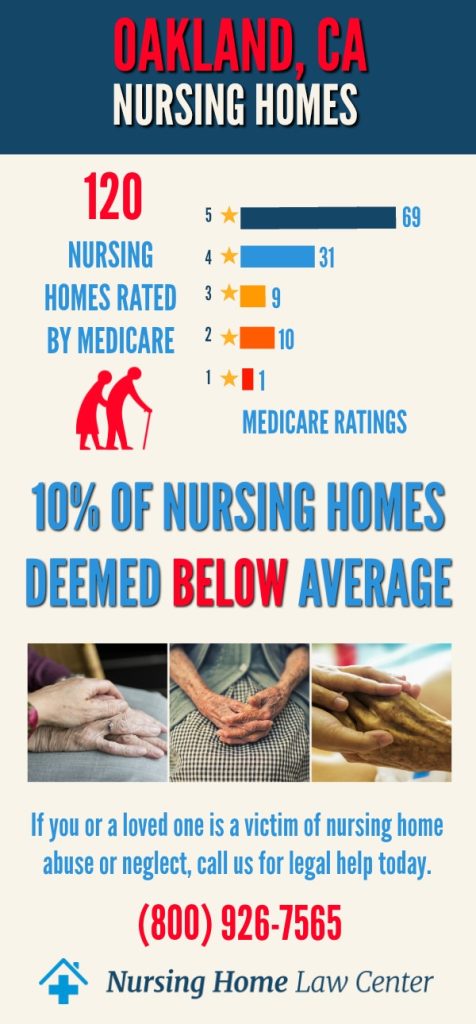
Around 10% of nursing homes in Oakland are deemed below average by the CMS.
Yes, it can be prevented. Elderly abuse prevention includes caregiver support to avoid emotional abuse, training, community involvement, and monitoring concerning behavior.
In California, the statute of limitations for filing a nursing home abuse claim is generally two years from the date of the abuse or discovery of the injury (California Code of Civil Procedure sections 312-366).
Yes. A personal injury attorney can perform a thorough investigation, accurately evaluate damages, and negotiate to recover compensation so that you can focus on helping your loved one.
A contingency fee means that your California nursing home abuse lawyer receives a percentage of the settlement or verdict to cover legal fees. You do not have to pay legal fees up front, and we only get paid if you win.
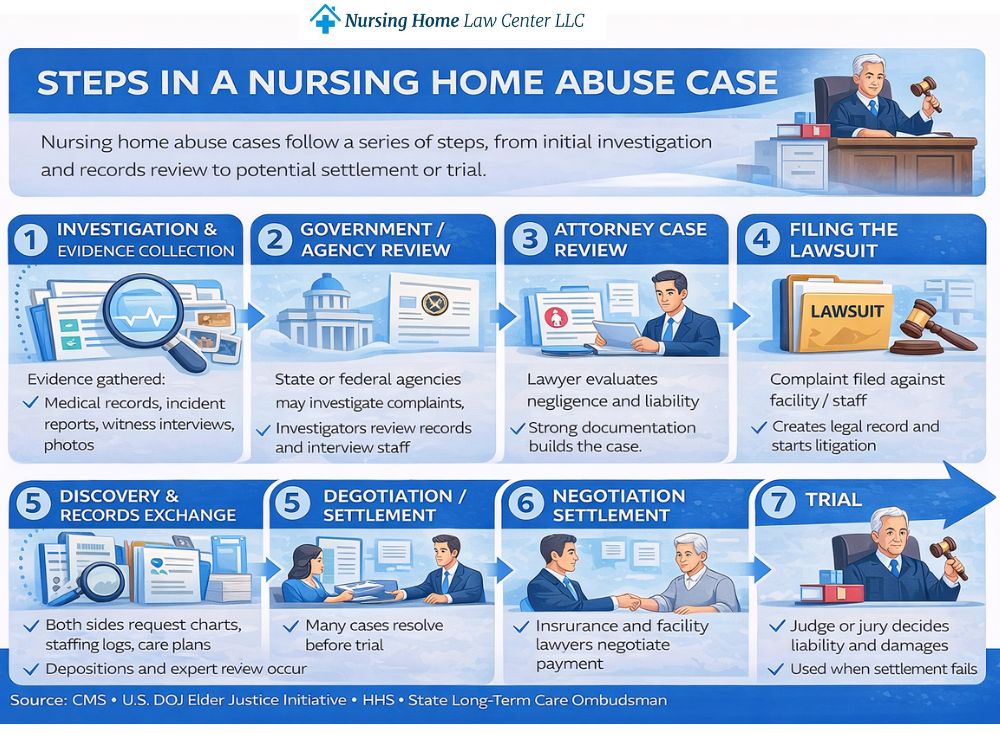
Most cases are settled out of court. Nursing home abuse verdicts can be higher than a settlement, but they are also more expensive and take longer to be resolved.
A nursing home arbitration agreement is typically signed as part of the nursing home contract. It means that you agree to resolve conflicts and settle claims out of court. An attorney can represent you during the arbitration process and ensure you are treated fairly.
The worst nursing homes in Oakland have placed residents in imminent jeopardy based on their CMS star rating, recent inspection findings, infection rates, and complaints. As of January 1, 2025, the worst nursing homes in Oakland include: