$3,100,000Pressure sore death
$2,333,000Fall involving traumatic brain injury
$1,500,000Bedsore settlement
$1,499,000Dementia patient injury
$1,250,000Repeated fall injuries

Colorado Nursing Home Abuse Lawyer

Colorado Nursing Home Abuse Laywer Stats

Pursue Justice and Fair Compensation for Injuries and Neglect in Colorado Nursing Facilities

Summary:

C.R.S. § 25-1-120 requires Colorado facilities to adhere to publicly stated policies that protect residents from nursing home abuse. If your loved one had their rights violated, a Colorado nursing home abuse lawyer is here to help you explore your legal options and seek compensation. Contact us today for a free case review. 

Why You Need a CO Nursing Home Abuse Attorney

When nursing home abuse occurs, family members are often overwhelmed by the legal process. An experienced personal injury lawyer can manage each aspect of a nursing home abuse lawsuit, including investigating the incident and negotiating with insurance companies. This ensures you can focus on your loved one’s well-being rather than managing paperwork. 

Why Choose the Nursing Home Law Center

Our Super Lawyers-rated legal team has extensive experience in personal injury claims, having helped over 5,000 clients across the United States. We have 10/10 ratings with both AVVO and Justia, demonstrating both our strong track record and compassionate approach to complex cases. By serving as advocates for you and your elderly relative, we ensure you are treated fairly by insurance companies and the legal system. 
colorado nursing home abuse lawyer

How Common Is Abuse and Neglect in Colorado Nursing Homes?

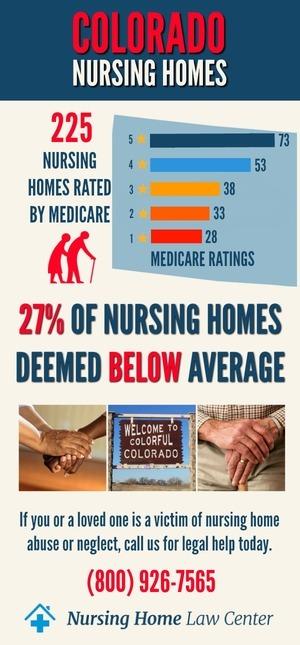
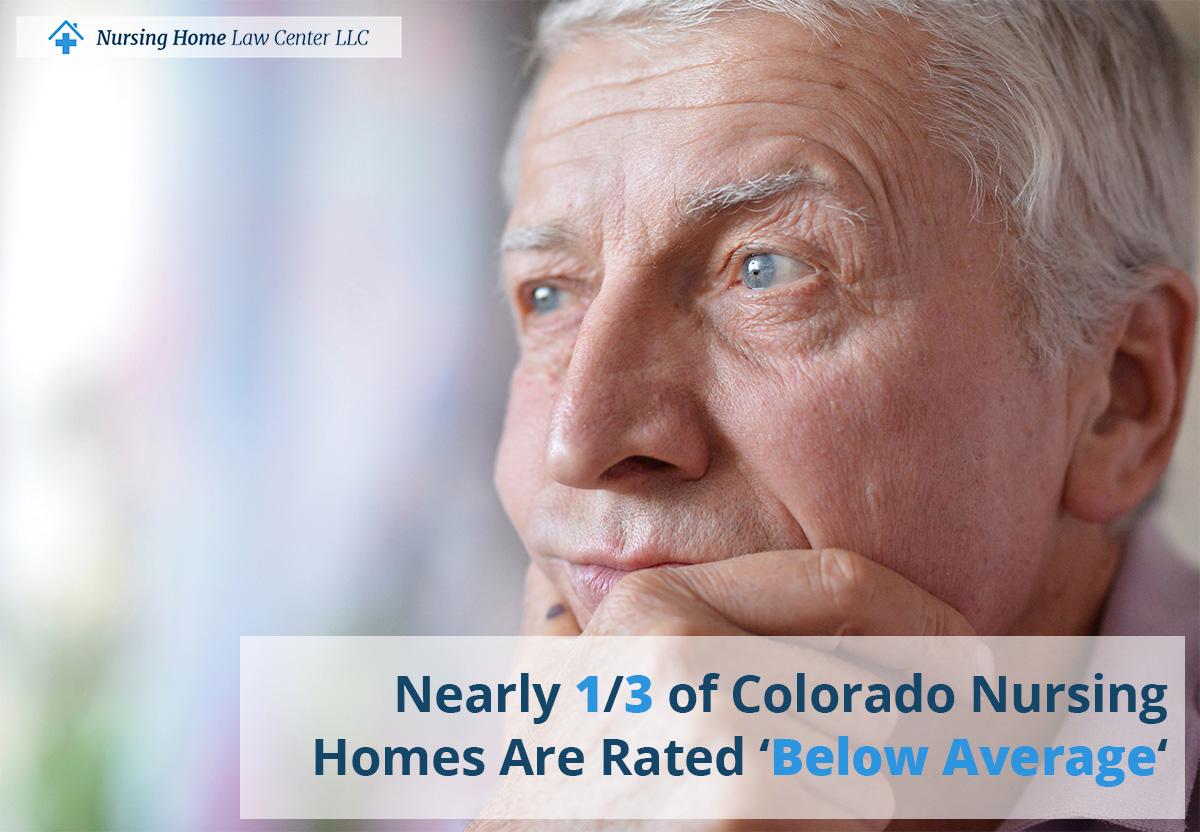
Around 27% of nursing homes in Colorado are deemed below average by the CMS.

What Is Nursing Home Abuse?

Nursing home abuse is any action that causes physical, financial, or emotional harm to someone in a nursing home setting. In many cases, this form of elder abuse is perpetrated by assisted care facility staff. 

There are several types of elder abuse, including the following. 

Physical Abuse

Physical elder abuse may involve battery, like hitting or kicking a senior, or it may involve using restraints as punishment. Physical restraints, like straps, or chemical restraints, like sedatives, can only be used for legitimate medical purposes, not staff convenience or retaliation. 

Emotional Abuse

Emotional abuse uses verbal or nonverbal behavior to humiliate, insult, demean, or intimidate an elder. Unlike physical abuse, emotional harm may not leave obvious signs and can be difficult to prove. 

Financial Abuse

Financial abuse of elders involves theft, fraud, or financial exploitation, such as intimidating someone into changing their will. 

Sexual Abuse

Elderly sexual abuse may involve rape, sexual assault, non-consensual touching, or sexual harassment. Sadly, it is underreported, especially as victims may have dementia and not understand what is happening. 

Neglect

As noted by the Centers for Disease Control, neglect is the failure to meet an elder person’s basic needs. Nursing home neglect can include staff members denying medical attention, failing to reposition immobile patients, or not offering help with hygiene needs. 
colorado nursing home negligence attorney

What Are the Signs of Elder Abuse in Colorado Nursing Homes and Assisted Living Facilities?

Common signs of nursing home abuse can include:

  • Nursing Home Falls: Falls can result in severe injuries like a subdural hematoma. Facilities should have procedures that prevent elderly residents from suffering physical harm.
  • Broken Bones: Abuse, neglect, or negligence can cause an elderly person to suffer severe fractures, such as hip fractures from a fall or a broken arm from being grabbed roughly.
  • Bed Sores: These nursing home injuries are often a sign of neglect, as they are caused by failure to reposition immobile patients. The infections caused by untreated pressure sores can result in septic arthritis, gangrene, or death.
  • Malnourished Nursing Home Residents: When nursing homes fail to provide residents with proper nutrition, they can suffer from health complications like a weakened immune system, making them more vulnerable to serious complications like sepsis from a minor infection.
  • Nursing Home Patients Suffering from Dehydration: Dehydration is one of the most common untreated medical conditions in care facilities. Severe dehydration can result in kidney damage, cognitive impairment, and wrongful death.
  • Choking Accidents in Nursing Homes: This type of nursing home negligence can cause aspiration pneumonia due to inhaled food entering the lungs. Staff should always monitor dining halls and ensure residents are safe while eating. 
  • Sexually Transmitted Infections: Sexually transmitted diseases are a clear warning sign of sexual abuse in nursing homes and should trigger an immediate investigation.
  • Poor Hygiene: Staff should be available to help residents bathe and use the toilet. Poor personal hygiene often indicates understaffing or negligent cleaning.

What Laws Govern Colorado Nursing Home Residents’ Legal Rights?

Colorado nursing home residents’ legal rights are governed by state and federal laws, including the 1987 Nursing Home Reform Act. This law established the Nursing Home Residents’ Bill of Rights, including freedom from physical danger or psychological abuse. 

The Federal Requirements For and Assuring Quality of Care In Skilled Nursing Facilities (42 U.S. Code § 1395i-3) authorizes the Centers for Medicare and Medicaid Services (CMS) to set quality assurance standards, inspect facilities, and penalize facilities that fail to adhere to basic care standards.

Colorado law sets higher and more specific guidelines for facilities in the state. C.R.S. § 25-1-120 authorizes the Colorado Department of Public Health and Environment to inspect nursing homes and guarantees a resident’s right to freedom from nursing home abuse. 

C.R.S. § 18-6.5-101 et seq develops a list of individuals known to have committed elder abuse or nursing home neglect, meaning that facilities can be held liable if they knowingly hire a person with this history. 6 CCR 1011-1, Chapter 5 (Nursing Care Facilities) sets basic standards of care in Colorado nursing homes and government care facilities. This includes social services, dietary services, medical records management, pest control, and housekeeping.
colorado nursing home abuse attorney

What to Do If You Suspect Abuse in a Colorado Nursing Home

If you suspect that a loved one is being abused or neglected in a nursing home, it’s important to take immediate action. Here are the steps you should follow:

  • Call 911 if your loved one is in immediate danger.
  • Report the abuse to the nursing home administrator or management.
  • File a complaint with your local Ombudsman’s office. The Ombudsman advocates for nursing home residents and can investigate complaints of abuse or neglect.
  • Contact a nursing home abuse lawyer to discuss your legal options and begin the process of seeking justice.

Where and How to Report Nursing Home Abuse in Colorado

Nursing home abuse in Colorado can be reported to local law enforcement, Adult Protective Services, the Colorado Department of Public Health and Environment, or the Colorado Long-Term Care Ombudsman Program. 

When reporting nursing home abuse, provide the victim’s name, location, facility name, date f the incident, types of injuries suffered, and who was present when the abuse or neglect occurred. If possible, include pictures, such as signs of physical abuse or poor facility maintenance. 

911 in Cases of Immediate Danger

911 should be used for emergencies, such as when the person is in danger of a life-threatening medical event or further harm. First responders can remove the victim from the setting, provide medical care, and gather evidence of elder abuse. 

Non-emergencies are when the person is not in immediate danger, such as if they are being emotionally abused.

Colorado Department of Human Services: Adult Protective Services (APS)

Colorado Adult Protective Services investigates neglect and abuse cases, both in care facilities and in the community, while providing resources to elderly individuals and their loved ones. If you suspect nursing home neglect, you can call your county department intake line.

Colorado Department of Public Health and Environment (CDPHE)

CDPHE licenses and inspects nursing homes throughout the state. If there is evidence of nursing home neglect or abuse, CDPHE may investigate and impose fines or license revocation. You can submit a complaint about a care facility online or call 303-692-2442.

Colorado Long-Term Care Ombudsman Program

An ombudsman serves as an advocate for nursing home residents, helping mediate disputes and protect a vulnerable person’s rights. The Colorado Long-Term Care Ombudsman Program is a network of professionals throughout the state, there to support residents. Contact information, including phone numbers, is available on the website

colorado nursing home negligence lawyer

How Our Colorado Elder Abuse Lawyers Can Help You Recover Maximum Compensation 

Our skilled attorneys can help you with the following services:

  • Identifying liable parties
  • Gathering evidence to prove nursing home abuse
  • Countering common defenses during negotiations
  • Accurately evaluating economic and non-economic damages
  • Managing documents and third-party communications
  • Filing claims in the Hillsborough County Circuit Court or another applicable court

Who Can Be Held Liable in Colorado Nursing Home Abuse Cases?

Potentially liable parties in nursing home abuse cases in Colorado include:

  • Facilities: This could be for negligent supervision, failure to provide appropriate services, or understaffing.
  • Administration and Management: These parties can be liable for negligent hiring, training, or supervision. They may also be liable for failure to intervene if they were warned of potential abuse.
  • Property Managers: If negligence occurred due to poor housekeeping or dangerous facility conditions, property managers can be liable.
  • Nursing Home Staff: Medical professionals may be liable for malpractice depending on the facts of the case.
  • Third-Party Contractors: Travel nurses or other temp staff, as well as their staffing company, can also be liable for nursing home abuse. 

What Evidence Is Needed to File a Nursing Home Abuse Claim in Colorado?

Evidence to file a nursing home abuse claim can include:

  • Care plans and care conference reports
  • Daily charting
  • Medication Administration Records (MARs)
  • Medication orders
  • Incident reports and post-incident monitoring
  • Staffing and assignment sheets
  • Turning and repositioning logs
  • Transfer and hospital records
  • Progress reports from specialists, like speech therapists
  • Facility policies and procedures

What Are Common Defenses in Lawsuits Against Colorado Nursing Homes?

Common defenses used in nursing home abuse claims include the following, which we can counter with strong evidence. 

  • “Unavoidable Decline:” Facilities are supposed to update care plans at least every three months, checking a resident’s status and determining future care needs. This can reveal whether the decline was unavoidable or whether the staff was not following the care plan.
  • “Refused Care:” Any refusals should be documented in daily charting and communicated to the resident’s family. If there are no documented refusals in the nurse’s logs, then this shows that the real issue was nursing home abuse.
  • “Fall Risk:” For falls, facilities may argue that the person was a fall risk. However, care planning requires staff to assess individuals for fall risk and take appropriate actions to prevent falls. If the individual did not have a high fall risk score, our nursing home abuse lawyers can prove the issue was negligence. 
  • “We Followed Policy:” We review facility policies and standard procedures for nursing home abuse cases, then compare them to daily charting, repositioning logs, and medication orders. This can show whether staff followed procedures. 
  • “It Happened Too Fast:” Staff should assess residents for potential risks, like fall risk or choking risk, and take preventative measures to prevent this harm. A nursing home lawyer from our firm can check previous assessments and care plans to prove there was a heightened risk of these issues that staff failed to act upon. 

What Damages Can Colorado Nursing Home Residents and Their Loved Ones Recover in a Nursing Home Lawsuit?

Nursing home lawsuit compensation includes both economic and non-economic damages. Economic damages cover financial losses such as:

  • Medical bills
  • Out-of-pocket medical expenses, like mobility aids
  • Surgeries and hospitalizations
  • Physical therapy and rehabilitation
  • Lost assets from financial abuse
  • Relocation to another nursing home

Non-economic categories cover the emotional and social losses from nursing home abuse, including:

  • Emotional distress
  • Physical pain and suffering
  • Loss of enjoyment of life

For wrongful death claims, loved ones can seek damages for funeral and burial expenses, medical costs before death, loss of companionship, and grief.

What drives case value includes:
  • Severity
  • Preventability
  • Documentation gaps
  • Hospitalizations and transfers
  • Facility-acquired infections
  • Facility history of infractions or fines
co nursing home abuse lawyer

What Is the Average Nursing Home Abuse Settlement in Colorado?

The average nursing home abuse settlement in Colorado is $1,012,571.

Example Cases Handled by Our Law Firm

$12,800,000: Marcel, a Colorado Springs resident, had been admitted to the nursing home after a fall. Due to his injuries, he needed to be repositioned regularly, but staff frequently ignored the turning guidelines and left him on his own. He developed a blood infection from multiple bed sores and passed away.

$2,333,000: Jolanda and Robin were residents of a Sterling, CO, nursing home when both were sexually assaulted by a CNA who had a history of domestic violence. Despite his criminal background, the facility hired him, then refused to make an incident report when the victims spoke up.$1,700,000: Ruth was in a Boulder, Colorado, nursing home due to Parkinson’s Disease. She was marked as a fall risk, but staff consistently failed to help her use the bathroom. While trying to reach the restroom, Ruth fell, suffering a fractured hip and subdural hematoma. Though Ruth survived the initial fall, she had to be in an intensive care unit for several months and ultimately passed away.
nursing home negligence attorney colorado

Book a Free Consultation With Experienced Personal Injury Lawyers

If your loved one has suffered abuse or neglect in a Colorado nursing home, the experienced attorneys at Nursing Home Law Center are here to help. With years of experience, our nursing home abuse law firm is committed to securing justice for victims and their families.

We work on a contingency-fee basis, meaning you pay no legal fees unless we win. Call us at (800) 926-7565, or fill out our contact form.
colorado nursing home abuse neglect lawyer

FAQs

How long do victims and family members have to file a lawsuit in Colorado?

You typically have two years from the date of the abuse to file a claim (C.R.S. § 13-80-102), but this statute of limitations can vary depending on the circumstances. 

Who can file a wrongful death lawsuit against a nursing home in Colorado?

The next of kin can file a wrongful death suit against a nursing home. This may be a child, spouse, sibling, or legal representative, like a nursing home abuse lawyer. 
nursing home negligence lawyer colorado

What are the worst nursing homes in Colorado?

The worst nursing homes in Colorado have been flagged for a low CMS star rating, which suggests they have placed residents in imminent jeopardy. This can be determined from resident complaints, recent inspection findings, or communicable disease rates in the facility.

Such nursing homes are as follows:

  • Boulder Post Acute, Boulder, Colorado
  • Brookshire Post Acute, Denver, Colorado
  • Cedars Healthcare Center, Lakewood, Colorado
  • Center At Centerplace, Greeley, Colorado
  • Columbine West Health And Rehab, Fort Collins, Colorado
  • Highline Post Acute, Denver, Colorado
  • Holly Heights Care And Rehabilitation, Denver, Colorado
  • Irondale Post Acute, Commerce City, Colorado
  • Juniper Village The Spearly Center, Denver, Colorado
  • Lakeside Post Acute, Wheat Ridge, Colorado
  • Medallion Post Acute Rehabilitation, Colorado Springs, Colorado
  • Pelican Pointe Health And Rehabilitation Center, Windsor, Colorado
  • Poudre Canyon Rehabilitation And Nursing, Fort Collins, Colorado
  • Rehabilitation And Nursing Center Of The Rockies, Fort Collins, Colorado
  • Rio Grande Rehabilitation And Healthcare Center, La Jara, Colorado
  • South Platte Rehabilitation And Nursing, Brush, Colorado
  • Sterling Rehabilitation And Nursing, Sterling, Colorado
  • Sundance Skilled Nursing And Rehabilitation, Colorado Springs, Colorado
  • The Lodge At Red Rocks, Morrison, Colorado
  • Valley View Health Care Center, Canon City, Colorado
  • Westlake Health And Rehabilitation Center, Greeley, Colorado
  • Westwood Post Acute, Denver, Colorado

Client Reviews

Jonathan did a great job helping my family navigate through a lengthy lawsuit involving my grandmother's death in a nursing home. Through every step of the case, Jonathan kept my family informed of the progression of the case. Although our case eventually settled at a mediation, I really was...

- Lisa

After I read Jonathan’s Nursing Home Blog, I decided to hire him to look into my wife’s treatment at a local nursing home. Jonathan did a great job explaining the process and the laws that apply to nursing homes. I immediately felt at ease and was glad to have him on my side. Though the lawsuit...

- Eric