
Experienced Attorneys Protecting the Rights of the Neglected and Abused
The Nursing Home Law Center is committed to providing the legal resources necessary to hold negligent facilities accountable.

Under 42 C.F.R. § 483.12, nursing homes must prevent, report, and investigate sexual abuse allegations. When a facility fails to meet those legal duties, a nursing home sexual abuse lawyer can help family members seek compensation and hold responsible parties accountable through a civil claim.
Elder sexual abuse refers to any sexual conduct imposed on an older adult without valid consent. In a nursing home, this can involve force, coercion, manipulation, threats, or taking advantage of a resident who cannot understand what is happening or cannot communicate consent.
According to the National Consumer Voice for Quality Long-Term Care, nursing home sexual abuse can take many forms, including:
Elder sexual abuse in nursing homes happens during bathing, toileting, dressing, transfers, or other moments when a resident is alone with a caregiver. It may also involve aides, certified nursing assistants, contractors, visitors, or other residents.
Sudden behavioral changes and certain physical signs may point to sexual assault in a nursing home.
Behavioral changes may include:
These changes can overlap with dementia or Alzheimer’s symptoms, which is one reason nursing home sexual abuse often goes unnoticed.
Physical signs may include:
Call 911 or contact local law enforcement to remove your loved one from immediate danger and ask for medical attention. Protecting the resident is the first and most important step. That may mean an emergency room visit, a hospital transfer, or a move to another nursing facility.
Under Section 1150B of the Social Security Act, covered individuals in federally funded long-term care settings must report a reasonable suspicion of a violation against a resident.
Resident rights under 42 C.F.R. § 483.10 also protect dignity, privacy, and the right to raise complaints without retaliation.
Family members can report abuse to the appropriate state agency, such as the long-term care ombudsman.
Write down dates, times, names, room numbers, and anything else the resident shared about the incident. Take photographs of injuries and preserve clothing or bedding. Save texts, emails, voicemails, and notes from conversations with the nursing home and its staff members.
A nursing home sexual abuse lawyer can gather the evidence needed to move the case forward, including witness testimony, incident reports, care plans, and medical records.
Our nursing home abuse attorneys begin with a free and confidential consultation to review your case and determine whether you may have grounds to pursue legal action. From there, we handle each step of the legal process, including:
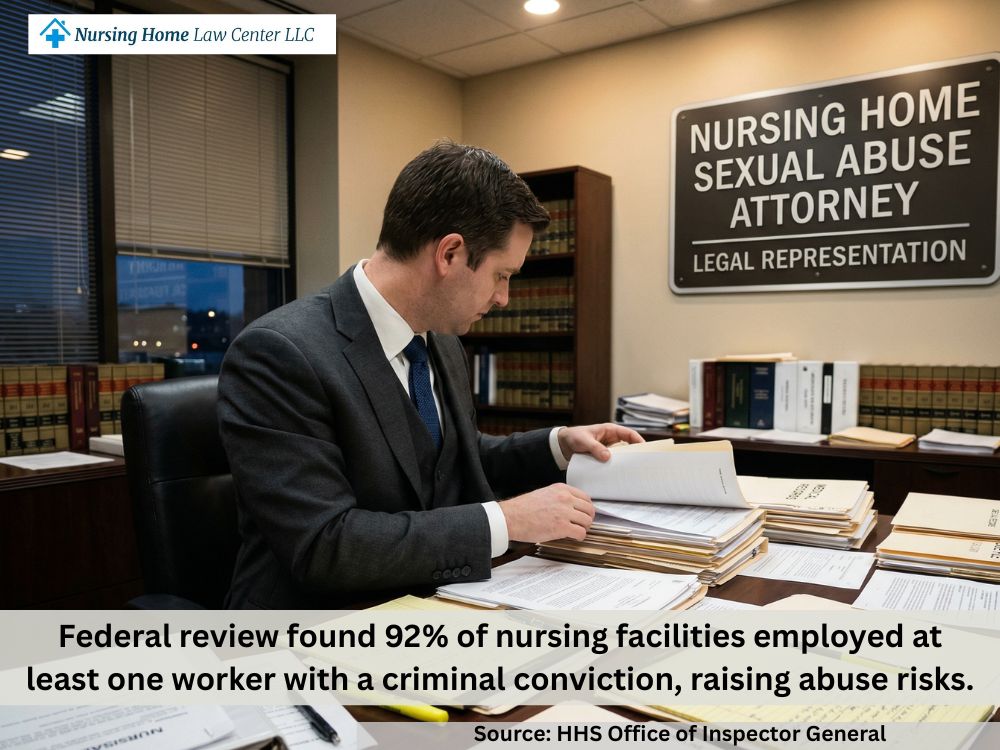
A strong case does not stop with the person who committed the assault. We investigate whether the nursing home ignored warning signs, kept dangerous staff members in place, failed to screen workers, or left vulnerable residents exposed to known risks.
Our experienced attorneys have recovered substantial compensation in nursing home sexual abuse cases, including:
Sexual abuse in nursing homes and other long-term care facilities is more common than many families realize. Many incidents never make it into official data because elderly victims fear retaliation or cannot clearly communicate what happened.
Even so, the reported figures are troubling. In 2024, the National Ombudsman Reporting System recorded 1,816 sexual abuse complaints in nursing homes and other long-term care settings.
A CNN investigation found more than 16,000 sexual abuse complaints in long-term care facilities since 2000. Between 2010 and 2015, 226 nursing homes were cited for sexual abuse, yet only 16 lost federal funding.
A systematic review has also found that 12% to 23% of residents in aged care facilities were involved in resident-to-resident mistreatment, including sexual conflict.
The average settlement in nursing home abuse cases involving sexual assault is $854,666.
Jane Doe lived at Bolton Manor Nursing and Rehabilitation Center from 2004 to 2011. In July 2011, she was sent to the hospital after staff discovered vaginal bruising, lacerations, and swelling. Her representatives alleged that a nursing aide sexually assaulted her and sued Kindred Healthcare for negligent care and sexual assault. The defense denied that any assault occurred and argued the injuries may have resulted from a fall, a wheelchair straddle injury, or another non-assault cause. They also pointed to the resident’s denial, the lack of criminal charges, and an inconclusive state investigation. The jury still found the facility negligent and awarded $2,014,000 for physical pain and loss of dignity.
An 81-year-old resident of Jacksonville Nursing & Rehab Center alleged that a male nurse’s aide sexually assaulted her by rubbing her vagina. She later sued the facility and its management company for negligent hiring and retention. Her lawyers argued the defendants had warning signs, including a note from another aide describing earlier abusive conduct involving a different resident. The defense disputed whether that note existed before the assault and maintained that the aide’s background check was clean. The resident later changed nursing homes because she feared for her safety and suffered nightmares and emotional trauma. The jury returned a defense verdict, but a $50,000 to $150,000 high-low agreement controlled the outcome.
Yes. Steps that help prevent nursing home sexual abuse include:
Some residents face a much higher risk of sexual abuse than others. The danger usually rises when a person has trouble recognizing abuse, resisting it, or reporting it.
The CDC identifies cognitive impairment, physical limitations, dependence, and social isolation as risk factors in elder sexual abuse.
Risk factors for nursing home sexual abuse include:
Liability in elder sexual abuse cases is established by proving four core elements:
Yes. Suing a nursing home for negligence focuses on several failures:
In nursing home abuse cases involving sexual assault, liability depends on who committed the abuse, who allowed the risk to develop, and who failed to act once warning signs appeared.
Potentially liable parties may include:
In resident-to-resident nursing home abuse cases, the facility may be liable if it knew, or should have known, that one resident posed a danger and failed to protect others. The focus is on the nursing home’s failure in risk assessment, revising care plans, supervision, response to prior incidents, and separating residents when necessary.
Evidence in a nursing home sexual abuse lawsuit may include:
Yes. A resident with dementia may be unable to understand the nature of the act or protect themselves from manipulation, coercion, or other tactics used to take advantage of the resident.
Yes. The estate or surviving family members may have the right to file a nursing home wrongful death lawsuit if the sexual abuse contributed to the resident’s death.
Compensation in nursing home abuse cases may include:
In a nursing home sexual abuse case, punitive damages may be available when the facts show reckless indifference to resident safety, deliberate disregard of abuse complaints, concealment, falsified records, or keeping a known danger in place. Whether punitive damages are available depends on state law and the strength of the evidence.
The statute of limitations for nursing home abuse lawsuits depends on state law, so the filing deadline can vary widely. Some states also have tolling rules or discovery rules that may extend the time to sue in certain cases. Even so, delay can seriously damage a claim because records may be lost, surveillance footage may be erased, and witness memories can fade. Urgent legal review is critical.
Our nursing home sexual abuse lawyers handle these cases on a contingency fee basis. That means you do not pay attorney’s fees upfront. We only get paid if we recover compensation for you through a settlement or verdict.
If your loved one suffered sexual abuse in a nursing home facility, taking legal action is essential to seek justice for your loved one and protect other elderly residents.
A nursing home abuse lawyer can investigate what happened, obtain and preserve evidence to strengthen your claim, identify the responsible parties, and pursue compensation.Our nursing home abuse attorneys represent elderly victims nationwide. Call us at (800) 926-7565 or fill out our contact form to schedule a free consultation and discuss your legal options.