$3,100,000Pressure sore death
$2,333,000Fall involving traumatic brain injury
$1,500,000Bedsore settlement
$1,499,000Dementia patient injury
$1,250,000Repeated fall injuries

New York Nursing Home Abuse Attorney

Jennifer Wilson
Attorney Jennifer Wilson
Licensed in New York

Pursue Justice for Injuries and Neglect in New York Nursing Facilities

Summary:

N.Y. Pub. Health Law § 2801-d imposes civil liability on nursing homes that deprive residents of their rights or benefits, such as the right to be free from abuse. If you suspect your loved one’s rights have been violated, a New York nursing home abuse attorney can help you make a legal claim and seek compensation. Contact us today for a free case review about a nursing home neglect lawsuit. 

What Are Common Forms of Abuse in New York Nursing Homes?

Common forms of elder abuse in nursing home settings can include physical, emotional, financial, and sexual abuse, as well as neglect. Elder abuse is a widespread phenomenon that affects thousands of New York residents each year, making it crucial to act quickly. 

Physical Abuse

Physical elder abuse can involve either physical violence, like battery, or the inappropriate use of restraints. Federal and state law require that nursing home staff members only use physical restraints, like wrist wraps, or chemical restraints, like antipsychotics, when a resident poses a risk to themselves or others. 

Emotional Abuse

Emotional elder abuse includes actions or speech meant to intimidate, humiliate, insult, or demean a vulnerable adult. It can be harder to identify these nursing home abuse victims, especially if they suffer from cognitive impairments.  

Financial Abuse

Elder financial abuse occurs when someone, such as a facility staff member, uses the victim’s resources for personal gain. This can include bank accounts, Social Security benefits, or changes to wills and deeds. 

Sexual Abuse

Sexual abuse of the elderly may range from non-consensual sexual contact to rape or sexual assault, often involving the most vulnerable residents as victims. 

Neglect

Nursing home neglect occurs when a nursing home facility fails to provide necessary medical treatment, personal hygiene assistance, or adequate nutrition and hydration. 
What Causes Abuse in New York Nursing Homes and Assisted Living Facilities?

New York Nursing Homes Abuse Lawyer Stats
Click to Enlarge

Causes of nursing home abuse can include:

  • Understaffing: Low staff-to-resident ratios result in patient care suffering, and vulnerable individuals may not receive timely intervention for issues such as personal grooming or repositioning.
  • Poor Training and Inadequate Supervision: Residents should be supported by licensed professionals, but some care homes hire temporary workers with no experience.
  • Prioritizing Profit: Facility owners might cut corners and slash budgets, severely impacting a resident’s quality of life.
  • Inadequate Policies and Procedures: Lack of monitoring or complaint procedures can lead to abuse, financial exploitation, and nursing home neglect. 

How to Recognize Elder Abuse in a New York Nursing Home

Signs of nursing home abuse can include:

Why Choose the Nursing Home Law Center

The New York attorneys at Nursing Home Law Center have a combined 100 years of legal experience and have helped over 5,000 clients nationwide. Our compassionate expertise has earned us a 10/10 rating on AVVO and Justia, as well as the prestigious Super Lawyers designation. We guide clients through the legal process, investigate suspected nursing home abuse, and manage negotiations so clients can focus on healing.

Example Cases Handled by Our Experienced Attorneys

$12,800,000: Felicia, a Westchester County nursing home resident, was admitted to a nursing home after a fall at home. She required regular repositioning, but the understaffed facility failed to follow her care plan and did not turn her every two hours. We reviewed medical records and found that she was only turned every 6 hours. Felicia developed stage 4 pressure ulcers that caused sepsis, which resulted in her death in the hospital. 

$1,500,000: Roger, a dementia patient, gained access to cleaning chemicals and drank them, thinking they were juice. This resulted in severe esophageal burns that required surgery. During our investigation, we learned that the door alarm meant to protect Roger had been disarmed, and staff had failed to lock the cleaning supplies cabinet.$1,250,000: Anna had dysphagia caused by her Parkinson’s disease, making it difficult for her to swallow thin liquids. A CNA gave her soda despite the care plan prohibiting any liquids without thickeners. Anna choked on the drink and developed aspiration pneumonia that required hospitalization.
New York Nursing Home Abuse Lawyer

What New York Laws Govern Nursing Home Residents’ Legal Rights?

New York nursing home residents’ legal rights are governed by the state’s public health laws and federal laws around facility standards. 

N.Y. Pub. Health Law § 2803-c requires facilities to publicly state a resident’s rights and provide details about contacting the state’s long-term ombudsman program to resolve complaints. Facilities are also required to spend at least 70% of their profit on resident care and limit profits to only 5% of revenue, as per Public Health Law §2828. This law was upheld by the New York Supreme Court in Grand South Point, LLC v. Bassett.

The Patient Abuse Reporting Law mandates that nursing home staff report abuse or neglect to the appropriate authorities or face a civil penalty. Residents also have the right to sue a facility for abuse or neglect (Public Health Law § 2801-d).

At the federal level, the 1987 Nursing Home Reform Act established residents’ rights and authorized the Centers for Medicare & Medicaid Services (CMS) to enforce quality-of-care standards set forth in 42 CFR §483.25. Facilities must administer the Resident Assessment Instrument, commonly referred to as the Minimum Data Set (MDS) to measure patient care and plan appropriate treatment for each resident (42 CFR §483.20(b) (1)). 

To ensure quality of care, every resident must be seen by a physician at least once every 30 days for the first 90 days after admission, and then once every 60 days thereafter (42 CFR §483.30). 
Nursing Home Negligence Attorney New York

What to Do If You Suspect Abuse in a New York Nursing Home

If you suspect nursing home negligence or abuse, follow these steps as soon as possible:

  • Call 911 if the resident is in immediate danger.
  • Report the suspected neglect or abuse to the facility administration.
  • Gather evidence, like records and witness statements.
  • Take pictures of any visible injuries.
  • Contact an experienced attorney to initiate a personal injury claim. 

Our attorneys will guide you through the reporting process for state agencies, gather comprehensive documentation, and initiate negotiations with insurance companies. 
New York Nursing Home Abuse Attorney

Where and How to Report Nursing Home Abuse in New York

Nursing home abuse in New York can be reported to local law enforcement, the Department of Health, Adult Protective Services, the Vulnerable Persons Central Register, or the local long-term care ombudsman.

To decide where to report first, consider whether this is an emergency or a non-emergency. Emergencies, like a life-threatening medical event or active physical abuse, should be reported to 911. Non-emergencies can be reported to Adult Protective Services, the Department of Health, or the long-term care ombudsman.

When reporting abuse, include the following information:

  • Victim’s name
  • Contact information for follow-up
  • Facility name and location
  • Dates, times, and locations of the abuse
  • Type of abuse and injuries caused
  • Narrative of the events
  • Individuals involved, such as staff or other residents
  • Follow-up actions taken and what medical care was provided

911 in Cases of Immediate Danger

If the victim is actively being harmed or suffering from life-threatening medical conditions, call 911 to secure immediate medical care. Responding officers can gather information and initiate an investigation. 

NYS Department of Health (DOH)

The New York State Department of Health (DOH) licenses skilled nursing facilities, including nursing homes and assisted living facilities. If they determine that a resident’s well-being is at risk, they will investigate and issue citations. 

You can report complaints via the online complaint form or by calling 1-888-201-4563.

Vulnerable Persons Central Register (VPCR)

The Vulnerable Persons Central Register, administered by the Justice Center for the Protection of People With Special Needs, collects reports about potential abuse of a vulnerable individual so that the Justice Center can investigate. Loved ones can make a report by calling 1-855-373-2122 or using the online webform

NYS Long-Term Care Ombudsman Program

An ombudsman serves as a third-party advocate for long-term care residents, protecting their best interests and mediating between parties to ensure the residents’ safety. Each area of the state has its own long-term care ombudsman. You can find your local ombudsman on the NYS Long-Term Care Ombudsman Program site, or call 1-855-582-6769 for help. 

Adult Protective Services (APS)

Adult Protective Services intervenes in cases of nursing home abuse, protecting the victim and performing an investigation to determine whether charges can be filed. These officials can also help you access resources for community support. You can call the APS hotline at 1-844-697-3505 to be redirected to your local office, or call the office directly.
Nursing Home Abuse Attorneys New York

How Our New York Elder Abuse Lawyers Can Help You Recover Fair Compensation 

A nursing home abuse lawyer from our firm can assist you with the following services:

  • Identifying liable parties
  • Gathering documentation and evidence of neglect
  • Countering common defenses in nursing home abuse claims
  • Calculating damages 
  • Negotiating for a fair settlement

Who Can Be Held Liable in New York Nursing Home Abuse Cases?

Potentially liable parties in nursing home abuse cases in New York include:

  • Facilities
  • Management and administration
  • Third-party contractors and staffing agencies
  • Property management companies, for negligent maintenance
  • Individual licensed professionals, if applicable

What Evidence Is Needed to File a Nursing Home Abuse Claim in New York?

Evidence our nursing home abuse lawyers can use to prove negligence includes:

  • Care plans and daily nurse charting
  • Medication Administration Records (MARs) and medication orders
  • Minimum Data Sets (MDS), like fall risk
  • Incident reports and post-incident monitoring
  • Staff logs and assignment sheets
  • Hospital transfer records, including discharge instructions
  • Turning and repositioning logs
  • Specialist referrals 
  • Call logs and communications with families
  • Facility procedures and policies

We will inspect these for red flags, such as missing notes from appointments, late charting, missing turning logs, or repeated falls without care plan updates or interventions. 
New York Nursing Home Abuse attorneys

What Are Common Defenses in Lawsuits Against New York Nursing Homes?

Defenses that facilities use to deny liability include the following:

  • “Unavoidable Decline:” If a decline was unavoidable, it would appear in declining lab results, diagnostic reports, and care plan updates. We will inspect these records to demonstrate that diagnostic assessments do not match this claim.
  • “Refused Care:” Refusals should be communicated to the family and documented in daily charting. If these are not present in any of the documentation, it suggests that the patient was denied care. 
  • “Fall Risk:” All residents should be assessed for fall risk as part of their intake and ongoing care plan management, as this ensures that they receive the support they need. If the resident was documented as a fall risk but care plans were not being followed, this indicates nursing home negligence. 
  • “We Followed Policy:” Policy is not a defense for negligence, as the policy may not meet the CMS care standards. We will review policies and consult with experts to determine whether the policy was being followed and if it aligns with best practices.
  • “It Happened Too Fast:” While an incident may have happened quickly, it may have been preventable if staff had followed care plans and policies. We will review the resident’s assessments and daily charting to see if there were warning signs that were ignored. 

What Damages Can New York Nursing Home Residents and Their Loved Ones Recover in a Nursing Home Lawsuit?

Nursing home lawsuit compensation is separated into economic and non-economic damages. Economic damages cover financial losses, such as:

  • Medical bills
  • Out-of-pocket medical expenses
  • Relocation
  • Physical therapy
  • Lost funds from theft or financial abuse

Non-economic damages consider the social and emotional impact, including:

  • Physical pain and suffering
  • Emotional distress
  • Loss of enjoyment of life

For wrongful death suits, families can secure funeral and burial expenses, as well as loss of companionship and grief. Punitive damages may be awarded if the abuse went beyond gross negligence and was intentional. 

What drives case value can include severity, preventability, lack of documentation, repeated hospitalizations, infections, and a facility’s history of infractions or fines.
New York Nursing Home Negligence Lawyer

What Is the Average Nursing Home Abuse Settlement in New York?

The average nursing home abuse settlement in New York is $1,103,014.

Book a Free Consultation to Explore Your Legal Options 

A nursing home abuse lawyer can help you explore your options, manage third-party communications, and guide you toward helpful resources to heal. We work on a contingency fee basis, meaning there are no upfront legal fees. To schedule a consultation with a compassionate nursing home abuse lawyer, call us at (800) 926-7565 or contact us online.
New York Nursing Home Abuse & Neglect Lawyers

FAQs

Can nursing home abuse be prevented?

Yes, elderly abuse can be prevented through caregiver support, community involvement, and proper staff training to identify signs of abuse. 

Can you prove a New York nursing home was understaffed?

Understaffing in a nursing home can be proven using staffing sheets, assignment logs, and daily charting. 

Can you prove medication errors in a New York nursing home?

Medication Administration Records (MARs) log what medications are administered and can be used to prove medication errors. 

Can you sue a nursing home for a slip and fall in New York?

Yes, you can sue for a slip-and-fall accident. This may fall under both nursing home negligence and premises liability, which means the facility did not create a safe environment. 

Can you sue a nursing home for medical malpractice?

You can sue individual licensed medical providers for malpractice, depending on whether they failed to uphold the standards of care in their specialty. 

Can you sue a New York nursing home for an assault by another resident?

Yes, you can sue a nursing home for resident-to-resident abuse, as it means the facility did not provide a safe environment or provide adequate supervision to prevent abuse. 

How long do victims and family members have to file a nursing home lawsuit in New York?

There are different statutes of limitations depending on what type of claim you are filing, which include:
  • Personal Injury: There is generally a three-year statute of limitations for these claims (CPLR § 214(5)). 
  • Medical Malpractice: Action must be taken within two years and six months of the original injury, or within two years and six months of treatment discontinuation (CPLR § 214-a). 
  • Actions Under § 2801-d: The case Zeides v. Hebrew Home for Aged At Riverdale, Inc determined that claims can be brought within three years if it involves violations of personal rights, or two and a half years if it involves medical malpractice.
  • Wrongful Death Claims: A wrongful death suit must be brought within two years of the date of death (EPTL § 5-4.1).
New York Nursing Home Negligence Attorney

Should I transfer my loved one to a nursing home if I think they’re being abused or neglected?

Transferring to a different nursing home ensures your loved one is safe while we investigate. However, every situation is different. When you contact us for a free consultation, we will help you decide the best course of action. 

What if the nursing home retaliates if I file a complaint?

The Nursing Home Residents’ Bill of Rights explicitly prevents retaliation for addressing grievances. If you or your family are retaliated against, we can help you take legal action. We also handle all third-party communications on your behalf. 

Who can file a wrongful death lawsuit against a nursing home in New York?

The next of kin or a personal representative can file a wrongful death suit. This may be a spouse, child, sibling, power of attorney, or a nursing home abuse lawyer. 

How common is abuse and neglect in New York nursing homes?

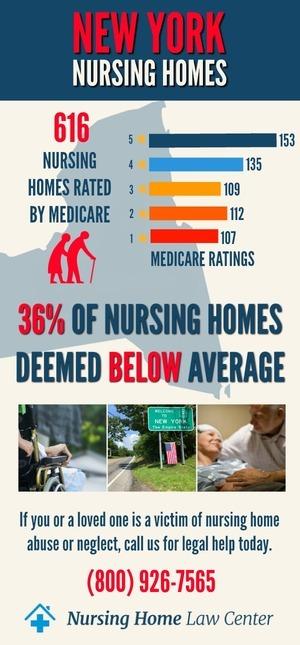
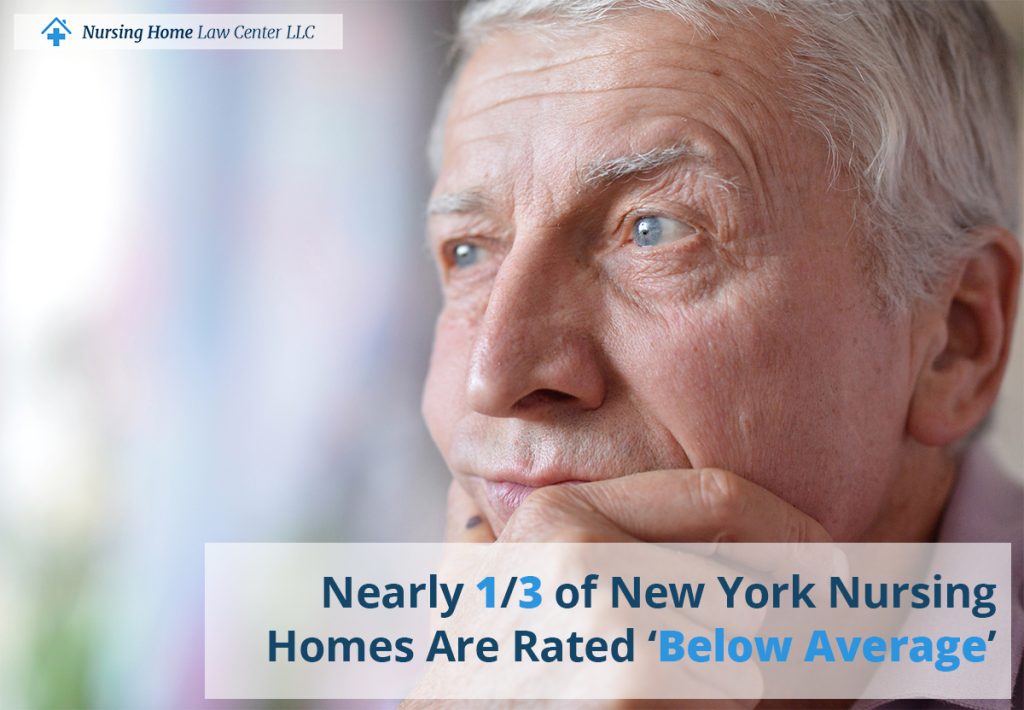
Around 36% of nursing homes in New York are deemed below average by the CMS. The New York State Office of Aging reports that as many as 300,000 elderly residents may be impacted by abuse per year. 

How do arbitration agreements and admission contracts impact New York nursing home abuse cases?

Arbitration agreements are often part of admission contracts, requiring you to resolve disputes through private arbitration rather than lawsuits. This means our attorneys will negotiate with the facility and an arbitrator to secure a settlement. We will be present at negotiation meetings to protect your rights and ensure you are treated fairly. 

What are the worst nursing homes in New York?

The worst nursing homes in New York are determined by their CMS star rating and recent inspection findings. Factors such as high infection rates, misclassification of resident RUG scores, or rights-violation complaints may also place residents in imminent jeopardy, resulting in low ratings. 

The following New York nursing homes have been identified as severely deficient:

  • Bellhaven Center For Rehab And Nursing Care, Brookhaven, New York
  • Berkshire Nursing & Rehabilitation Center, West Babylon, New York
  • Cayuga Nursing And Rehabilitation Center, Ithaca, New York
  • Central Park Rehabilitation And Nursing Center, Syracuse, New York
  • Chestnut Park Rehabilitation And Nursing Center, Oneonta, New York
  • Downtown Brooklyn Nursing & Rehabilitation Center, Brooklyn, New York
  • Eddy Heritage House Nursing And Rehabilitation Center, Troy, New York
  • Elderwood At Waverly, Waverly, New York
  • Good Shepherd Fairview Home Inc,  Binghamton, New York
  • Henry J Carter Skilled Nursing Facility, Manhattan, New York
  • Hudson Hill Center For Rehabilitation & Nursing, Yonkers, New York
  • Monroe Community Hospital, Rochester, New York
  • Nassau Rehabilitation & Nursing Center, Hempstead, New York
  • Ontario Center For Rehabilitation And Healthcare, Canandaigua, New York
  • Peninsula Nursing And Rehabilitation Center, Far Rockaway, New York
  • Pine Forest Care Center For Rehab & Healthcare, Huntington, New York
  • St Luke Residential Health Care Facility Inc, Oswego, New York
  • Sunset Nursing And Rehabilitation Center, Inc, Boonville, New York
  • Swan Lake Nursing & Rehabilitation, Patchogue, New York
  • The Grand Rehabilitation and Nursing at Guilderland, Altamont, New York
  • The Grand Rehabilitation And Nursing At Rome, Rome, New York
  • The Grand Rehabilitation And Nursing At Utica, Utica, New York
  • The Hamptons Center For Rehabilitation And Nursing, South Hampton, New York
  • Tolstoy Foundation Rehabilitation and Nursing Center, Valley Cottage, New York
  • Utica Rehabilitation & Nursing Center, Utica, New York
  • Van Duyn Center For Rehabilitation And Nursing, Syracuse, New York
  • Van Rensselaer Manor, Troy, New York
  • Waters Edge At Port Jefferson For Rehab And Nursing, Port Jefferson, New York
  • Waterview Heights Rehabilitation And Nursing Center, Rochester, New York

Nursing Home Abuse Injury FAQs

How Do You Prove Nursing Home Negligence?

The surviving family member of a loved one lost by an avoidable death at a nursing home or assisted living facility could file a civil lawsuit seeking compensation. However, the complaint or petition must be filed in the appropriate county courthouse before the statute of limitations expires.

A nursing home abuse attorney working on behalf of the plaintiffs will seek "discovery," or evidence acquired through depositions and the exchange of documents.

Your lawyer will prove the case at trial showing that negligence directly caused the victim's injury or death by showing:

  • The facility or nursing staff owed the resident a duty of care
  • The facility or staff members breached their duty through negligence, abuse, or intentional act
  • The patient suffered injuries or death as a result
What Can You Sue a Nursing Home For?

According to the CDC (Centers for Disease Control and Prevention), nearly two million American citizens suffer nursing home neglect or abuse at the hands of the staff, families, or others.

Typical reasons victims and surviving families file civil lawsuits against nursing facilities include:

  • Unsanitary or hazardous conditions
  • Negligent hiring and training practices
  • A lack of supervision
  • Bedsores (pressure ulcers)
  • Substandard medical care
  • Medical malpractice
  • Sexual assault
  • Physical abuse
  • Mental or emotional abuse
  • Financial exploitation
How Much Is a Nursing Home Wrongful Death Lawsuit?

Estimating the value of preventable death or personal injury cases is challenging, based on the unique circumstances and evidence. Nursing home abuse attorneys typically estimate the case's worth before compensation demand letters to insurance companies or filing a lawsuit in civil court.

The Health Affairs report reveals that, on average, victims of abuse and neglect recover over $400,000 per case. Lawsuits involving preventable death and catastrophic injuries usually return the highest case values.

How Long Does It Take to Settle a Nursing Home Lawsuit?

Some personal injury attorneys postpone payment of any attorney fees and upfront costs to start the process for a quick resolution. Even so, the legal process of resolving claims or taking the case to trial is slow.

The defendants will usually delay, deny, or defend their actions by showing how the injury, harm, or death could not have been prevented. However, the plaintiff's nursing home abuse attorney will seek the truth when deposing witnesses, reviewing medical records, and gathering evidence to prove the victim's case.

Some victims and survivors filing cases and death suits seek justice for their case and protect other assisted living facility residents. Every nursing home abuse case is different with unique circumstances, and the length of time it takes to resolve the case depends on the facts.

What Is the Most Commonly Reported Type of Elder Abuse?

According to the National Council on Aging (NCOA), senior citizens residing in nursing facilities are more likely to become financially exploited victims than any other type of elderly abuse.

Many financial exploitation cases are self-reported by the victim who recognizes that someone has gained illegal access into their bank accounts, stole their credit cards or cash, or took their belongings. Nursing home neglect is the second most common form of assault on the elderly, where the nursing home staff failed to meet the victim's needs.

Who Can Bring a Wrongful Death Action?

The laws in individual states determine who can submit a preventable death claim or lawsuit seeking compensation. Typically, the decedent's personal representative can file a claim. A representative might be an adult child, the victim's bank, or the law firm managing the estate.

Some states allow any beneficiary inheriting all, or a portion, of the decedent's estate to submit a lawsuit based on an avoidable death.

In some cases, the nursing home resident's surviving children, spouse, or extended families have priority in obtaining compensation to recover damages like hospitalization costs, medical care expenses, lost wages, grieving, pain-and-suffering, and funeral/burial expenses.

Client Reviews

Jonathan did a great job helping my family navigate through a lengthy lawsuit involving my grandmother's death in a nursing home. Through every step of the case, Jonathan kept my family informed of the progression of the case. Although our case eventually settled at a mediation, I really was...

- Lisa

After I read Jonathan’s Nursing Home Blog, I decided to hire him to look into my wife’s treatment at a local nursing home. Jonathan did a great job explaining the process and the laws that apply to nursing homes. I immediately felt at ease and was glad to have him on my side. Though the lawsuit...

- Eric