
Experienced Attorneys Protecting the Rights of the Neglected and Abused
The Nursing Home Law Center is committed to providing the legal resources necessary to hold negligent facilities accountable.

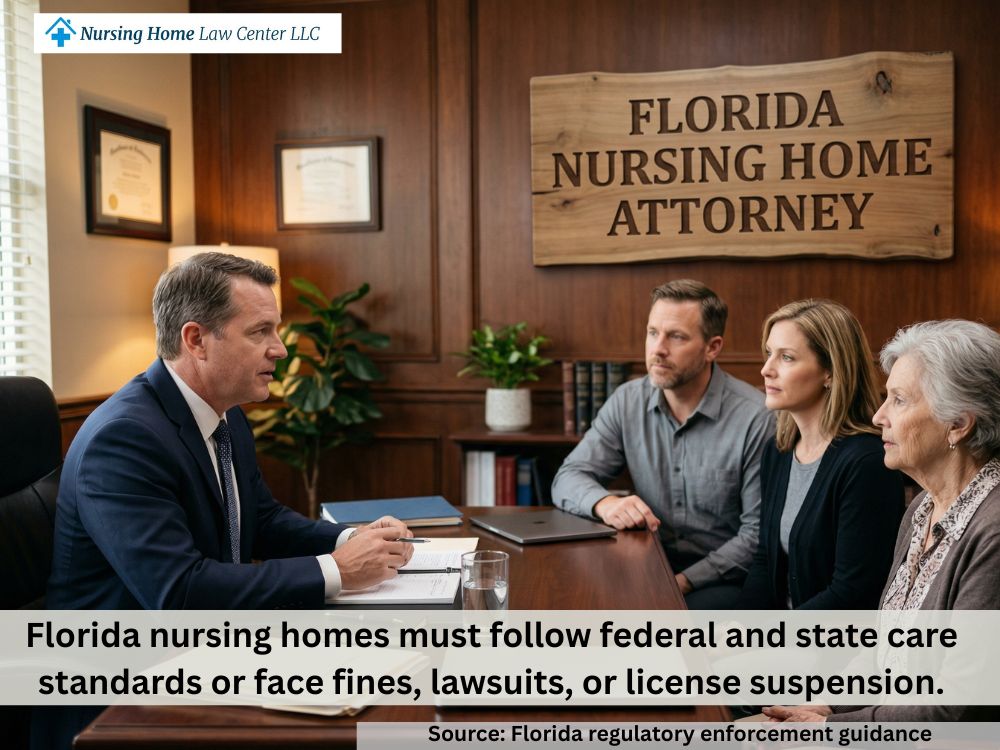
Under Fla. Stat. § 400.023, Florida law authorizes civil claims for negligence and violations of residents’ rights that result in personal injury or death, and it permits those claims against the licensee, certain management companies, managing employees, and direct caregivers. A Florida nursing home abuse attorney from our firm can investigate what happened and help your family pursue justice and fair financial compensation. We offer a free, no-obligation consultation to discuss your options.
Elder abuse in long-term care settings can be physical, emotional, sexual, financial, or neglect-based. It affects hundreds of thousands of adults aged 60 and older. In many cases, several forms of abuse appear together.
Physical elder abuse includes hitting, grabbing, pushing, rough transfers, and other intentional force that causes harm. Some conduct may amount to battery. We also see cases involving improper physical restraints and chemical restraint practices where sedating medication is used for staff convenience instead of legitimate treatment. Florida law protects residents from physical abuse, neglect, and improper restraints except in narrow, documented circumstances.
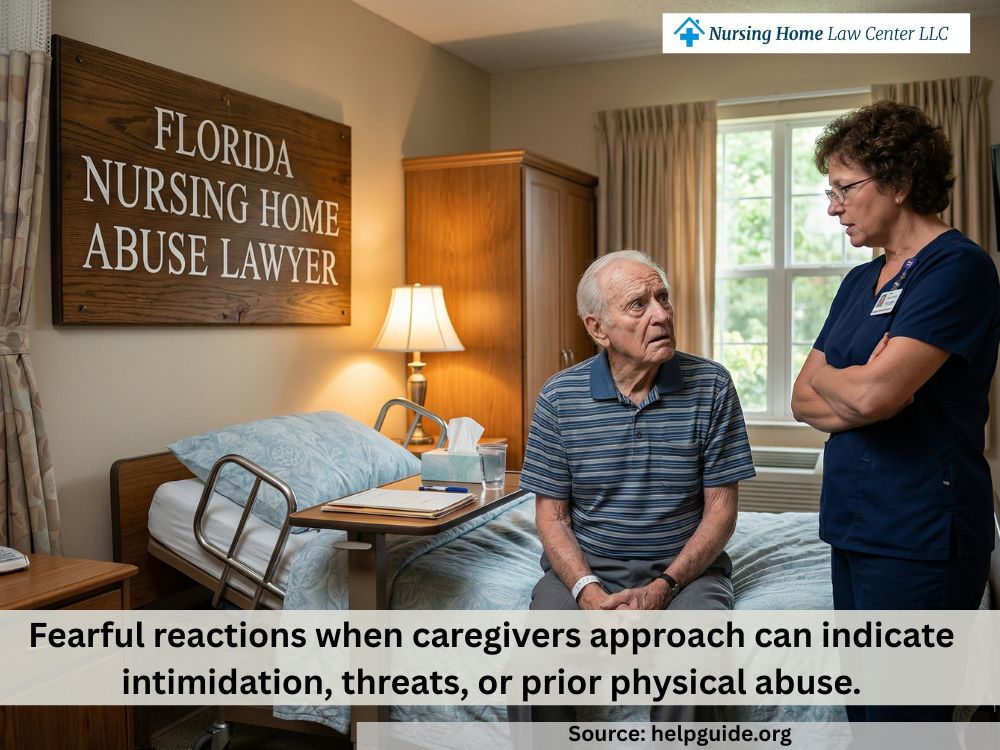
Emotional elder abuse includes threats, humiliation, intimidation, isolation, yelling, verbal abuse, and retaliation for complaints. Florida law protects a resident’s right to present grievances without coercion or reprisal, which is important to keep in mind when staff respond to complaints with fear or shame.
Financial elder abuse may involve theft, forged checks, misuse of benefits, suspicious trust-account charges, or pressure to change estate documents. Florida residents’ rights law addresses resident funds and requires separate accounting when a facility holds money for a resident.
Elder sexual abuse includes assault, coerced touching, sexualized photographing, forced nudity, or sexual contact involving a person who cannot consent. Warning signs may include genital injuries, unexplained STDs, or abrupt fear around certain staff. Florida residents’ rights protections expressly include freedom from sexual abuse.
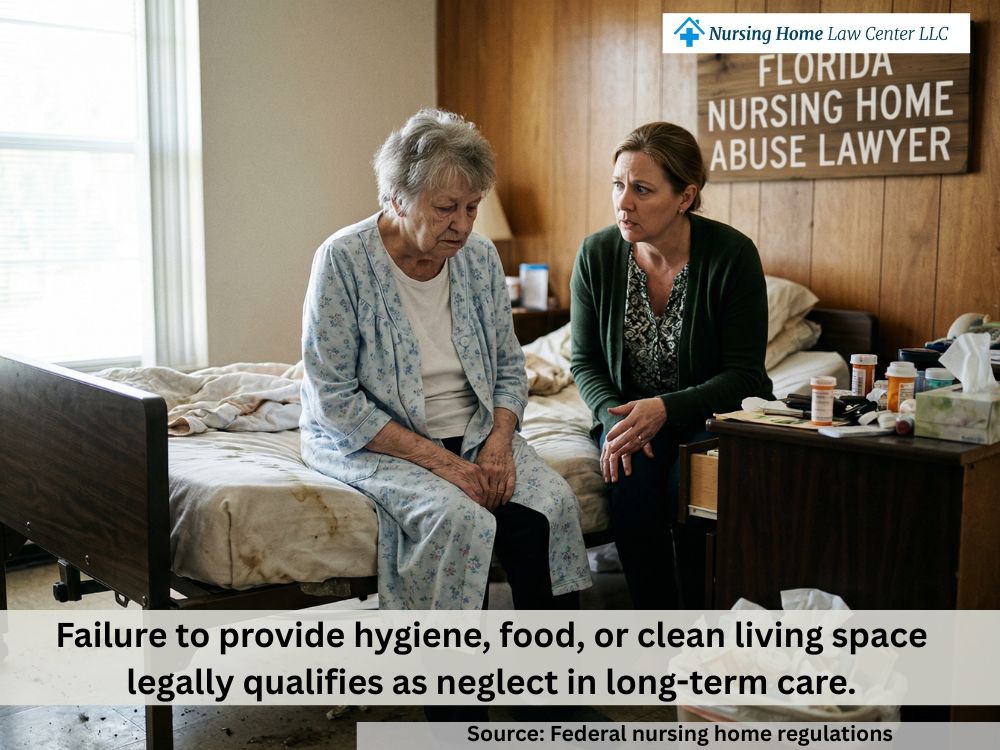
Nursing home neglect often manifests as missed turns, missed meals, skipped toileting, medication errors, poor supervision, and ignored changes in condition. Under Fla. Stat. § 825.102, neglect includes failing to provide necessary care, supervision, food, medicine, or medical services, or failing to protect the resident from abuse by another person. Research on the scope of this issue underestimates the problem because it counts only nonfatal injuries among older adults treated in emergency departments.
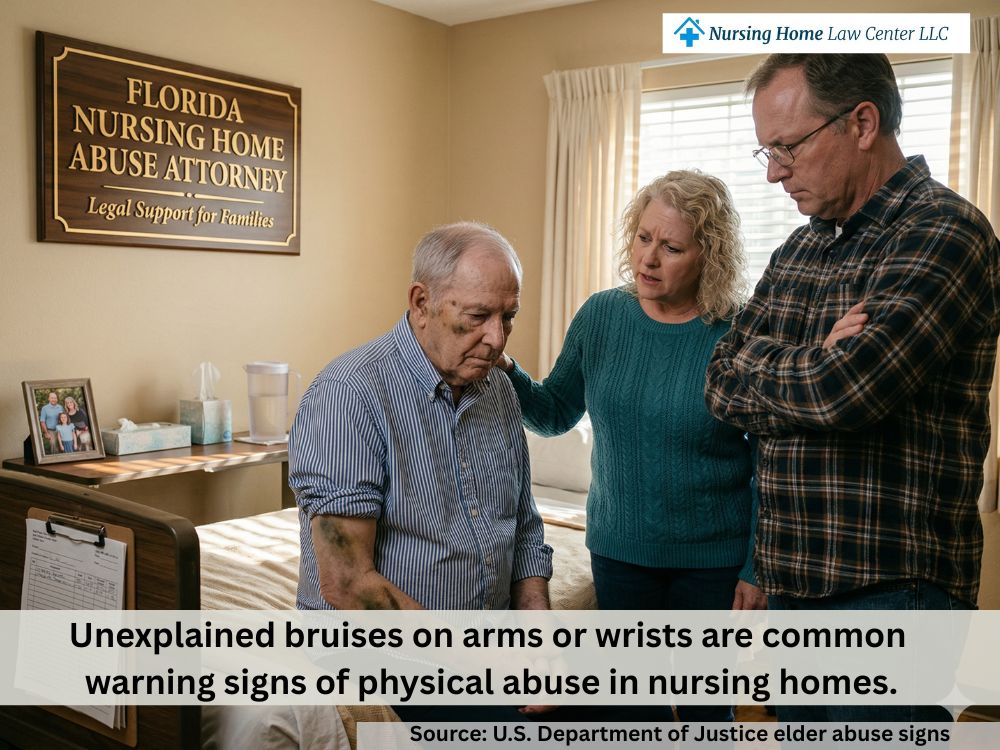
The signs of nursing home abuse and neglect are often medical, behavioral, and environmental at the same time, and they can include:
The legal rights of Florida nursing home residents are governed by layered federal and state nursing home laws and regulations.
Fla. Stat. § 400.0060 et seq. is the broader framework the Florida legislature created for nursing homes and related health care administration facilities. The rights, health, safety, and welfare of residents are not fully ensured by agency rules or by the good faith of owners and operators alone, and it created the State Long-Term Care Ombudsman Program to investigate complaints and protect residents.
Fla. Stat. § 400.022 is the resident’s rights statute. It requires licensees to publish a statement of rights and protects a resident’s civil liberties, private communication, access to family, grievances, inspection records, personal funds, adequate and appropriate health care, privacy, and freedom from mental and physical abuse, sexual abuse, neglect, exploitation, and improper medical care.
Fla. Stat. § 825.101 et seq. supplies criminal definitions for abuse, aggravated abuse, neglect, and exploitation of elderly persons and disabled adults. Section 825.102 defines abuse as intentional physical or psychological injury, or intentional acts likely to cause such injury, and defines neglect as failing to provide essential care or protection.
Florida Administrative Code Rule Chapter 59A-4 sets minimum standards for nursing homes. The chapter covers licensure, Florida facility policies, physician and nursing services, resident assessment and care plans, food and nutrition, medical documentation, risk management, disaster preparedness, and the physical environment.Federal law adds another layer. Under 42 U.S. Code § 1395i-3, a Medicare- or Medicaid-certified skilled nursing facility must provide services that allow each resident to attain or maintain the highest practicable physical, mental, and psychosocial well-being, using written care plans, assessments, qualified staff, clinical records, and complaint transparency. The 1987 Nursing Home Reform Act is the landmark federal reform law behind many of those protections.
If you suspect neglect and abuse in a Florida nursing home, you can report it to 911 in an emergency, the Florida Agency for Health Care Administration, Adult Protective Services, and the Long-Term Care Ombudsman program. Emergency danger and non-emergency reporting serve different purposes, so families often use more than one route.
Call 911 when a resident faces immediate danger, has sustained a serious nursing home injury, is under active assault, is experiencing sexual violence, severe dehydration, or a head injury. Ask responders to document the condition and transport the resident when needed. We also tell families to request a written incident report and a prompt care plan meeting.
The AHCA licenses and regulates nursing homes and accepts consumer complaints online or via phone at (888) 419-3456 or (800) 955-8771. AHCA’s role is regulatory: it can investigate, inspect records, cite deficiencies, and take enforcement action. Families should ask the facility for the chart, MAR, care plan, staffing information, and any incident report.
The APS accepts reports online or through the Florida Abuse Hotline at 1-800-962-2873, which operates 24/7. APS focuses on protecting vulnerable adults from further nursing home abuse and neglect, exploitation, or self-neglect.
The Florida Long-Term Care Ombudsman Program investigates complaints made by or on behalf of residents and describes its work as confidential and free of charge. Its toll-free number is 1-888-831-0404. The ombudsman route is especially helpful for resident-rights complaints, discharge threats, chronic understaffing concerns, and ignored grievances.
A nursing home abuse case often starts with one phone call from family, then turns into a document-heavy fight. Our nursing home neglect lawyers handle the case from the initial call through settlement or verdict. Here’s how we can help:
Potentially liable parties in nursing home abuse lawsuits in Florida include several individuals and entities. One of our first jobs is to identify which Florida facility decision-makers actually controlled staffing, budgeting, supervision, and resident safety, so the right defendants are named from the start:
Strong proof usually comes from the timeline. We build the story through records, witnesses, and a comparison of what the resident needed against what the facility actually did.
Florida nursing homes often repeat the same common defenses, and we prepare for them early.
When a resident suffers harm in a Florida nursing home, the civil case is meant to measure the losses caused by the abuse, neglect, or rights violation. Depending on the facts, recovery may include economic, non-economic, punitive, and wrongful death damages.
These cover the financial losses tied to the injury. These damages can include hospital bills, physician charges, wound care, medication costs, ambulance transport, rehabilitation, additional custodial care, relocation to a safer facility, and other out-of-pocket expenses caused by the abuse or neglect. If the resident needed additional treatment because the facility failed to provide proper care, those additional medical expenses may be included in the case.
These compensate for the injury’s human impact. In Florida nursing home abuse cases, the damages may include pain and suffering, disability, disfigurement, loss of dignity, emotional distress, fear, and mental anguish. These damages are often central in cases involving decubitus ulcers, fractures, dehydration, infections, restraint misuse, or prolonged neglect because the harm reaches far beyond the medical bills.
Punitive damages are not meant to compensate for a loss. They are meant to punish especially serious misconduct and deter similar conduct in the future. In Florida, punitive damages are governed by Fla. Stat. § 768.72 and generally require a sufficient evidentiary showing before they can be awarded. These claims may arise when the evidence suggests gross negligence, intentional misconduct, concealment, or a pattern of reckless disregard for resident safety.
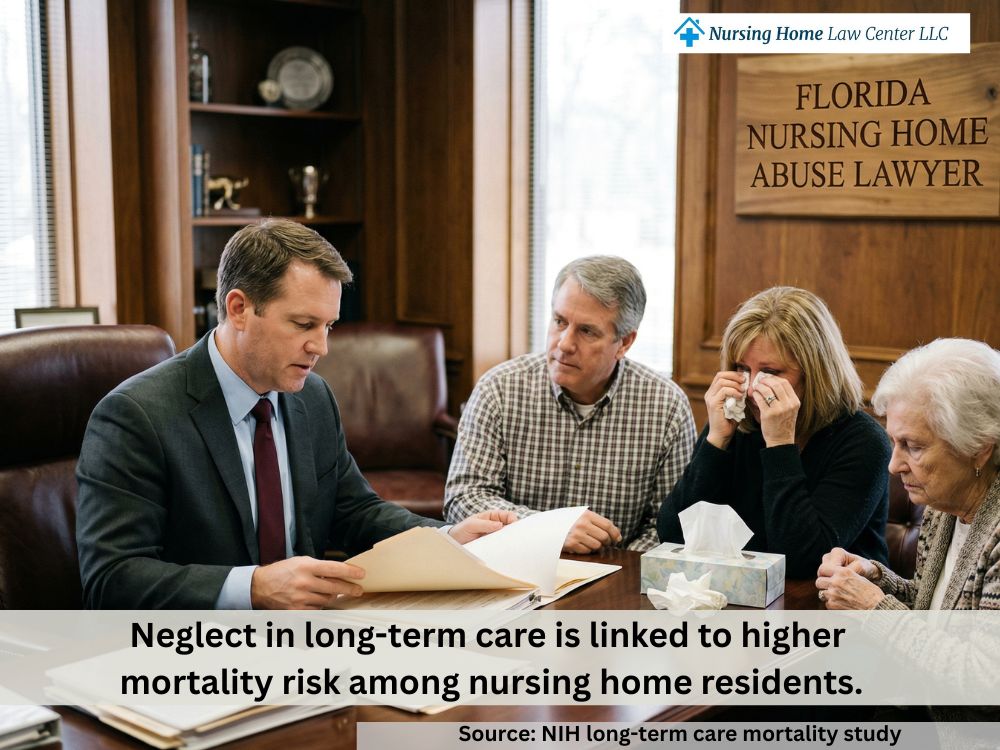
If the abuse or neglect contributed to the patient’s death, the case may proceed as a wrongful death claim. Depending on the facts and the eligible survivors, damages can include funeral expenses, medical expenses related to the final injury or illness, and other losses recognized under Florida wrongful death law. These claims often arise in cases involving sepsis, fatal falls, choking events, untreated infections, or severe pressure ulcer decline.
The amount of compensation awarded in nursing home abuse lawsuits usually depends on the evidence. Cases tend to carry greater value when the injuries are severe, the neglect lasted longer, the records clearly show preventable harm, and the proof ties the resident’s decline to the facility’s failures. Strong documentation of decubitus ulcers, weight loss, dehydration, repeat falls, delayed hospital transfer, understaffing, or altered charting can significantly influence how the claim is evaluated.
Families choose our law firm because these cases require urgency, careful investigation, and a legal team with the experience and resources to hold negligent facilities accountable. Here are some reasons why people trust our firm:
The average nursing home abuse settlement in Florida is $54,126,599. That figure should not be mistaken for a guaranteed benchmark, as many settlements are confidential, public verdicts can swing into the millions, and a modest neglect case will not be valued like a catastrophic pressure ulcer death.
In practice, value usually turns on the severity of the injury, whether the abuse caused a wrongful death, the resident’s pain and decline, the amount of medical expenses, the strength of the medical records, and whether the proof supports punitive damages. A nursing home abuse lawyer should focus less on a flashy average and more on whether the evidence shows preventable harm and a path to recover damages.
These cases show how nursing home neglect and abuse can lead to devastating pressure injuries, infection, amputation, and death, with value often shaped by the severity of the wounds, the duration of the neglect, and how clearly the records tie the decline to the facility’s failures.
After hip surgery, Hildegard entered a nursing facility for a short rehab stay. Her family alleged staff failed to turn, clean, or feed her, and she developed gangrenous stage 4 pressure sores, severe weight loss, dehydration, and sepsis. The case value was driven by the extent of the neglect, the catastrophic wounds, and her death.
Horace, an 82-year-old assisted living facility resident, developed advanced decubitus ulcers that progressed to bone infection, sepsis, a partial leg amputation, and death. His six children brought the wrongful death case. The severity of the wounds, the amputation, and the fatal outcome all pushed the verdict higher.
Carol developed bed sores in a Florida nursing home after staff stopped a two-hour repositioning protocol. She endured exposed bone, infections, debridement procedures, hospitalizations, wound-vac treatment, and reconstructive surgery. The result reflected the long treatment course, permanent physical limitations, and evidence that prevention measures were not followed.
If you believe a loved one was abused, neglected, or died prematurely in a Florida facility, we invite you to speak with our nursing home abuse attorneys. Our team will establish a close attorney-client relationship with you, review the records, explain the deadlines, and help decide whether the evidence supports a strong claim.
We offer a free case review, and our contingency-fee arrangement means you do not pay attorney fees unless we recover compensation for you. We stand with families who want answers during very trying times, accountability, and a real chance to attain justice and compensation.

Under Fla. Stat. § 825.102, intentional infliction of physical or psychological injury, intentional acts that could reasonably be expected to cause such injury, and certain intentional isolation constitute nursing home abuse. The statute also defines neglect as failing to provide essential care or protect the person from abuse by others.
Yes. A Florida nursing home abuse lawyer can bring a civil case under Fla. Stat. § 400.023 for negligence or for violation of residents’ rights that caused injury or death. The statute allows actions against the licensee and certain related parties.
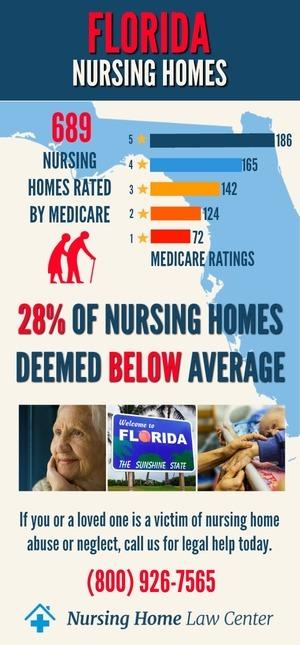
Florida has roughly 700 nursing homes, and more than 28% of them face serious deficiencies. CMS state data show a reported total nurse staffing hours per resident per day of 3.88886 nationwide and 3.85608 in Florida, providing useful context for families comparing staffing pressure in Florida nursing facilities. A Florida study in the NCBI Bookshelf reported that 83% of emergency department nurses said they had seen what they believed was abuse of older persons, yet only 36% had reported it.
A wrongful death claim is filed by the personal representative of the estate for the benefit of survivors and the estate. In practice, that often means the case is pursued on behalf of close family members such as a spouse, children, parents, or other eligible survivors, depending on the facts and probate posture.
Florida’s nursing home neglect statute of limitations appears in Fla. Stat. § 400.0236. In general, an action must be brought within 2 years from the incident or from when it was discovered or should have been discovered with due diligence, subject to a 4-year outside limit. If fraudulent concealment or intentional misrepresentation prevented discovery, the period can extend for 2 years from the date of discovery, with a 6-year outer cap.
The worst nursing homes in Florida are those that perform the poorest under public oversight measures. Medicare- and Medicaid-certified homes are surveyed for compliance, deficiencies are graded by severity and scope, and CMS star ratings help families compare overall quality, staffing, inspections, and quality measures.
Based on those criteria, current examples of the worst nursing homes in Florida include: