
Experienced Attorneys Protecting the Rights of the Neglected and Abused
The Nursing Home Law Center is committed to providing the legal resources necessary to hold negligent facilities accountable.

Nursing home malnutrition settlements provide financial relief to residents and families when a facility’s failure to provide proper nutrition, monitor health changes, or respond to signs of malnutrition causes preventable harm. Settlement value depends on the severity of the resident’s injuries, the extent of the nursing home’s neglect, and the losses suffered by the victim and their family.
Malnutrition in nursing homes is typically preventable, since staff members are responsible for meal assistance, weight monitoring, dietary care plans, and daily observation of residents who cannot eat or advocate for themselves.
Malnutrition is especially dangerous for residents with dementia, swallowing difficulties, mobility limitations, or chronic illness. Cases may involve severe weight loss, dehydration, pressure wounds, infections, organ failure, hospitalization, or wrongful death.
Our nursing home malnutrition attorneys can review your case, investigate whether neglect caused malnutrition, and help you hold negligent facilities accountable.
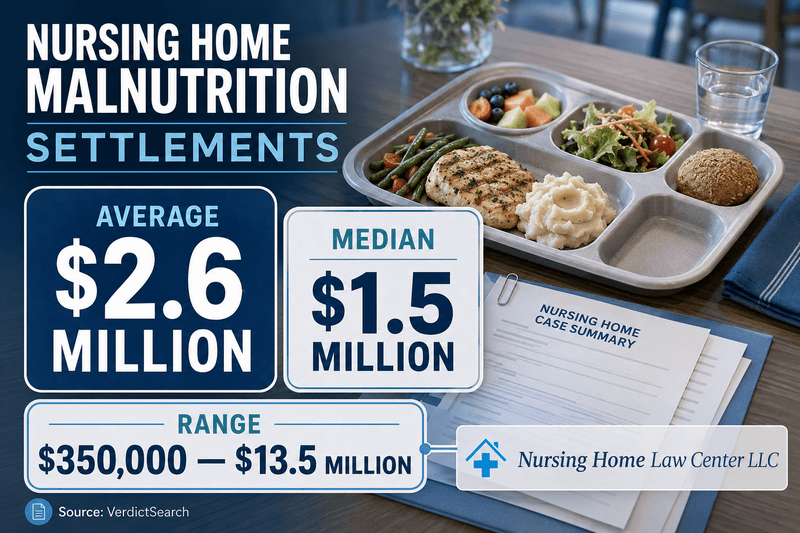
The average nursing home settlement for malnutrition is $2.6 million.
According to case data reported by VerdictSearch, settlement values across nursing home lawsuits typically range from $350,000 to $13.5 million, with a median settlement of $1.5 million.
This wide range reflects the diversity of malnutrition cases, from residents who experienced weight loss and dietary neglect with a full recovery to residents who suffered severe complications, prolonged hospitalization, or wrongful death.
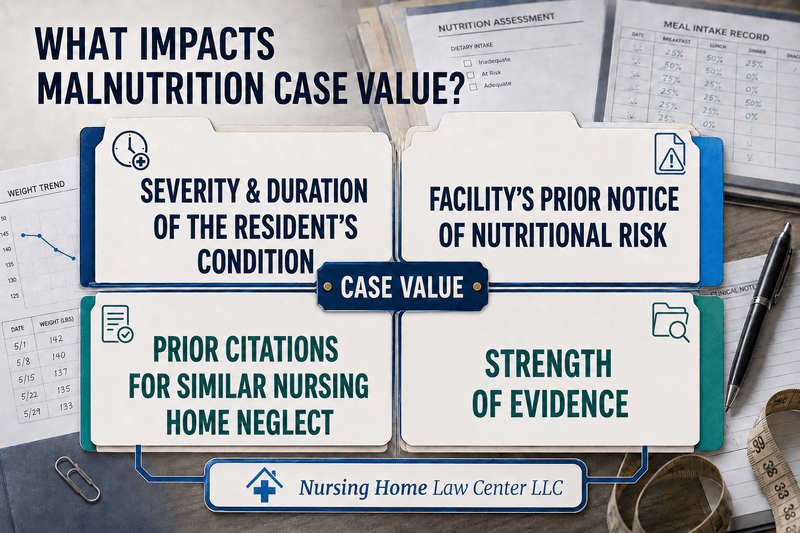
The value of a nursing home malnutrition lawsuit depends heavily on the severity and duration of the resident’s condition. Lower-value nursing home lawsuits may involve mild weight loss that was identified and corrected before lasting harm occurred. Higher-value cases typically involve prolonged and severe neglect, including significant weight loss, muscle wasting, bed sores, organ failure, repeated hospitalization, or wrongful death.
Nursing home lawsuit settlement value also depends on whether the facility had prior notice of the resident’s nutritional risk. Records showing declining weight, missed meals, incomplete food and fluid charting, refusal to eat, or physician orders for nutritional supplements that were never followed can establish that staff knew about the risk and failed to act.
Other factors include the facility’s staffing levels at the time of the neglect, any history of prior citations for similar nursing home neglect, the availability of witness testimony from staff or other residents, and the emotional distress experienced by the resident and their family. State law also plays a role, since some states cap damages or impose shorter deadlines that can affect how a case is valued and pursued.
Below are examples of how malnutrition settlements have been valued in nursing home neglect cases across the country. Names and identifying details have been withheld to protect the privacy of the residents and families involved.
A 90-year-old resident spent more than eight years experiencing declining health while living in a nursing facility before his death.
His estate and adult daughter alleged that chronic understaffing caused nursing home staff to overlook his worsening condition, resulting in severe pressure sores, malnutrition, and repeated dehydration. The Texas nursing home neglect attorney handling the case cited records showing that the facility failed to notify his physician about significant changes in his health.
The unusually high settlement amount was influenced by the resolution occurring during the facility’s bankruptcy proceedings, with compensation provided through available insurance coverage and a solvent partner.
An 89-year-old woman living in a nursing home lost 90 pounds over two years, was hospitalized four times for dehydration, and developed eight avoidable pressure wounds.
Her estate alleged the nursing home was chronically understaffed, falsified care records, and that its dietitian failed to track her caloric intake properly. Her treating physician later described her pain as severe and unrelenting in the months before her death.
An 89-year-old resident sustained multiple fractures, developed infected pressure sores, and suffered from dehydration and malnutrition during a long-term stay at a nursing home.
Her family alleged the nursing home was understaffed and had altered her records to conceal the extent of the neglect.
Physician’s orders called for a resident, admitted at age 82 following a hip fracture, to be repositioned every two hours. Staff allegedly ignored those instructions. She was later removed from the facility suffering from severe bed sores, malnourishment, and dehydration. She died ten days afterward.
The nursing home contended her decline stemmed from preexisting conditions rather than any lapse in care. The settlement value included damages for severe pain and suffering, mental anguish, and the loss of companionship experienced by surviving relatives.
Over a two-year residency at a nursing home, an 87-year-old man fell at least once and developed multiple infected pressure sores along with severe malnutrition and repeated dehydration.
His family alleged the nursing home failed to assess his condition, treat his wounds, and staff its nursing department adequately.
A 75-year-old resident of a nursing home developed bed sores, malnutrition, dehydration, and metabolic acidosis over the course of several months.
The Fort Worth nursing home lawyers representing her family alleged the facility knew of her declining condition and fall risk yet failed to intervene, resulting in repeated injury.
Across a ten-month stay at a nursing home, an 87-year-old woman experienced repeated episodes of malnutrition and dehydration along with multiple infected pressure sores. She died five months after her discharge.
Her estate alleged the nursing home did not adequately staff and train its team, maintain infection control, and follow physician orders.
Fourteen months at a nursing facility left an 86-year-old resident with severe bed sores, sepsis, dehydration, and malnutrition.
The Mississippi nursing home neglect lawyers hired by her family alleged the facility operated below state staffing minimums and falsified dozens of care entries, noting that care was given at times she was not even present at the facility.
A 74-year-old facility resident with diabetes suffered two falls that fractured both legs, then developed pressure sores that ultimately led to bilateral amputations. She also became dehydrated and malnourished during her stay at the nursing home.
The resident alleged the facility failed to monitor her diabetic condition, train staff on fall prevention, and follow physician orders.
Extended periods of immobility and ongoing neglect contributed to the fatal decline of a 72-year-old patient with Alzheimer’s disease.
The Chicago nursing home abuse and neglect attorney representing his estate alleged he had been underfed and overmedicated, and that the resulting wounds progressed into sepsis, ultimately causing his death.
Untreated bed sores at a New York City nursing home progressed to stage 4 decubitus ulcers, gangrene, osteomyelitis, and sepsis over four months for a 74-year-old resident. She also lost roughly 60 pounds amid worsening malnutrition and dehydration.
The New York nursing home neglect attorney assigned to this case alleged that staff failed to reposition her, adequately monitor her wounds, and address her nutritional needs.
Within her first two weeks at a nursing home, an 87-year-old resident began showing signs of declining appetite and hydration. She developed infected pressure sores that led to sepsis and death within three months of admission.
Her family alleged nursing home staff failed to catch her nutritional decline and never disclosed her worsening wounds.
An 84-year-old resident was hospitalized with malnutrition, dehydration, and a Stage 4 pressure ulcer just over three months into her stay at a long-term care facility. She died three weeks later, and her death certificate cited failure to thrive stemming from the infected wound.
The New Jersey nursing home neglect lawyer appointed to this case alleged staff failed to assess, turn, and monitor her condition properly.
A long-term care resident died from acute renal failure following a period of declining health that her children attributed to dehydration and malnutrition.
Her family pursued a claim with Sacramento nursing home abuse attorneys, alleging the facility failed to provide adequate care. A state health investigation resulted in a citation against the facility.
Four months of residency at a nursing home left a 92-year-old woman with dementia suffering from hip and sacral bed sores alongside severe malnutrition. She was transferred elsewhere but died three months later.
Her family alleged an incorrectly scored risk assessment failed to flag her need for repositioning, and that records were falsified to cover a period when she was hospitalized.
Nursing home malnutrition occurs when facilities fail to meet a resident’s basic nutritional needs.
Some residents cannot feed themselves. Some have dementia and forget to eat. Others have swallowing difficulties, dental problems, or medical conditions that suppress appetite or interfere with nutrient absorption. The facility is responsible for identifying these risks and ensuring each resident receives adequate food, fluids, and dietary support.
Other common causes for malnutrition in nursing homes include inadequate staffing, poor training on feeding assistance, not accommodating special diets, missed care-plan updates, and failing to act on a resident’s ongoing weight loss. Staff may skip meal assistance for residents who depend on it, fail to offer alternatives when a resident refuses food, or overlook physician orders for nutritional supplements.
Nursing home neglect can also involve falsified charting, where staff records that meals were served or eaten without confirming the resident actually consumed them.
Malnutrition can also develop in assisted living facilities that admit residents needing more nutritional support than the facility is equipped to provide. When these facilities accept residents with swallowing difficulties, cognitive decline, or chronic illness but fail to establish systems to track intake, recognize warning signs, and arrange medical care, the resident’s health can deteriorate rapidly.
Malnutrition often develops gradually, making it easy to overlook until a resident experiences serious health complications. When nursing home staff fail to monitor nutritional status or respond to declining health, residents may suffer preventable harm.
Common signs of malnutrition in nursing home residents include:
Without timely intervention, malnutrition can lead to severe infections, organ damage, declining overall health, and even wrongful death.
Malnutrition can weaken residents and contribute to preventable injuries. Some injuries and conditions associated with nursing home neglect include:
A nursing home malnutrition lawsuit requires evidence showing that a facility failed to provide adequate nutrition, ignored warning signs, or did not follow a resident’s care plan. Our legal team reviews records and other documentation to determine whether nursing home neglect caused a resident’s injuries, health decline, or wrongful death.
Key evidence may include:
The compensation available in a nursing home lawsuit involving malnutrition depends on the severity of the harm, the impact on the resident’s life, and applicable state laws. A settlement may help cover losses caused by nursing home neglect, including the physical, emotional, and financial consequences of inadequate care.
Depending on the circumstances of the case, compensation may include:
The person who can file a nursing home malnutrition lawsuit depends on whether the resident is still living and whether they have the legal ability to pursue a claim. A resident who experienced harm may be able to bring a personal injury claim directly if they have legal capacity. If they cannot manage the legal process themselves, a legal representative, guardian, or another authorized individual may be able to act on their behalf, depending on state law.
If malnutrition contributed to a resident’s death, certain members of the family or the personal representative of the estate may be able to pursue a wrongful death claim. These nursing home lawsuits may allow loved ones to seek compensation for losses caused by nursing home neglect, including funeral expenses and other damages allowed under applicable laws.
Our nursing home abuse attorneys can review the circumstances of a case, determine who has authority to file, and help families take legal action against negligent facilities and secure a fair settlement.
The deadline to file a nursing home lawsuit following malnutrition depends on the state where the injury occurred and the type of claim being pursued. In most states, the statute of limitations for nursing home abuse, neglect, personal injury, or wrongful death claims generally falls between one and three years from the date of injury, death, or discovery of harm. A few states extend the deadline to four or six years.
Because missing the deadline may prevent families from seeking financial compensation, it is important to speak with an experienced attorney as soon as possible. Our legal team can review the facts, protect important evidence, and help determine the appropriate timeline for taking legal action.
Building a strong nursing home malnutrition claim requires careful preparation before accepting any settlement offer. Families should take steps to preserve evidence, understand their legal rights, and ensure the proposed resolution reflects the full extent of the harm caused by nursing home neglect.
Before resolving a claim, families should:
Pursuing a nursing home malnutrition claim can involve reviewing extensive records, identifying failures in care, and proving how neglect contributed to a resident’s injuries or decline. Our legal team investigates each case carefully to determine whether you can pursue a nursing home lawsuit.
A typical nursing home malnutrition case involves:
If your loved one suffered harm because of inadequate nutrition or nursing home neglect, contact our legal team for a free case evaluation. We can review the circumstances surrounding your loved one’s condition, examine medical records, and determine whether the nursing home may be responsible for preventable injuries, serious health complications, or wrongful death.
Our nursing home abuse attorneys help families understand their legal options and pursue financial compensation when a facility fails to provide proper care. We handle cases involving nursing home abuse, neglect, personal injury, and wrongful death, working to hold negligent facilities accountable.
To discuss your case with an experienced nursing home attorney, call our office at (800) 926-7565 or complete our online contact form. You do not owe us attorney fees unless we recover compensation for you.