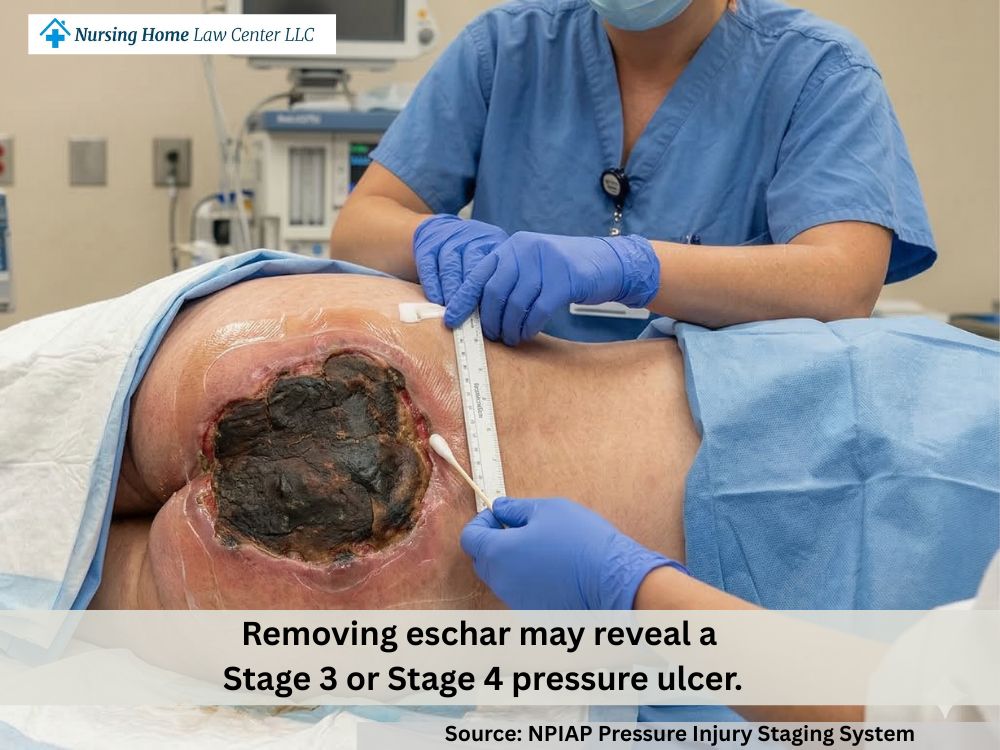
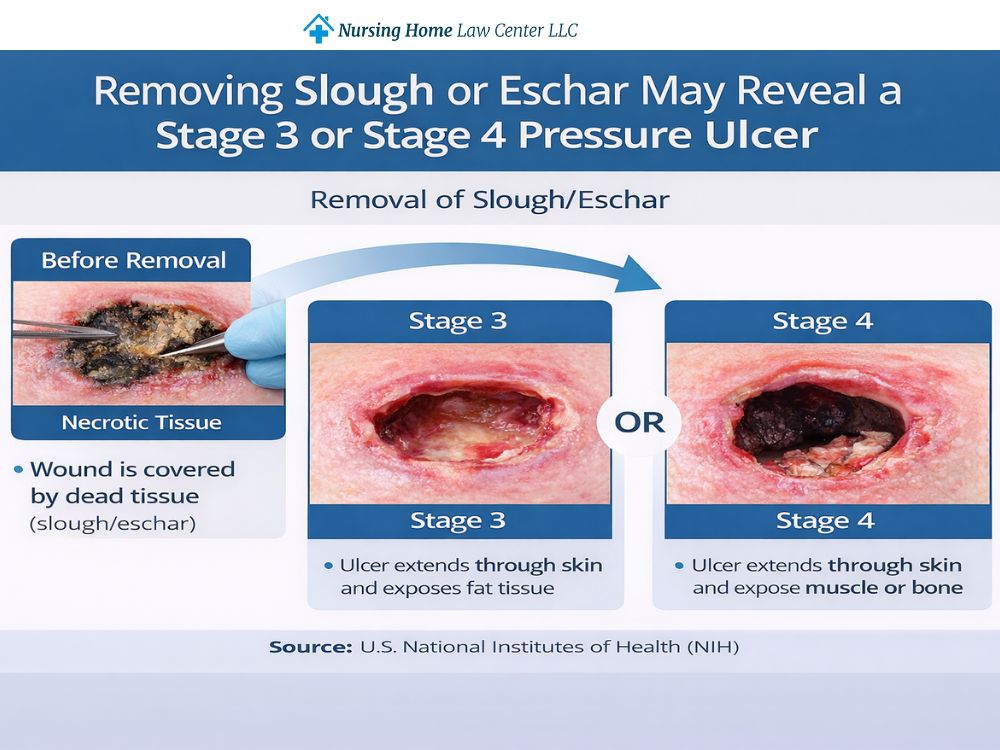
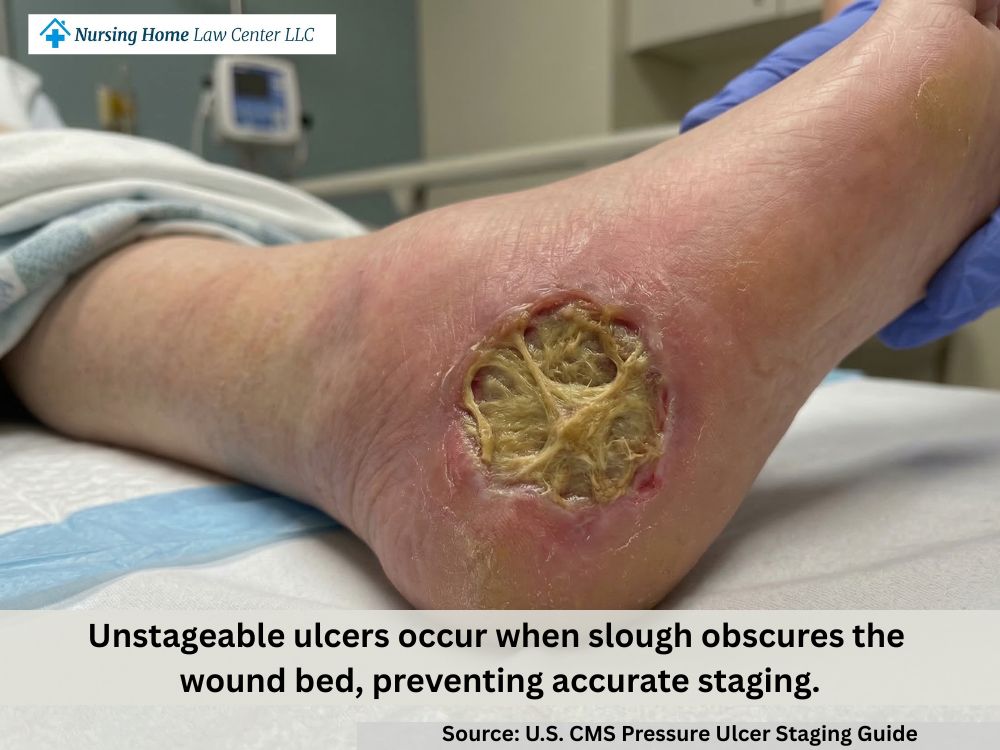
An unstageable pressure ulcer is a wound where the true depth cannot be measured because the surface is covered by slough or eschar. Clinicians know there is tissue breakdown, but they cannot assign the full stage of a pressure sore until enough of that covering is removed to expose the wound base. That removal may reveal a Stage 3 or Stage 4 injury.
For nursing home residents, an unstageable ulcer often signals a breakdown in basic care. accountability from the negligent nursing home through legal action.
What Is the Clinical Presentation of an Unstageable Bed Sore?
Slough is soft, moist, nonviable material that may appear yellow, tan, gray, green, or brown. It can cling to the wound bed in stringy or thick patches. Eschar is thicker dead tissue that often looks tan, brown, or black and may feel dry or leather-like. In some residents, eschar forms a hard cap over the damaged area.
An unstageable pressure ulcer may also show drainage, warmth, swelling, tenderness, or a foul odor when infected tissue is present. The skin around it can look red, macerated, fragile, or undermined. In severe cases, the visible surface hides much deeper tissue damage below, including injury extending toward subcutaneous tissue or other underlying structures. That hidden depth is what makes unstageable pressure wounds so dangerous.
The most common anatomical locations where pressure ulcers occur are the sacrum, heels, hips, ankles, and other areas exposed to prolonged pressure over a bony prominence. Elderly patients with limited mobility, poor nutritional status, dehydration, or chronic illness face a higher risk of these injuries. So do people with spinal cord injuries, neurological disorders, or cardiovascular disease. In such residents, pressure ulcers can worsen quickly because the body has less reserve and a weaker ability to repair tissue damage.
How Are Unstageable Pressure Injuries Treated?
Pressure ulcer treatment starts with getting the constant pressure and shear forces off the wound. An unstageable ulcer will not improve if the resident keeps lying or sitting on the same damaged area for extended periods. Staff should offload the site, reposition the patient on a reliable schedule, and use support surfaces that reduce force on vulnerable skin.
The wound then needs a careful evaluation of drainage, odor, pain, edge condition, surrounding tissue, and signs of infection. The care team also has to look at the resident’s nutrition, hydration, mobility, circulation, and overall health.
In many cases, clinicians consider debridement because the wound is covered by slough or eschar that hides the true extent of the injury. Depending on the wound, a clinician may choose sharp, surgical, enzymatic, mechanical, or autolytic removal of nonviable material. The point is to clear away necrotic tissue, lower the burden on the wound, and expose the area enough to guide treatment.
That said, there is an important exception. Eschar that is dry, adherent, intact, and free of erythema or fluctuance on the heel or an ischemic limb should not be softened or removed, as it can function as a protective cover.
Treatment does not stop with pressure injury debridement. Many residents need dressing changes, pain control, nutrition support, infection prevention, and consultation with wound care specialists. Imaging or lab work may be necessary if clinicians suspect further infection. Some residents may require negative pressure wound therapy after debridement and stabilization, depending on the wound’s characteristics and the patient’s overall condition.
Once slough or eschar is removed, the wound may reveal Stage 3 or Stage 4 damage, including full-thickness tissue loss extending into fat, fascia, muscle, or bone.
Nursing home abuse lawsuits must be pursued according to the laws set forth by the state where the facility is located. In this section, our attorneys have compiled the relevant laws, regulations and local organizations for each state so you can get an idea of how the law impacts your situation. Should you decide to move forward with a case, you will also find information about locating an experienced attorney who can assist your family.
Jonathan did a great job helping my family navigate through a lengthy lawsuit involving my grandmother's death in a nursing home. Through every step of the case, Jonathan kept my family informed of the progression of the case. Although our case eventually settled at a mediation, I really was...
- Lisa
After I read Jonathan’s Nursing Home Blog, I decided to hire him to look into my wife’s treatment at a local nursing home. Jonathan did a great job explaining the process and the laws that apply to nursing homes. I immediately felt at ease and was glad to have him on my side. Though the lawsuit...