
Experienced Attorneys Protecting the Rights of the Neglected and Abused
The Nursing Home Law Center is committed to providing the legal resources necessary to hold negligent facilities accountable.

The skin is the body’s largest organ, so skin failure often accompanies terminal conditions. A Kennedy terminal ulcer (KTU) is a severe type of skin wound that develops rapidly during the final stages of life, often signaling a swift physical decline. Some clinicians dispute whether KTU is a distinct diagnosis, and the safest approach is careful assessment and documentation.
In hospice care, the presence of a KTU may be a normal stage of the dying process, but it may also indicate medical neglect. Documentation, such as medical records and nursing charts, can help our pressure ulcer lawyers determine whether negligence was involved. We will also help families seek compensation and hold responsible parties accountable.
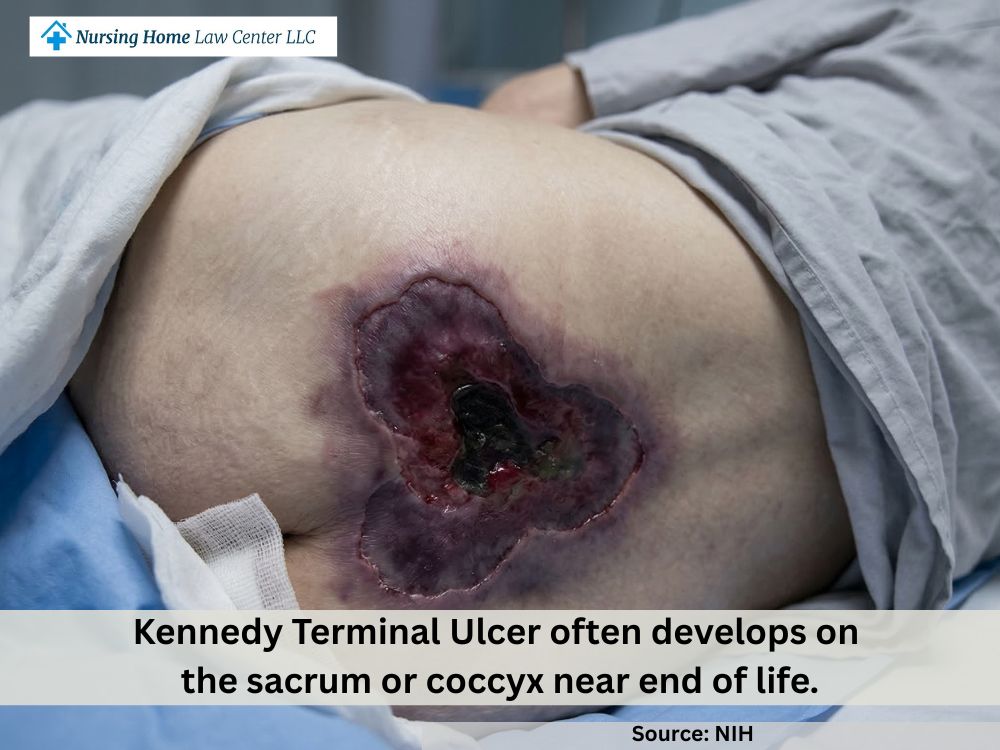
A Kennedy ulcer (KTU) is often described as a terminal skin wound. It is sometimes classified within pressure-injury frameworks but comes from different forces. Rather than resulting from pressure like a bed sore, KTUs happen when the skin fails due to widespread tissue death.
KTUs typically occur at sites such as the sacrum, heels, or tailbone. These are called bony prominences because the bone sits close to the skin’s surface, making these areas more prone to ulceration in terminally ill patients.
In many cases, KTUs present as butterfly- or pear-shaped ulcers, unlike round or oval pressure ulcers.
A Kennedy ulcer is not a diagnosis of neglect on its own, but must be placed in context with other potential signs like dehydration or physical injuries.
Recognizing the difference between Kennedy ulcers and neglect-related injuries is critical in legal contexts, as it helps determine whether the skin damage was a natural part of the final stages of life or caused by inadequate care and lack of appropriate prevention measures by healthcare providers.
Kennedy terminal ulcers differ significantly from typical pressure ulcers due to the quick progression and exact cause.
In palliative care literature, KTU is often discussed in the context of end-of-life care. However, evidence and definitions vary. Pressure ulcers result from prolonged pressure and shear forces and can occur in non-terminal patients.
While Kennedy ulcers develop rapidly and signal the start of the dying process, pressure ulcers develop over time.
Healthcare professionals will apply the wound care measures needed for pressure-related injuries, such as repositioning, offloading, and support surfaces. However, the goal is to reduce discomfort and further wound development rather than to entirely prevent the ulcer.
Terminal ulcers, like Kennedy ulcers, progress rapidly and present in actively dying individuals or those in their final days. They emerge in bony areas such as the heels, shoulders, or coccyx rather than in areas with sustained pressure. Most notably, they have an irregular pear or butterfly shape and mottled discoloration.
In contrast, pressure ulcers develop over weeks or months. They may appear anywhere that has had sustained pressure or shear forces over time, though are common in bony areas like the coccyx. A bed sore is typically circular, oval, or crater-shaped and is not mottled.
Labeling preventable skin failure as ‘terminal’ can obscure missed prevention steps, making documentation critical. An attorney can review medical charts, doctors’ orders, and nurse testimony to better understand what type of care the patient was receiving and whether it aligned with wound management protocols.
The term was coined in 1989, associated with observations attributed to Mary Lou Kennedy, NP (Fort Wayne, Indiana), and later debated in wound-care literature. Kennedy noticed that these fast-developing ulcers were distinct from typical pressure sores and were more closely associated with end-stage skin failure.
Some clinicians argue that the term should be retired or used cautiously, while others note that some pressure injuries may be unavoidable.
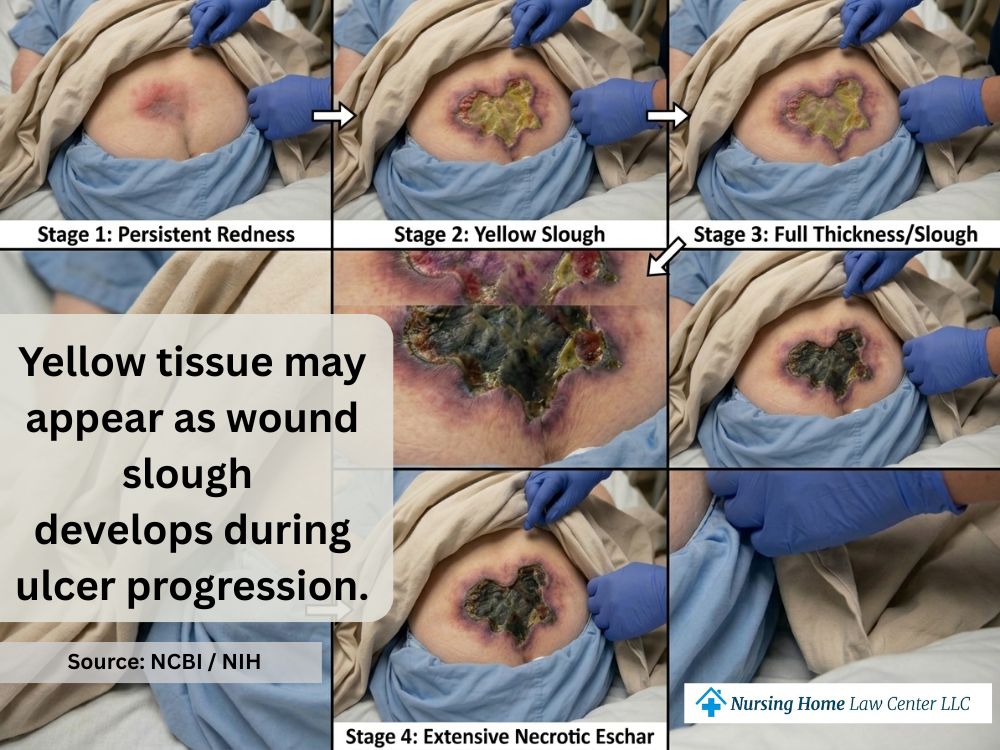
Kennedy Terminal Ulcers (KTUs) develop due to a combination of internal and external factors factors. Risk factors include:
Certain physiologic drivers, such as poor perfusion (blood flow to tissues) or multi-organ failure, may contribute to the development of Kennedy ulcers and other unavoidable pressure injuries, but do not necessarily cause the condition.
It is important to understand how pressure injuries and related wounds look, as well as how they develop, in order to distinguish Kennedy ulcers from bed sores.
KTUs are typically larger and irregularly shaped skin injuries that appear reddish, yellow, black, or mottled. They may have a butterfly or pear shape. They commonly appear on the sacrum, coccyx, and heels, where the skin is thinner.
Unlike slow-progressing pressure ulcers, Kennedy ulcers can change quickly and may be accompanied by other signs of impending death.
With a Kennedy ulcer, assessment focuses on differentiating from avoidable pressure injury and documenting context, onset, and wound characteristics.
Wound care specialists and palliative nurses will consider these factors:
These signs can help medical professionals decide on treatment, including additional comfort measures or pain management.
While a Kennedy ulcer may appear close to death in some cases, it is not a precise indicator. Specialists will consider all the clinical signs, including ulcer progression, to help patients and families understand what to expect and provide emotional support.
Managing Kennedy terminal ulcers requires a compassionate approach that focuses on the comfort of patients and preventing further skin damage during the final phases of life. Below are some of the common treatment and management options:
Hospice and palliative care teams enhance quality of life through advanced skin wound care, pain management, and regular repositioning, which will prevent more discomfort as patients begin the dying process. They also document the wound progression and other clinical signs, which are essential for legal purposes.
Clinical wound specialists should provide consistent communication with family members to prevent misunderstandings, including clear explanations of what a Kennedy ulcer means and how it is managed.
The KTU label alone does not decide negligence. Documentation is key to determining whether medical staff acted in accordance with CMS guidelines around pressure ulcer management. Personal injury lawyers can review documentation to identify potential liability, including whether the KTU resulted from negligence or was an unavoidable consequence of a terminal illness.
Certain records can provide a narrative of events around ulcer development, which may reveal potential neglect. These can include:
Kennedy Terminal Ulcers may be misunderstood by patients and their families, making it important for medical staff to carefully explain what a KTU is and how it develops
Kennedy ulcers can be a clinical sign of impending death. As such, early recognition can enable palliative nursing staff to gently prepare families and patients for the next stage of the dying process. KTU documentation helps clinical staff develop a care plan that prioritizes dignity and comfort while also distinguishing KTUs from bedsores.

If you believe a KTU resulted from neglect or improper care at a nursing home or intermediate care facility, you deserve justice and compensation. A nursing home abuse and neglect attorney is here to help you understand your rights and guide you through the process of seeking the compensation you deserve. Contact Nursing Home Law Center today to schedule a free consultation by calling or completing our online form.

Nursing home abuse lawsuits must be pursued according to the laws set forth by the state where the facility is located. In this section, our attorneys have compiled the relevant laws, regulations and local organizations for each state so you can get an idea of how the law impacts your situation. Should you decide to move forward with a case, you will also find information about locating an experienced attorney who can assist your family.